
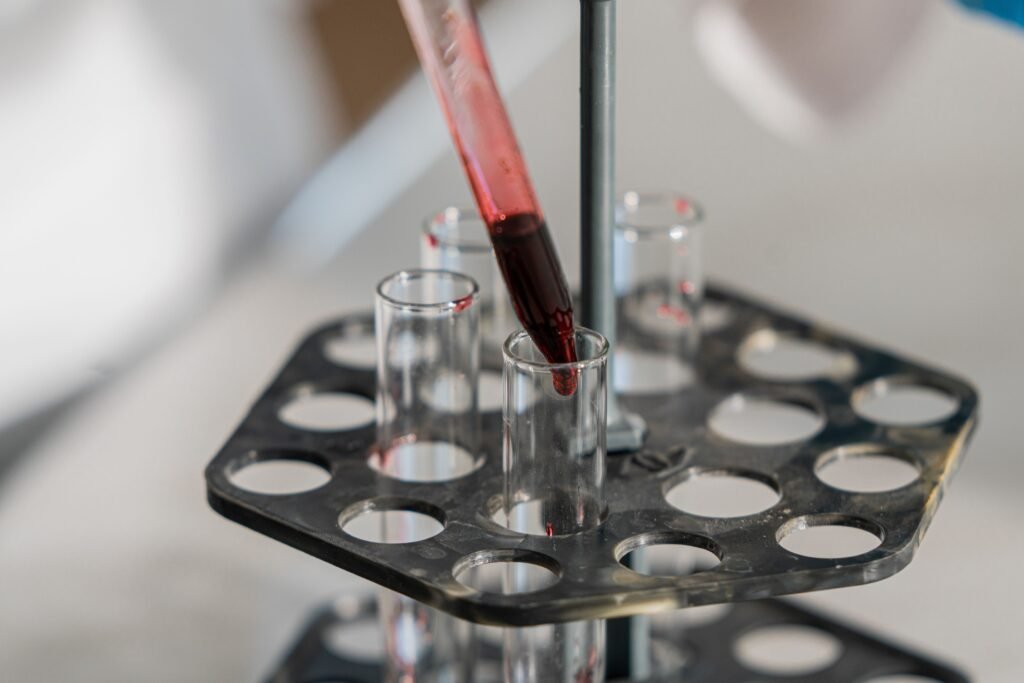
When your dog’s liver bloodwork comes back with ALT, ALP, AST, or GGT flagged in red, the number alone tells you less than it seems to. These four are the values on a chemistry panel that get grouped as liver enzymes. A raised one means liver cells are stressed, turning over faster than usual, or that bile is not flowing normally. It is not a diagnosis, and it does not say how serious this is.
What sorts it out is how your dog is doing, which of the four are up, and how far above the range they sit. The first needs no laboratory, so it comes first. For how these values sit beside the rest of a standard panel, the wider picture helps.
Start With How Your Dog Is Doing
The same number means different things depending on the animal attached to it. A mild elevation in a dog who is eating, drinking, and acting like itself often earns nothing more than a recheck in a few weeks. Several markers rising together, especially alongside vomiting, yellowing gums, or a lost appetite, earns a prompt visit. And a short list of findings cannot wait for a recheck at all.
See a vet now if your dog has yellowing of the gums, eyes, or skin (jaundice), repeated vomiting with lethargy, sudden loss of appetite, dark or tarry stool, or abdominal pain alongside abnormal liver values. These combinations warrant same-day evaluation rather than a routine recheck.
Neurologic changes belong on that list too. Confusion, aimless wandering, circling, pressing the head against a wall, or sudden blindness in a dog with abnormal liver values can signal hepatic encephalopathy, a brain disturbance driven by toxins, ammonia among them, that a failing or bypassed liver no longer clears. It needs same-day care, and seizures, collapse, or unresponsiveness need an emergency vet immediately.
Everything else here can wait for a scheduled appointment. That list cannot.
Which of the Four Enzymes Are High
ALT (alanine aminotransferase) is the most liver-specific of the four in dogs. It sits inside liver cells and leaks out when they are irritated or damaged, so it is usually the first marker checked, and what a high ALT means on its own has its own article. AST (aspartate aminotransferase) rises with liver cell damage too, but muscle is full of it as well, so a high AST beside a normal ALT often points at muscle and sends the workup elsewhere. Measuring creatine kinase (CK), a muscle enzyme, at the same time helps tell muscle damage from liver damage.
ALP (alkaline phosphatase) and GGT (gamma-glutamyl transferase) track bile flow instead. When bile backs up both climb, a cholestatic pattern (from the Greek chole, “bile,” and stasis, “standing still”). ALP is the awkward one. It has the lowest specificity of the routine liver enzymes in dogs, rising with normal bone growth in puppies and, unlike in most other species, with steroid use or Cushing’s disease, even when the liver is perfectly healthy. GGT is less sensitive but more specific, so the two get read as a pair, and what a high GGT means is covered separately.
An isolated, mild ALP is one of the most common findings on a dog chemistry panel, and often the least concerning. That is why the everyday explanations get ruled out first: bone growth in a young dog, and in an adult or senior dog, steroid treatments for skin and allergy problems or Cushing’s disease. Older dogs can also develop nodular hyperplasia, benign, age-related nodules in the liver that can raise ALP without making the dog ill. If ALP is the only marker flagged, this closer look at an isolated ALP elevation walks through how that workup differs.
ALT and AST climbing together means the liver cells are being irritated or injured: toxin exposure, certain medications, infections, heatstroke, or in some breeds an inherited tendency to store copper. ALP with GGT points at bile flow. All four markedly up earns a prompt workup. One more thing sits under all of it. Most of the liver’s blood arrives straight from the digestive tract, so disease in the pancreas or intestines can push liver values up secondhand. Pancreatitis, for instance, can raise ALP through swelling around the bile duct.
How High the Values Are, and for How Long
As a rough scale, two to three times the upper limit counts as mild, five to ten times as moderate, and more than ten times as marked. The size of the jump does not always match the severity of the disease behind it, which is why the height of a value is only one piece of the reading, alongside your dog’s age, breed, medication history, and symptoms.
Duration often does more work than height. A value that crept up across a year of annual bloodwork is a different conversation from one that doubled since last month. And an ALT that stays high for more than about two months with no explanation deserves a closer look, because it is the best early screening signal currently available for chronic hepatitis, a long-running inflammation of the liver. For that pattern, getting an answer is worth more than another routine recheck.
What Your Dog’s History Answers That the Panel Cannot
Breed narrows the list before anyone draws more blood. Bedlington Terriers, West Highland White Terriers, Skye Terriers, Dobermans, and Labrador Retrievers are predisposed to copper-associated hepatopathy, where copper builds up in the liver over time and drives a persistent ALT elevation. Say so at the appointment even if nobody asks, because it changes the workup and the diet recommendations. Small breeds, especially Yorkshire Terriers, Maltese, and Cairn Terriers, are more prone to congenital portosystemic shunts, a plumbing problem where a vessel reroutes blood around the liver rather than through it. That can cause mild, chronic enzyme elevation from a young age, often in a dog smaller than expected for the breed or oddly disoriented after meals.
The medication list narrows it further, because several everyday drugs raise liver enzymes without necessarily harming the liver. Long-term corticosteroids push ALP up, and ALT to a lesser degree, and the values settle over weeks once the drug is tapered. Phenobarbital, used for seizures, does much the same through enzyme induction, but with years of use it can also cause real liver damage, which is why dogs on it have their liver values checked on a schedule. NSAIDs such as carprofen differ again: their hepatotoxicity is idiosyncratic rather than dose-related and cannot be predicted from how long a dog has taken the drug, though most dogs recover fully if it is caught early and the drug stopped. So tell your veterinarian about every medication and supplement, over-the-counter joint products included, before anyone assumes the worst about a lab result.
True toxin exposures are less common but far more urgent. Xylitol (in sugar-free gum and some peanut butters), certain wild mushrooms, sago palm plants, and blue-green algae in stagnant water can all cause serious, rapid liver injury. If your dog has had known or even possible access to any of these, say so immediately, because the treatment window matters.
What Comes Next, and What Helps While You Wait
All four share one limit worth naming plainly. They tell you about cell irritation and bile flow, not about how well the liver is doing its job, and a dog can have high enzymes while liver function stays completely intact. So veterinarians read them next to bilirubin, albumin, and clotting values, with the history weighed just as heavily.
Bilirubin and albumin sit closer to true function. Bilirubin is the yellow pigment left when old red blood cells break down, and a healthy liver clears it into bile, so a buildup is where the jaundice above comes from. It is not always a liver problem: fast red blood cell destruction, such as immune-mediated hemolytic anemia, or a blocked bile duct can raise it too, and what a high bilirubin means has its own article. Albumin is a blood protein made by the liver, and a low value can reflect liver disease, but it is a late sign, because the liver has a large reserve for making it. It also drops when the kidneys or intestines leak protein, so a low albumin alone does not point to the liver, and what low albumin means is covered separately.
When function itself needs checking, the bile acids test is the usual next step. It compares a sample taken after a fast of about 12 hours with one about two hours after eating. A healthy liver clears bile acids efficiently between the two draws; a liver that is struggling, or bypassed by a shunt, does not. In dogs, a result above about 25 micromoles per liter is considered abnormal, and what a high bile acids result means has its own article. Abdominal ultrasound gets added when values are high or persistent, since it shows structural changes, nodules, or shunts that bloodwork cannot.
How far the workup goes depends on how your dog is doing, which enzymes are up, and by how much. For a mild, isolated elevation in a symptom-free dog, repeating the draw at a recheck beats launching a full investigation over one number. For a larger or multi-marker pattern, expect the bile acids test, imaging, and a careful medication review fairly quickly. Confirming chronic hepatitis takes a liver biopsy, and clotting is checked first because sampling the liver carries a risk of bleeding. The reassuring part is that the liver has a large reserve and can regenerate, so there is real room to recover once the cause is found and removed.
While the recheck is pending, keep a daily log of appetite, water intake, energy, vomiting, and stool color, because trends over days say more than how your dog happens to seem during a ten-minute exam. Do not start new supplements, herbal remedies, or over-the-counter medications, “liver support” products included, without checking first: some interact with whatever is actually going on, and others muddy the recheck so nobody can tell whether the numbers moved on their own. Keep fresh water available, keep the regular diet unless told otherwise, and keep the appointment even if your dog seems perfectly fine, since bloodwork trends often move before symptoms do.
Was the article helpful?