
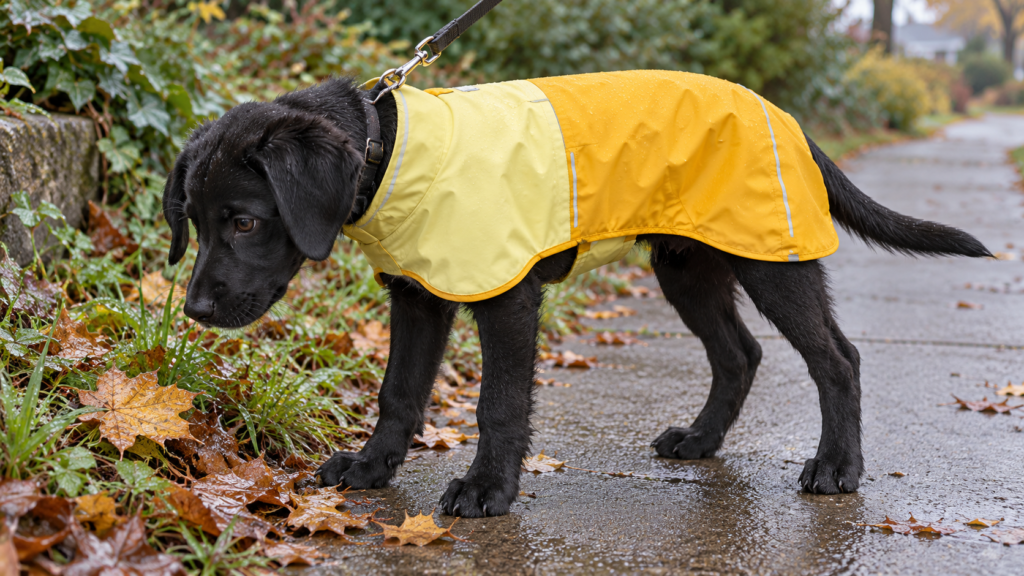
It is raining steadily, your dog still needs to go out, and you are choosing a raincoat from a size chart that sorts dogs by weight. That chart will mislead you. A 25-pound Boston Terrier carries most of that weight in a deep, barrel chest with very little back behind it, while a 25-pound Dachshund is built like a long, low shelf. The same medium will be wrong for at least one of them.
Shape decides this purchase, not weight. For the right dog in the right fit, a raincoat keeps the coat drier, shortens cleanup at the door, and makes a bathroom break in steady rain less miserable for everyone involved. For the wrong dog or the wrong fit, it is stiff fabric that rubs the shoulders, blocks normal movement, or traps heat.
Two Builds, One Size Chart
Three measurements replace the weight guess: neck circumference, the widest part of the chest, and the length from the base of the neck to the base of the tail. If your dog falls between sizes, the better choice is usually the one that gives the chest and shoulders room, as long as the coat does not slide sideways. From there the two builds want different cuts. Long-backed breeds often need a longer cut or a dachshund-specific style, while broad-chested dogs need extra adjustability around the chest instead.
Then check it on the dog, because no chart can do this part. A raincoat should not pull across the front legs. Watch your dog from the side and from the front after you fasten it: they should be able to take a normal stride, lower their head to sniff, turn around, and lie down. If the coat changes their gait, rubs the armpits, or makes them freeze every time it goes on, the fit is wrong, whatever the size chart said.
Which Dogs the Coat Actually Helps
Short-coated dogs, small dogs, seniors, and dogs who hate getting soaked usually benefit most. Thick-coated dogs may only need one for heavy rain, long walks, or days when drying them fully is difficult. Very fluffy dogs may do better with a simple waterproof shell than a lined coat, because the goal here is rain protection, not warmth. Insulation is the job of a proper winter coat. In the rain, dryness matters more than thick fabric, because a wet coat or sweater can actually make a dog colder.
Features Worth Paying For
Start with the closure, because that is the part your dog votes on. Belly straps are fast and forgiving, especially for dogs who dislike having their feet handled. Step-in designs can give better chest coverage, but they are harder for sensitive dogs and for dogs with arthritis. Zippers can look tidy but may catch fur if the jacket is tight or if your dog has a long coat.
Next, check leash access, which people tend to discover too late. If your dog wears a back-clip harness, the raincoat needs a leash port in the right place. If the hole sits too far forward or too far back, the leash pulls the jacket instead of the harness. Collar-only walkers need enough neck room that the collar and leash do not bunch under the hood.
Reflective trim is worth having for fall and winter walks, especially if your neighborhood has narrow shoulders or dim sidewalks. It does not replace a light-up collar or harness for dark walks, but it helps drivers and cyclists notice movement sooner. If visibility is your main problem, pair the coat with dedicated reflective dog gear rather than asking one jacket to do everything.
Hoods are optional. Some dogs tolerate them well; many hate them. A high collar is often more practical than a hood because it blocks some rain without covering the ears or narrowing vision. If a hood makes your dog shake, paw at their face, or stop walking, fold it back or choose a hoodless design.
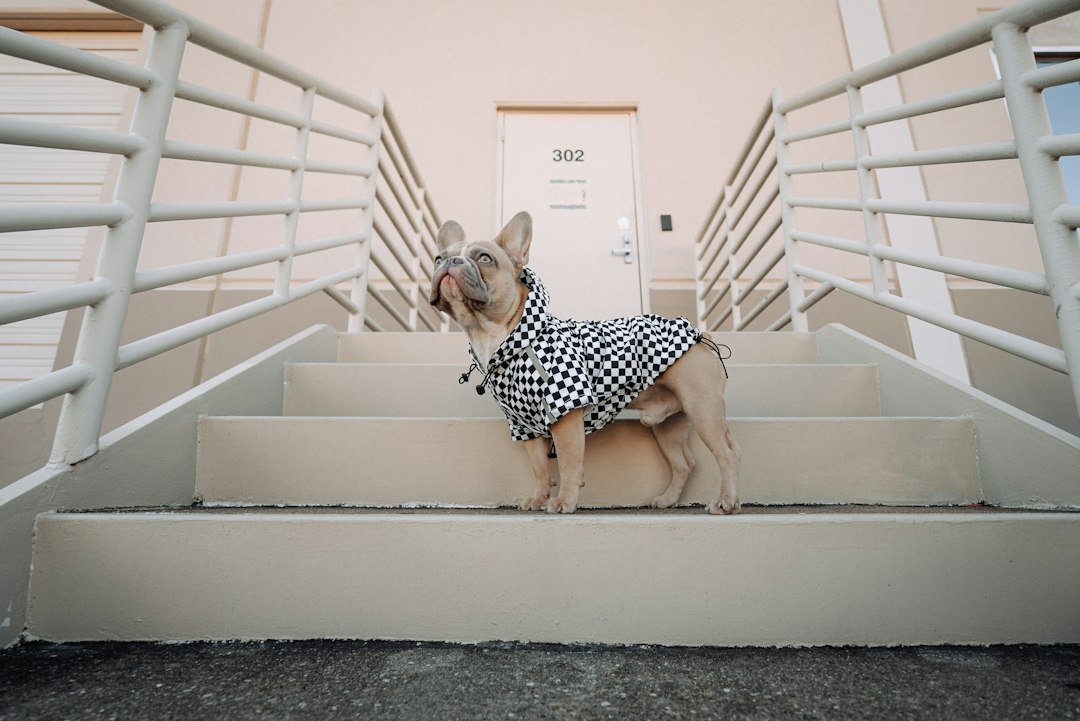
None of it matters if the first fitting goes badly, so do not wait for a storm. Let your dog sniff the coat indoors, then drape it over their back for a few seconds, reward, and remove it. Fasten one strap at a time, and keep the first session boring and short. If your dog eats treats, toss a few on the floor so they move naturally while wearing the jacket.
The first outdoor test should be a short, familiar walk. Watch for rubbing, freezing, pawing at the hood, or a sudden refusal to squat. Dogs often need a little practice with clothing, but they should look more comfortable as the walk continues, not less. If your dog panics, take the coat off and restart more slowly later.
After each wet walk, hang the coat open so it dries fully. Check the straps and seams for grit, especially around the chest and armpits, because a dirty strap can rub like sandpaper. If the coat develops a sour smell or the inner lining stays damp, wash it according to the label before using it again.
Three Raincoats Compared by Price and Build
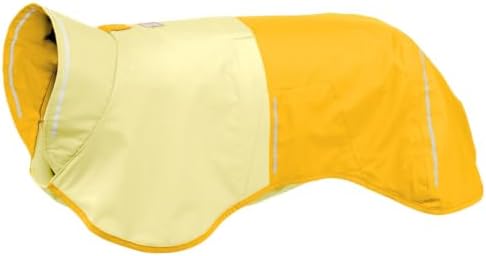
These three cover the main price points. Spark Paws is the fuller-coverage choice for owners who want more of the body protected. Ruffwear Sun Shower is the premium pick for active dogs and longer walks. It is an unlined waterproof shell with side-release buckles, a leash portal on the back so it fits over most harnesses, and a fold-up storm collar instead of a hood. VIVAGLORY is the budget pick, and a sensible place to start if you are not yet sure your dog will tolerate a coat at all.


For most dogs, I would choose based on fit first and brand second. A cheaper coat that sits comfortably and keeps the chest dry is better than a premium coat that rubs behind the elbows. If your dog is between sizes or has an unusual shape, buy from a listing with clear measurements and a realistic return policy.
Cleanup is a separate problem. A raincoat cuts down the mess at the door, but it does nothing for muddy feet. A quick paw-wipe routine handles that for most dogs, and very muddy routes are where one of the dog paw cleaners for muddy walks earns its place.
When Your Dog Needs a Vet, Not a Raincoat
A raincoat is not a treatment for illness, pain, or a sudden drop in stamina. Watch for shivering after a short walk, collapsing, coughing, breathing harder than normal, limping or favoring a leg, or refusing to move in weather your dog usually tolerates. None of those is solved by a warmer or drier jacket.
Whining, shivering, slowing down, weakness, or hunting for a warm spot to burrow can be signs of hypothermia (Greek hypo, “under,” and therme, “heat”), a dangerously low body temperature. If you suspect it, bring your dog inside quickly, dry them off, and call your veterinarian right away rather than waiting to see whether the signs pass.
Call your vet promptly if your dog seems weak, disoriented, painfully stiff, unable to warm up after coming indoors, or is breathing abnormally after a wet walk. Gear can make routine walks more comfortable, but it should never delay care when your dog looks unwell.
For healthy dogs, the raincoat is a comfort and cleanup tool. Take it off once you are indoors, dry the parts it did not cover, and check the skin under the straps during the first few uses. If the coat creates a new problem, it is the wrong coat for that dog, and I would send it back rather than train the dog around it.
This article is for educational purposes only and is not a substitute for professional veterinary care. Always consult a licensed veterinarian regarding your pet’s health and nutritional needs. As an Amazon Associate, Vet Explains earns from qualifying purchases.
Was the article helpful?