
Table of Contents
On a dark walk, a black or brown dog can seem to disappear within a few steps. Reflective dog gear helps drivers, cyclists, and other walkers pick out your dog’s shape sooner, but the useful version is the one that fits comfortably, stays visible as your dog moves, and is easy enough to use every evening.
I treat visibility gear as backup, not a force field. A sturdy leash, an attentive handler, a sensible route, and space from traffic still do most of the safety work. The three options below solve different problems, so the right choice depends more on your dog and your route than on which product looks brightest online.
What can reflective dog gear actually do?
Reflective material needs another light source. It sends light from headlights or a flashlight back toward that source, so it looks brightest to the person near the beam [3M explanation of retroreflection]. LEDs make their own light, which helps you locate your dog before headlights reach the gear.
On an unlit path, both types have weak points. Dirt, mud, coat hair, or clothing can cover reflective panels; a low battery can dim an LED. Long-coated dogs often need the visible area sitting above the coat, which is why a harness or vest may work better than a narrow glowing collar.
Neither option replaces your dog’s usual leash attachment or supervision. Keep your dog on the side away from moving vehicles, pause at driveways, and behave as though the driver has not seen you until you are certain they have.
Best reflective dog gear at a glance
These are three genuinely different tools. Compare where the light sits, how much of the dog it covers, whether it needs charging, and whether it can layer cleanly with the collar or harness you already trust.


How did we compare these options?
We looked first for a clear visibility job, then for fit, adjustability, power needs, and owner reports that exposed recurring problems. Reviews cannot predict your dog’s fit, but patterns around slipping straps, weak closures, short battery life, or light buried in thick fur are useful.
We also wanted options that complement rather than imitate one another: a lit harness for broad active light, an LED collar for a simple glow around the neck, and a reflective vest for large coverage without charging. Listings change, so confirm the current size chart, components, care directions, and water-resistance rating before ordering.
Is the Noxgear LightHound the best all-around option?
The Noxgear LightHound is the most complete single piece here for dogs who need light across the body. A broader illuminated panel remains visible as the dog turns and is harder for a thick coat to swallow than a slim collar. If your dog dislikes flashing light, start with a steady mode.
The compromise is upkeep. It needs charging, and its straps must sit clear of the front legs and behind the elbows without rubbing. Check the fit again over a winter coat, because adding layers can turn a comfortable harness into a tight one.
When does the BSEEN LED collar make sense?
The BSEEN rechargeable LED collar adds active light without replacing the gear your dog already walks in. Trim the flexible tube only as the maker directs, and treat it as a visibility accessory rather than the collar that carries identification or takes leash pressure.
It is easiest to see on a short-coated dog and above clothing. Thick neck fur, a hood, or a high coat collar can hide most of the glow. Keep the leash on your normal load-bearing collar or harness; this light tube is not walking equipment.
Who is the SafetyPUP XD reflective vest best for?
The SafetyPUP XD reflective dog vest trades electronics for a large patch of fluorescent fabric and reflective trim. It is a practical option if you do not want another battery to manage, especially for overcast afternoons, wooded routes, hunting season, or quick roadside walks.
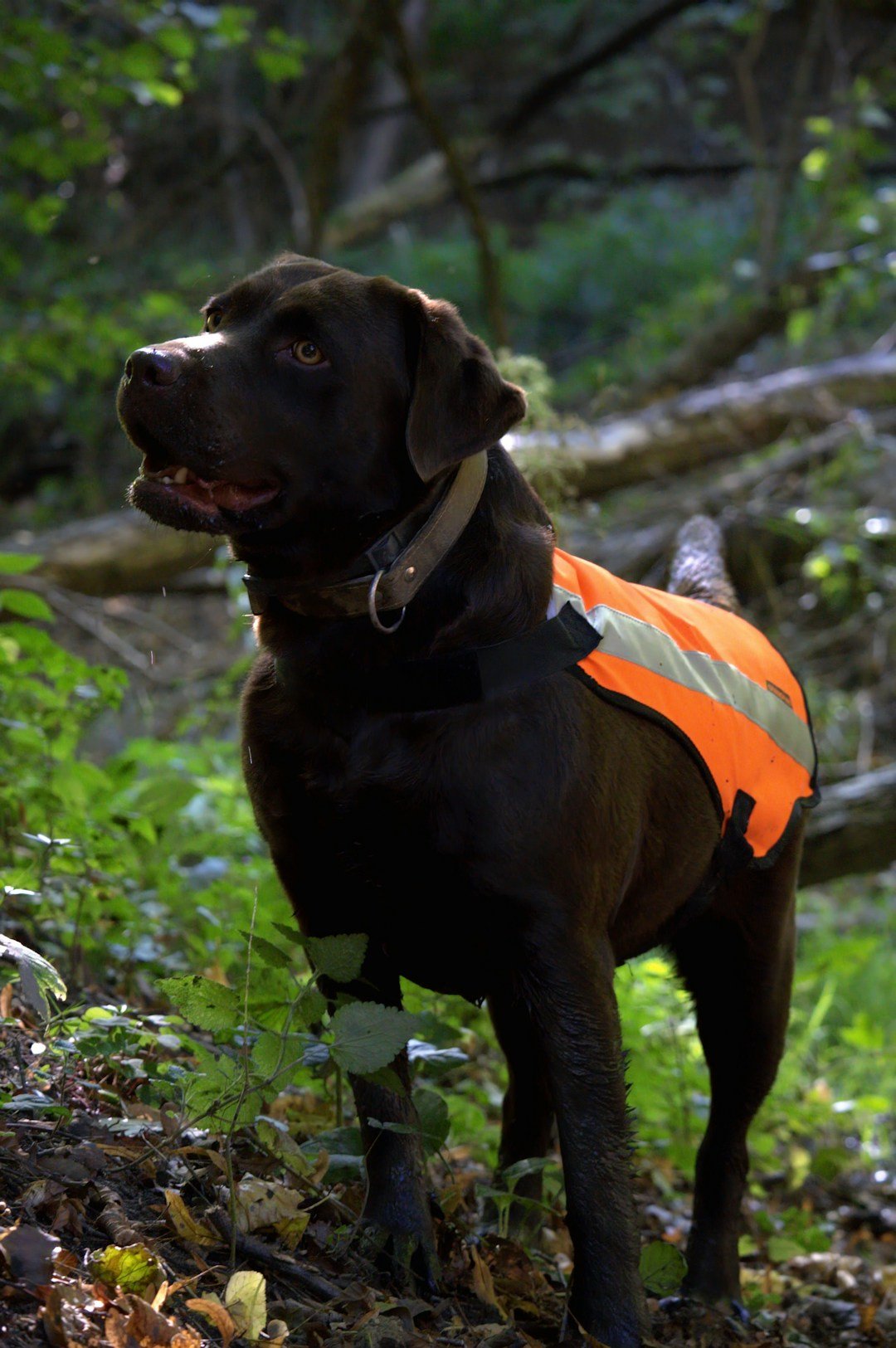
Because the vest relies on reflected light, it needs headlights or another beam to stand out at night. Mud, snow, and coat hair can cover the useful surface. Measure your dog’s chest and back, then use the current listing chart instead of guessing from breed or weight.
How should you choose gear for your dog?
- For unlit streets or trails: start with active light visible from several angles and add reflective material as backup.
- For long or dense coats: favor a vest or illuminated harness that sits on top of the coat.
- For rain-prone walks: check the current water-resistance instructions and dry charging ports fully before reconnecting power.
- For growing puppies: choose plenty of adjustment and check the fit before every walk during growth spurts; oversized gear can twist or catch a leg.
- For sensitive dogs: introduce the gear indoors with treats, then begin with a steady, low-intensity mode.
A good setup is layered without becoming cluttered: one secure leash attachment, identification, and one or two visible surfaces. If straps press together, limit shoulder movement, or make your dog freeze, scratch, or change gait, take the gear off and reassess the fit.
How do you check fit, charging, and wear?
Fit should be snug enough that the gear cannot rotate or slip over the head, with room to move and breathe normally. Follow the maker’s fit instructions, then inspect behind the elbows, across the chest, and around the neck after the first few walks. Redness, broken hair, damp skin, or reluctance to walk means something is rubbing or pressing.
Follow the charging and care directions for the specific product. Never charge wet gear or use damaged cables, ports, housings, or swollen batteries. Clean mud and road film from reflective panels, and retire anything with frayed straps, unreliable switches, or weakened closures.
Test new gear before you depend on it. Have another adult watch from a safe spot while you pass from several angles, or record a short phone video in your route’s usual lighting. Fur, clothing, or your own body can block more of the visible area than you expect.
When should you call a veterinarian after a road incident?
Bright gear cannot fix panic, lunging, or a strong chase response near traffic. For those dogs, choose quieter routes, keep the leash short near roads, and work with your veterinarian or a qualified behavior professional on a plan that addresses the behavior itself.
Further Reading
As an Amazon Associate, I earn from qualifying purchases.
Was the article helpful?