

The appointment is at ten. The carrier came out of the closet at nine forty, and your cat is now flat under the bed with her ears back. If that is your morning, the carrier is only part of the problem. The other part is that it came out twenty minutes before you needed it.
This is not a small problem. In one large owner survey, 38 percent of cat owners said that just thinking about taking their cat to the vet was stressful. A carrier your cat will tolerate can decide whether the appointment happens at all.
For routine vet visits, buy a hard carrier that splits in the middle and opens at the top. For a cabin flight, buy a soft bag that genuinely fits under the seat. If the car ride is what worries you, buy one of the few carriers that has been crash tested. Whichever you choose, bring it out weeks before you need it, because that matters more than the brand.
What Actually Matters in a Cat Carrier
Measure your cat, not the listing. Compare her length and shoulder height with the usable inside space, which is always smaller than the outside size on the box. She should be able to stand, turn around and lie flat. Bigger is not automatically kinder, though, because a cat with too much room slides around in the car.
Then look at how it opens, since this is where most carriers let their owners down. Look for a carrier with top and front openings, so you can lower a reluctant cat in through the top instead of pushing her through a narrow door.
The feature that matters most is one owners rarely think about: a carrier that splits in the middle, so the clinic can lift the top half off. Many cats are less stressed when they can stay in the bottom half for the exam. A top hatch is not the same thing as a removable top, so check how your model actually comes apart.
The base should be leak proof, with room for a towel she can grip. Cats urinate, vomit and shed in carriers. A hard plastic shell can be disinfected afterward, but fabric and stitched seams never really come clean. An accident soaked into a fabric lining needs a proper enzymatic cleaner rather than a scented spray, or the smell will come back.
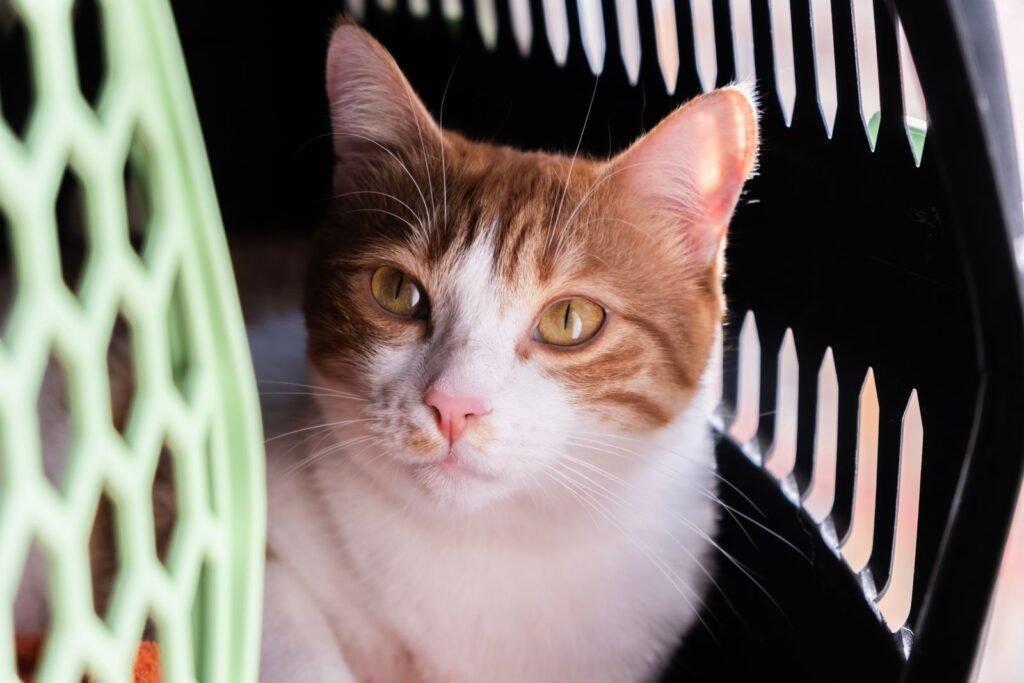
Finally, think about what she can see. A little privacy, with air still moving, can make the trip less stressful, which matters if your cat tends to throw up on car rides. You do not need to pay for that feature. A towel over three sides does the same job, as long as the vents stay clear.
Three Carriers for Three Different Trips
These three are not a ranking. Each one answers a different question, and the price gap is wide for a reason.


Product prices and availability are accurate as of the date/time indicated and are subject to change.
The Petmate Two Door kennel is the sensible default for ordinary vet visits. It runs about 24 by 17 by 14.5 inches, takes pets up to 15 pounds, and has a steel front door, a top hatch, and a moat in the floor that keeps fluid off the bedding. Its weakness is bulk. And 15 pounds is a ceiling, not a fitting guide: a long cat runs out of length before she runs out of weight.
The Sherpa Original Deluxe in medium is the one to buy if you are flying or walking any distance. It is 17 by 11 by 10.5 inches, weighs three pounds empty, has a firm floor insert, and opens at the top and the end. The tradeoffs are every soft bag’s. The sides flex when she leans on them, the fabric cleans badly, and a determined cat will work at a zipper until it gives.
The Sleepypod Air costs roughly four times the other two, so be clear about what the money buys. Not comfort, and not space: it is 22 by 10.5 by 10.5 inches, squashes to 16 for an under-seat fit, and takes cats up to 18 pounds. You are paying for independent crash testing. It is one of a handful of carriers on the Center for Pet Safety’s certified list, which is short enough to read in a minute. If that is not worth two hundred dollars, I would not argue.
Getting Your Cat to Accept the Carrier
A carrier that lives in the garage and comes out twice a year means trouble to your cat. So leave it out in a room she already uses, with her own bedding inside, and drop treats or catnip in it most days. Often the treats disappear overnight before you ever see her go in. Do not push or coax her toward it, because that makes a suspicious cat more suspicious. It takes weeks, and it works once the carrier has become part of her territory.

Carrier training is one of the few pieces of this advice tested in a controlled study. Twenty-two cats were split into a trained group and an untrained one. The trained cats showed clearly fewer stress signs on the car ride, and their vet exams were shorter. It was a small study, but in an exam room with a frightened cat on the table, a shorter exam matters.
A synthetic feline pheromone spray, used in the carrier and on the towel over it, may take a little of the edge off. It is one of the usual steps in getting your cat to the vet. It is cheap and has no real downside, but it does not replace weeks of leaving the carrier out.
If the appointment is tomorrow and none of that happened, start by shutting her into a small room with few hiding places, and move slowly. Do not chase her. Chasing is how people get bitten, and how cats learn to vanish at the sound of the closet door. If she will not walk in, cradle her and lower her through the top, or lift the top half off, settle her in the bottom and put it back on. A towel wrapped around her keeps her legs out of the way. If every visit goes like this, ask your veterinarian about calming medication before the next one. It is a normal request.
Getting There Safely
In the Car
Carry it in both arms, like a package you care about, rather than letting it swing from the handle. She will feel more secure. Use one carrier per cat, even for two cats who sleep together at home, because travel is not the time to test that friendship.
Then secure it. Belt a carrier into the back seat only if it has been crash tested. Every other carrier belongs on the floor behind a front seat, where it cannot tip or fly forward. It costs nothing and is the easiest thing here to get right. A cat loose in the car can end up under the pedals or out through an open door.
Never leave her in a parked car, whatever the weather. And do not open the carrier at a gas station or in a busy waiting room because she is crying. If she seems unwell, tell the front desk instead.
In an Airline Cabin
Treat airline approved on a product listing as marketing. Airlines set their own cabin rules, and they vary by airline, aircraft and route. Check the under-seat size, weight limit, booking rules and paperwork with your airline for your actual trip before you buy a bag. If your cat cannot stand and turn around in a bag that fits under the seat, do not squeeze her in to meet the limit. Look at other ways to get her there.
Medication for a flight is a conversation to have with your veterinarian weeks ahead, not the night before. Whatever you are given, try a dose at home first, so you know how your cat reacts before you are standing in an airport.
When a New Carrier Is Not the Fix
Sometimes the carrier gets the blame for something else. A cat who used to travel reasonably well and now fights hard may be sore somewhere, and what she is objecting to is being handled. If that change came with weight loss, more drinking, more hiding or trouble with her litter box, the vet visit matters more, not less.

In an older cat, that combination points toward an overactive thyroid gland (hyperthyroidism), chronic kidney disease or diabetes, and all three do better when they are found early. Between visits, leave the carrier out as furniture, so the next trip starts from a better place.
One thing cannot wait for an appointment. A cat going in and out of the litter box, crying and straining but passing little or nothing, may have a blocked bladder, especially if he is male. That urethral obstruction lets waste build up in the blood within a day or two and can disrupt the heart rhythm, and a complete urinary blockage can kill within about three days. Use whatever carrier you own, even the wrong one, and go to an emergency veterinarian now rather than waiting for morning.
This article is for educational purposes only and is not a substitute for professional veterinary care. Always consult a licensed veterinarian regarding your pet’s health and nutritional needs. As an Amazon Associate, Vet Explains earns from qualifying purchases.
Was the article helpful?