
Table of Contents
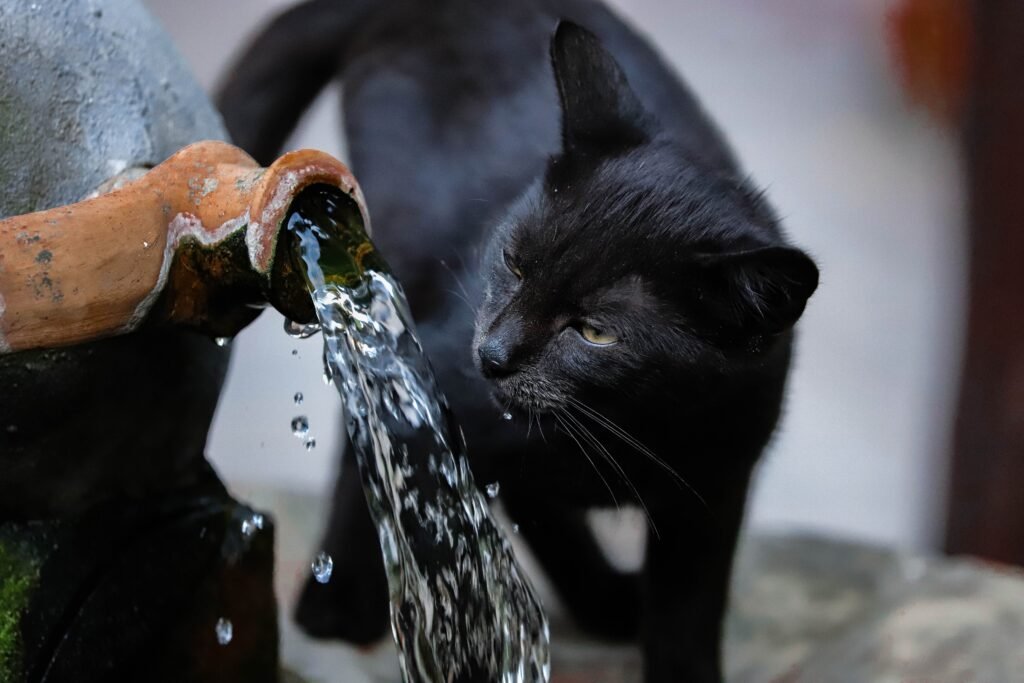
Most cats don’t drink enough water on their own, and a bowl that’s been sitting still since morning is part of the reason. Cats evolved from desert ancestors and rely heavily on moisture from food. Fed mostly dry kibble next to a plain bowl, they slide into mild chronic dehydration that is easy to miss.
A water fountain solves this by keeping the water moving and aerated, which cats generally find more appealing than still water. It won’t fix a genuine urinary or kidney problem on its own, but for a cat that’s a light drinker, it’s often the simplest change that gets more water into them.
Quick answer: The Veken 95oz Cat Water Fountain is the best value pick, with 5-stage filtration and a quiet pump for under $20. If you have multiple pets or want fewer refills, the PetSafe Drinkwell Platinum holds 168 oz and cuts refills down to about once a week.
Why Cats Often Don’t Drink Enough Water
That ancestry is why many house cats ignore a bowl entirely, even a freshly filled one. The usual explanation for fountains is that moving water reads as fresher and safer than standing water. That is an inference about behavior, not something feeding trials have demonstrated.
Senior cats and cats eating mostly dry food are especially prone to running low on water. Aging kidneys need more fluid to flush waste, and dry kibble carries far less moisture than wet food. If your cat falls into either group, a fountain is one of the easiest low-effort changes you can make at home.
What to Look for in a Cat Water Fountain
Not every fountain earns its keep. A few features are worth checking before you buy:
- Multi-stage filtration: look for at least a carbon filter to cut down on the odor and taste cats often reject.
- Quiet pump: a loud motor can scare off a hesitant cat before they ever try it, especially at first.
- Easy to take apart and clean: tight seams and hard-to-reach reservoirs are the most common reason fountains get cleaned less than they should.
- Enough capacity for your household: multi-cat homes generally do better with 90 oz or larger, refilled every few days.
- A stable, tip-resistant base: a fountain that gets knocked over defeats the purpose.
Plan on replacing filters every two to four weeks even if the water still looks clear. Cats are sensitive to taste and smell changes long before a filter looks visibly dirty, and a fountain running on a spent filter is barely better than a still bowl.
Our Top Picks for Cat Water Fountains
Both fountains below are widely reviewed, easy to find replacement filters for, and simple enough to clean weekly without a fight.
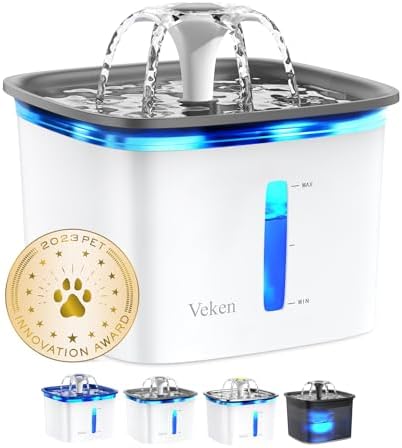

The Veken fountain is the easiest entry point for most households. At around $20 it uses a 5-stage filtration system and offers two flow settings. It holds close to 3 liters, enough for most single or two-cat homes to go several days between refills.
The PetSafe Drinkwell Platinum is built for bigger households or homes with both cats and dogs. Its 168-ounce capacity means less frequent refilling, and the adjustable flow control lets you dial in a gentler stream for cats that are wary of a stronger current.
Getting a Reluctant Cat to Use a Fountain
Keep the old water bowl out for a week or two after introducing the fountain rather than switching cold turkey. Most cats investigate the new sound and movement on their own timeline, and forcing the switch can just make them avoid both.
Placement matters more than people expect. A fountain tucked into a loud utility room, or set right next to the litter box, often gets ignored. One placed in a calm, central spot the cat already walks through tends to get used within days.
How Much Does a Cat Fountain Cost to Run?
Budget on $20 to $45 upfront depending on the model, plus replacement filters every two to four weeks, which usually run $10 to $15 for a multi-pack. The electricity cost is negligible, since these pumps use only a few watts.
Is a Fountain Worth It for Urinary Health?
For cats prone to urinary crystals or with a history of FLUTD (feline lower urinary tract disease), increasing water intake is one of the few useful things an owner can do at home. More dilute urine means less concentrated mineral buildup. How much a fountain adds is less clear: in a crossover study of healthy cats, urine was no more dilute after drinking from a fountain than from a bowl. [Grant, Journal of Feline Medicine and Surgery, 2010] A fountain is not a treatment for an active blockage or infection, and it won’t replace a prescription urinary diet if your vet has recommended one. It is still a reasonable, low-cost addition alongside whatever your vet has already advised.
Go to an emergency vet immediately if a male cat is straining to urinate, crying in the litter box, or making frequent trips with little or no urine coming out. This can mean a blocked bladder, which is life-threatening within 24 to 48 hours and cannot wait for a regular appointment. [Cornell Feline Health Center]
Further Reading
Why Is My Cat Peeing Outside the Litter Box? Common Reasons Litter box avoidance and low water intake can both point back to urinary tract irritation, so it is worth reading if you are seeing both changes at once.
Best Hairball Remedies for Cats Another everyday buying guide for a common cat wellness issue, useful if you are already reviewing what is in your cat’s daily routine.
Feline Lower Urinary Tract Disease (Cornell Feline Health Center) A deeper, vet-reviewed look at FLUTD itself if your cat has a history of it, including signs that need same-day veterinary attention.
This article is for educational purposes only and is not a substitute for professional veterinary care. Always consult a licensed veterinarian regarding your pet’s health and nutritional needs. As an Amazon Associate, Vet Explains earns from qualifying purchases.
Was the article helpful?