Dog paw cleaners keep the muddy part of a fall walk off your floors, furniture, and car. The most useful one is not the strongest cleanser or the largest cup. It is the tool your dog will calmly accept, that fits the paw correctly, and that you will actually rinse out afterward. For most homes that means a water-filled washer cup or a no-rinse foam with a soft brush.
Quick answer
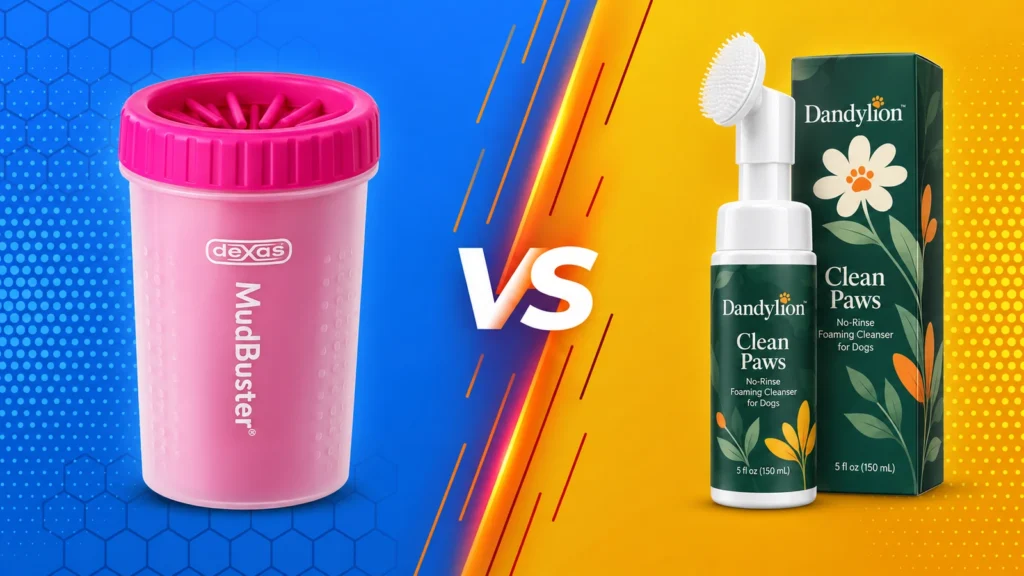
Choose the Dexas MudBuster Medium if your dog regularly comes home with visible mud packed around the pads and you want water to lift it away. Choose Dandylion Clean Paws if the paws are mostly dusty or lightly dirty and you want a fast, no-rinse routine by the door.
Sizing matters for the MudBuster. Dandylion works across paw sizes but is not a substitute when a paw needs a real water rinse. Price and availability sit in the table below and change often.
Why clean paws after muddy walks?
Mud is more than a housekeeping problem. It can hide small stones, burrs, grass awns, road grit, or a tiny cut between the toes. A short cleaning routine gives you a natural moment to look at each pad and nail. That is especially useful after wooded trails, gravel paths, wet fields, or salted sidewalks.
You do not need to scrub healthy paws after every brief trip outside. Over-washing and rough rubbing can irritate skin, particularly in dogs that already have sensitive feet. If the paws look clean, a dry towel may be enough. If there is visible dirt, use lukewarm water or a dog-specific product as directed, then dry carefully.
Store the cleaner, a clean towel, and a small treat by the entrance you use most. The best setup is the one you can repeat without chasing the dog through the house.
Paw washer cup vs. no-rinse foam
These two formats solve different versions of the same problem. A cup surrounds the paw with water and flexible bristles, which suits mud caked into the pads and lower fur. A foam puts cleanser straight onto the paw with no water to carry. Match the format to your dog’s coat, paw width, and tolerance for handling.


Dexas MudBuster Medium: best for water-based cleaning
The Dexas MudBuster Medium is a rigid cup with soft silicone bristles inside. You add a little lukewarm water, insert one paw, gently rotate the cup, remove the paw, and towel it dry. The medium model is listed for paws about 1.5 to 2.5 inches wide. Measure the broadest part of the paw while your dog is standing; a cup that is too narrow can catch fur or make the experience uncomfortable.
This is the stronger fit for dogs that splash through muddy yards, hike on wet trails, or have debris clinging around the pads. The contained cup keeps much of the dirty water off your hands and floor. The limits are equally clear. You need clean water, you must empty and rinse the cup afterward, and a dog who dislikes having a paw placed inside a container will need a slower introduction.
Dandylion Clean Paws: best no-rinse option
Dandylion Clean Paws dispenses foam through a built-in silicone brush. Massage the foam over the pads and between the toes, then wipe the paw dry. The formula is sold as fragrance-free and pH balanced, which can be appealing for households that avoid scented grooming products. Because there is no rigid opening, it also avoids the paw-width problem of a washer cup.
This is the more convenient choice for apartment entries, car cleanups, travel, and everyday dust. It is not a replacement for rinsing. If the paw has thick mud, a sticky substance, road salt, or something potentially irritating on it, use plenty of water first. Follow the label and avoid the eyes and mouth. Wipe the paw dry rather than leaving foam for your dog to lick off, and stop if the skin becomes red or uncomfortable.
A 5 fl oz bottle costs more than a simple water cup over time, so the foam earns its price only when that convenience actually changes how often you clean.
How to choose the right paw cleaner
Start with the dog, not the product. A calm dog with a short coat around the feet may accept either style. A nervous dog, one with long fur between the toes, or one with tender joints may dislike having the leg lifted and placed into a cup. The brush-on foam gives you more control over how far the limb moves, while a cup limits how much rubbing your fingers need to do.
Then think about cleanup. A reusable cup has to come apart easily enough to rinse and dry fully, and a foam brush needs its removable cover cleaned per the manufacturer’s directions. Check whether replacement silicone inserts are sold for the cup you are considering. Any tool left damp and dirty by the door will quickly become the least convenient option.
How to use a paw cleaner without a struggle
Introduce the tool when the paws are already clean and your dog is relaxed. Let your dog sniff it, reward that interest, touch one leg briefly, and stop. On the next practice, hold the paw for a second. Build toward the real cleaning motion over several short sessions instead of forcing all four feet at once.
Place a nonslip mat under the dog so lifting one paw does not feel precarious. Keep each leg in a natural position rather than pulling it forward or sideways. If your dog stiffens, growls, repeatedly pulls away, or seems painful, pause. Restraint can turn a minor chore into a lasting handling fear, and unexpected resistance can also be a clue that the paw hurts.
Use fresh lukewarm water for a cup, not hot water. Wipe or rinse away loosened dirt, reward the dog, and keep the first successful session short. You can clean the remaining paws after a short break.
Drying and checking paws matters
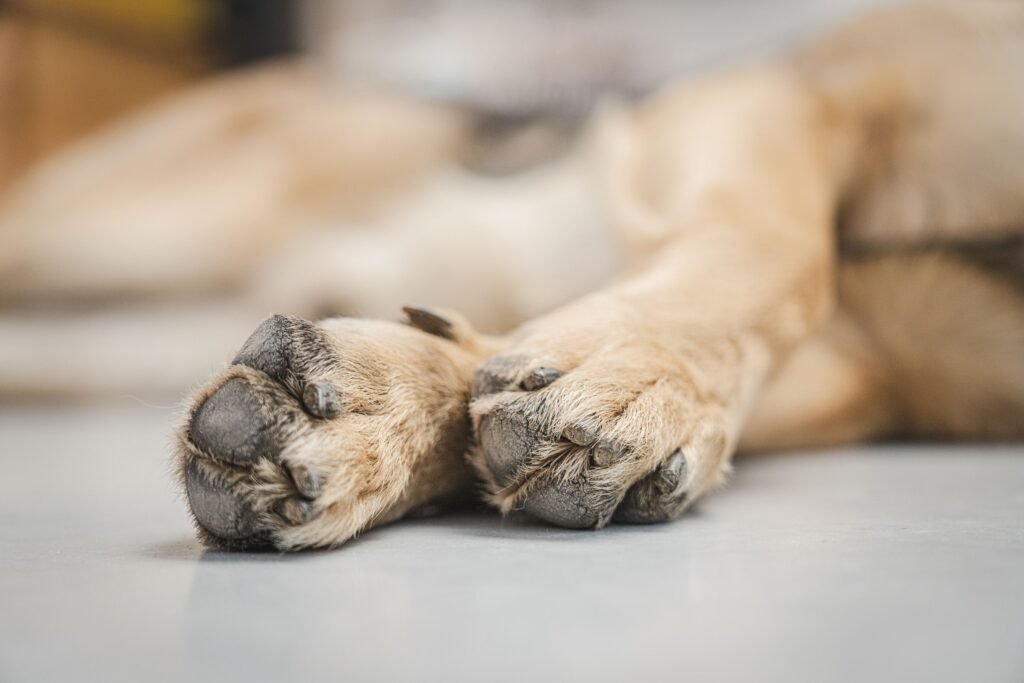
Dry between the toes as well as across the pads. Long fur can hold moisture and grit, so use a clean absorbent towel and gentle pressure rather than rapid rubbing. While the paw is in your hand, look for a split nail, torn pad, swelling, a seed head, an attached tick, or anything stuck between the toes. Compare it with the opposite paw if you are unsure whether a bump is normal.
Wash towels regularly. If several dogs share the setup and one has a suspected skin infection, use separate towels and ask your veterinarian how to disinfect reusable grooming tools safely.
When a dirty paw is more than dirt
A paw cleaner is for surface dirt, not treatment. Contact your veterinarian if licking, redness, odor, staining, swelling, or tenderness keeps returning, even when the paw looks cleaner after washing. Recurrent paw trouble has several possible causes, including allergies, infection, and injury, and reaching for a stronger cleanser can delay the examination that would identify which one it is.
Seek prompt veterinary care for ongoing limping, a deep or gaping cut, a torn nail, marked swelling, pus, a bad odor, or a burn. The same goes for bleeding that does not stop with steady direct pressure. If an object is embedded in the paw, leave it in place for the drive to the clinic. After contact with an unknown chemical, rinse with plenty of lukewarm water and call your veterinarian or a pet poison service.
Do not dig deeply between the toes, and do not pull the object out. Steady it so it cannot shift on the way to the clinic, keep your dog from licking the paw, and protect the area from further contamination. Road salt and ice melt are the cold-weather version of this problem. Wipe or rinse the feet as soon as you come inside. Call your veterinarian or a pet poison service if your dog swallowed more than a lick or two of ice melt, keeps vomiting, or seems unsteady or disoriented.
A practical shopping checklist
Before buying, confirm the exact model and size rather than relying on the product photo. For foam, read the full ingredient list and directions, especially if your dog has known skin sensitivities.
Look for a tool with no sharp seams that is easy to hold when your hands are wet. If you walk from a car rather than your front door, a leak-resistant container and a dedicated towel may matter more than a premium feature.
Most importantly, choose the gentlest routine that removes the actual dirt. A towel, water, and a one-minute paw check often do more good than an elaborate product used inconsistently.
Disclosure: As an Amazon Associate, VetExplains earns from qualifying purchases. This does not affect the price you pay or our product-selection standards.
Was the article helpful?