
Table of Contents
The foods most likely to hurt a dog are chocolate, xylitol, grapes and raisins, and onions or garlic. If your dog has eaten any of them, call your veterinarian or an animal poison control hotline now, before symptoms start. In the US that is the ASPCA Animal Poison Control Center, at (888) 426-4435 [ASPCA].
Several ordinary human foods are honestly risky for a dog, and for a few of them, how quickly you act is what changes the outcome.
Why Do Ordinary Foods Become Dangerous for Dogs?
Dogs process certain compounds very differently than people do, so foods that are completely safe for us can be toxic to them, sometimes in small amounts. Size matters too: the same amount of a toxin hits a small dog far harder than a large one.
This is why “just a little bit” of the wrong food is not always safe. How much matters depends on your dog’s size as much as on the food itself.
Which Foods Are Most Dangerous?
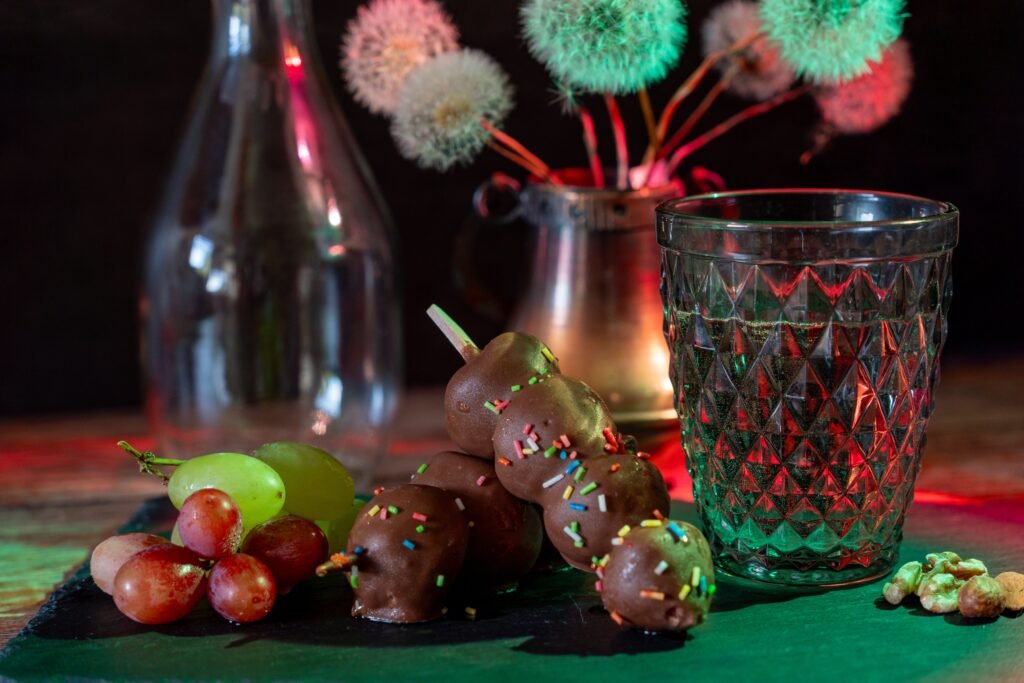
Chocolate contains theobromine, which dogs clear far more slowly than people do. Darker, more concentrated products, such as baking chocolate and cocoa powder, carry more of it per gram than milk chocolate. Signs range from vomiting and restlessness to a racing heart and, in serious cases, tremors and seizures [Merck Veterinary Manual].
Xylitol is a sugar alcohol sweetener used in many sugar-free gums, candies, mints, and some peanut butters. In dogs it can cause a rapid, dangerous drop in blood sugar, and at higher doses, liver damage [Merck Veterinary Manual]. It is one of the fastest-acting and most urgent items on this list.
Grapes and raisins can cause kidney failure in some dogs, and the amount that does it is unpredictable, so any amount is treated as a potential concern. The suspected cause is tartaric acid, which dogs excrete poorly, and its content varies from grape to grape [Merck Veterinary Manual]. That is exactly why we treat this one cautiously rather than trying to calculate a “safe” amount.
Onions, garlic, leeks, and chives damage a dog’s red blood cells, and raw, cooked, dehydrated, and powdered forms have all caused it. Signs of the resulting anemia, such as weakness, pale gums, and collapse, often appear several days after the meal rather than right away [Merck Veterinary Manual].
Which Other Foods Should Stay Out of Reach?
Macadamia nuts can cause weakness, loss of coordination, vomiting, and tremors in dogs, even in fairly small amounts [Merck Veterinary Manual]. Alcohol affects dogs much like it affects people, but at a far lower relative dose, and caffeine carries risks similar to the theobromine in chocolate [ASPCA].
Raw bread dough is a two-part hazard: it can expand in a warm stomach, and the yeast can produce alcohol as it ferments [Merck Veterinary Manual]. Avocado flesh is a milder concern for dogs than for birds and rabbits, but the pit is a real choking and obstruction hazard [Merck Veterinary Manual].
Fatty, fried, or rich table scraps can trigger pancreatitis, particularly in dogs prone to it [ASPCA]. Cooked bones can splinter and cause internal injury or obstruction far more easily than raw bones.
What Symptoms Should I Watch For After Possible Ingestion?
Symptoms vary by toxin, but common signs across many of these include:
- Vomiting or diarrhea
- Restlessness, tremors, or weakness
- A racing or irregular heartbeat
- Lethargy or collapse
- Loss of coordination or seizures
Some toxins on this list, especially xylitol and grapes, can cause serious internal harm before obvious symptoms appear. Waiting for symptoms is not the safe approach.

What Should I Do If My Dog Ate Something Toxic?
Contact your veterinarian or an animal poison control hotline immediately if your dog has eaten chocolate, xylitol, grapes or raisins, onions or garlic in a meaningful amount, or anything else on this list. Do that even if your dog seems completely fine. Early treatment is often far more effective than waiting to see what happens, and it sometimes includes inducing vomiting under professional guidance.
Do not induce vomiting at home without professional guidance, since it is not safe for every situation and every substance.
Having the packaging, or knowing roughly how much was eaten and when, is useful information to share with your veterinarian or poison control.

How Can I Prevent Accidental Ingestion?
Store chocolate, sugar-free products containing xylitol, grapes and raisins, and onions and garlic well out of reach. That includes bags and countertops your dog can get to. Be especially careful around holidays, when these foods are more likely to be out.
Make sure everyone in the house, including guests and children, knows what not to feed your dog.
Keep your veterinarian’s number and the poison control number above somewhere easy to find, so you are not searching for them in a moment of stress. A consultation fee may apply to a poison control call [ASPCA].
Further Reading
How to Choose Dog Food: A Veterinarian’s Guide This is the pillar guide to our nutrition cluster, useful for building safe everyday feeding habits once you know what to avoid.
Bland Diet for Dogs: Chicken and Rice Done Right Worth knowing for milder digestive upset once any toxin exposure has been ruled out by your veterinarian.
Holiday Foods Toxic to Dogs (Christmas Edition) Covers seasonal risks in more depth, useful ahead of gatherings and holidays when unfamiliar foods are more likely to be within reach.
Renal Diet for Dogs: What It Is and Why It Helps A helpful companion article, since several toxins on this list, including grapes and raisins, can affect the kidneys specifically.
People Foods to Avoid Feeding Your Pets The ASPCA Animal Poison Control Center maintains this list as a reference, and their poison control hotline is worth saving in your phone.
Was the article helpful?