
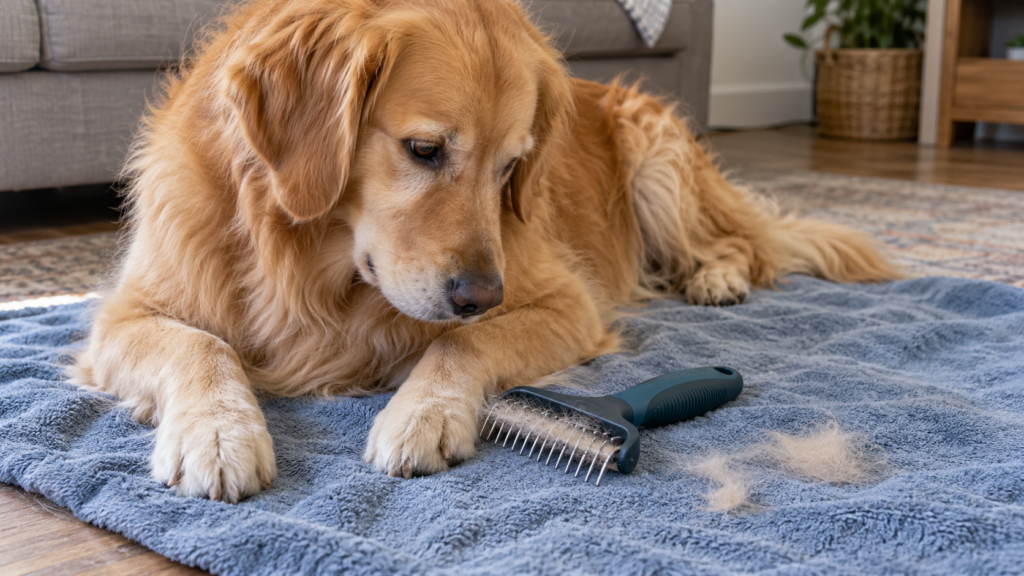
Most of the hair on the floor let go days ago. It stayed trapped in the coat until something lifted it out, and that lifting is the whole job of a deshedding rake, and its whole limit.
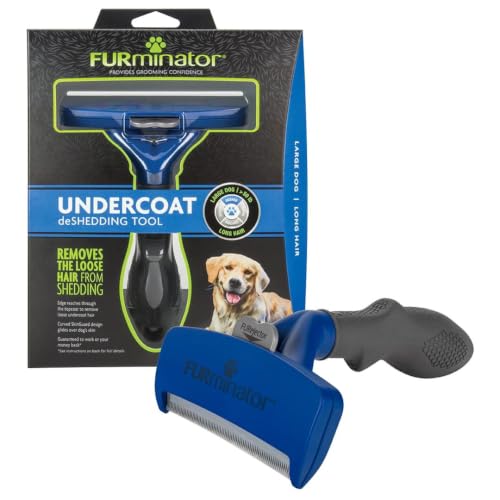
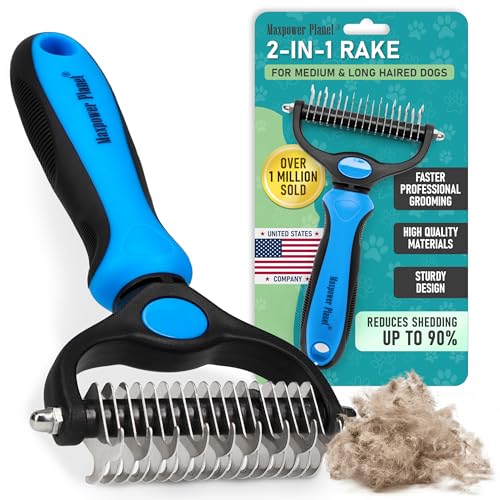
Two tools do that job well. The FURminator Undercoat deShedding Tool suits a thick double coat, and the Maxpower Planet Dog Grooming Rake suits lighter maintenance. Neither helps hair that is falling out because the skin underneath is unwell, so a grooming session really begins at the skin rather than at the drawer.
First, Decide Whether This Is Shedding at All
See a vet now: Bald patches, red or scabbed skin, constant scratching, or hair thinning evenly on both sides of the body point to a medical cause, not ordinary shedding. Intense itching with crusting on the ear edges, elbows and belly suggests sarcoptic mange (Greek sarx, “flesh,” and koptein, “to cut”). It spreads to people as well as to other dogs, so call your vet right away. Even thinning without any itching can point to a hormonal or other non-inflammatory cause. A deshedding tool fixes neither, and brushing inflamed skin makes it worse.
Ordinary shedding leaves the coat dense. Thinner, perhaps, and coming out in handfuls during a coat blow, but still covering, with no bare patches showing through. Hair loss wears much the same costume, and it comes in two patterns worth telling apart, because they lead in different directions.
Patchy, itchy hair loss over red or crusted skin usually comes from something inflammatory: fleas or mites, a skin infection, or allergies. When itching and hair loss turn up together, the itch is what gets investigated first. The quieter pattern is even thinning across both flanks and the trunk, over skin that looks unbothered, and that is the hormonal picture instead.
Roughly two thirds of hypothyroid dogs develop that symmetrical, non-itchy thinning, most often between 4 and 10 years of age, usually with lethargy and weight gain without a bigger appetite. Cushing’s disease causes a similar loss over the trunk and belly while sparing the head and feet, usually with more drinking and urinating, panting, and a pot-bellied outline. Neither is a grooming problem. I would rather hear a dog was a heavy but healthy shedder than that a rake had been worked across thinning skin for months.
What You Are Brushing Through, and What Reaches It
Once the skin checks out, the coat itself decides the tool. Most dogs carry two layers of hair: a coarser topcoat and a soft, dense undercoat beneath it. The undercoat insulates in winter, helps keep a dog cooler in summer, and is the layer that comes out in handfuls during the spring and fall coat blows. Every hair moves through a growth phase, a transition phase and a resting phase before it drops, so some shedding is always happening.
Where a dog lives shifts the pattern. Dogs kept mostly indoors under artificial light often shed at a steady rate all year instead of in two big seasonal waves, so constant shedding with no obvious off season is not, by itself, a warning sign. Double-coated breeds like Huskies, Labradors, German Shepherds and Golden Retrievers shed most because they carry the most undercoat. Single-coated breeds shed too, just less dramatically.
Diet gets more credit than it has earned. A substantial share of a dog’s daily protein goes into building skin and hair, and linoleic acid supports the sebum that keeps a coat glossy, but true deficiencies are uncommon in dogs eating a complete commercial food. When diet is the problem, it shows first as a dull coat or flaky skin rather than only as more hair on the floor.
So the question narrows to what reaches that undercoat without touching the skin, and not every brush sold as one does. A slicker brush is built for detangling and surface hair: it tidies a coat without emptying it. A rake or rounded-edge blade reaches through the topcoat and lifts loose undercoat out, releasing that hair rather than cutting it or scraping skin. Three features separate the good ones: a curved edge that follows the body instead of digging in flat, teeth spaced for the coat length, and a handle comfortable for several minutes. Cheap tools with sharp, uneven teeth nick skin and pull hair instead of releasing it.
Size is the other half, and the wrong size is a common reason a decent tool feels like a dud. Rakes and blades come in small, medium and large, and the size refers to blade width and tooth length rather than to the dog. A large-breed tool dragged across a Corgi covers the coat unevenly; an undersized tool on a Golden Retriever means far more passes. Coat length matters as much: Labs and Beagles, short-haired and dense-coated, do best with a shorter-toothed rake, while Huskies, Shepherds and Collies need longer teeth that get through the topcoat without snagging. The weight and coat-length recommendation on the packaging is there for this reason.
The Two Tools Worth Paying For
The FURminator Undercoat deShedding Tool is the one groomers reach for on double-coated breeds carrying a lot of loose hair. A curved stainless steel edge and a button that ejects collected hair save picking it out by hand every few strokes. It costs more, and on a Husky, Shepherd or Golden in mid coat blow it removes noticeably more hair per session than a standard rake.
The Maxpower Planet Dog Grooming Rake is the budget-friendly option that still gets real results. Its double-sided design handles both light deshedding and detangling, a reasonable single purchase for anyone who would rather not own two brushes. It will not out-perform the FURminator on a heavy-shedding double coat, but for regular maintenance it is an easy recommendation, and I would put the extra money into the FURminator only for a genuine double coat.
Product prices and availability are accurate as of the date/time indicated and are subject to change.
The Session, Start to Finish
Start with a clean, dry coat. Dirt trapped near the skin stops a tool gliding and turns a gentle stroke into a tug on tangled hair, so a bath with a deshedding shampoo, followed by a full towel or air dry, makes the next session noticeably more effective. With a new tool, a few sessions of two or three minutes let a dog get used to the sensation first.
Then work slowly, in the direction of hair growth, with even strokes. Pressing too hard or moving quickly raises the odds of skin irritation, especially over bony areas like the hips and spine, and lifts out less hair than a patient pass. Do not skip the underside. The back and sides get the attention because they show, but the belly, the legs and behind the ears hold just as much loose undercoat and mat more easily when ignored.
The stop cue is the tool itself. Once a session stops filling it, the extra passes are no longer collecting hair that was coming out anyway; they are working on coat the dog still needs. Stop the session there. A deshedding tool should never pull hard enough to make a dog flinch, and a flinch is a reason to set it down rather than finish the stroke.
The Rhythm That Keeps the Floor Clear
Short and frequent beats long and occasional. For most dogs, 5 to 10 minutes 2 or 3 times a week keeps loose hair under control, heavy shedders do better closer to daily, and most double-coated dogs need the upper end of that range through the coat blows. Labs and Beagles carry an undercoat under short hair, and benefit from the same rhythm even when the shedding is less obvious.
One distinction matters, because it is where good intentions do damage. Daily brushing with a pin or slicker brush is fine, since it works the surface. A rake that strips undercoat is more aggressive, so one or two deshedding sessions a week, with ordinary brushing in between, keeps the floor just as clear with less wear. And if the shedding changes pattern, or hair comes out alongside itching or irritated skin, that is a call to the vet rather than another trip to the pet aisle.
This article is for educational purposes only and is not a substitute for professional veterinary care. Always consult a licensed veterinarian regarding your pet’s health and nutritional needs. As an Amazon Associate, Vet Explains earns from qualifying purchases.
Was the article helpful?