
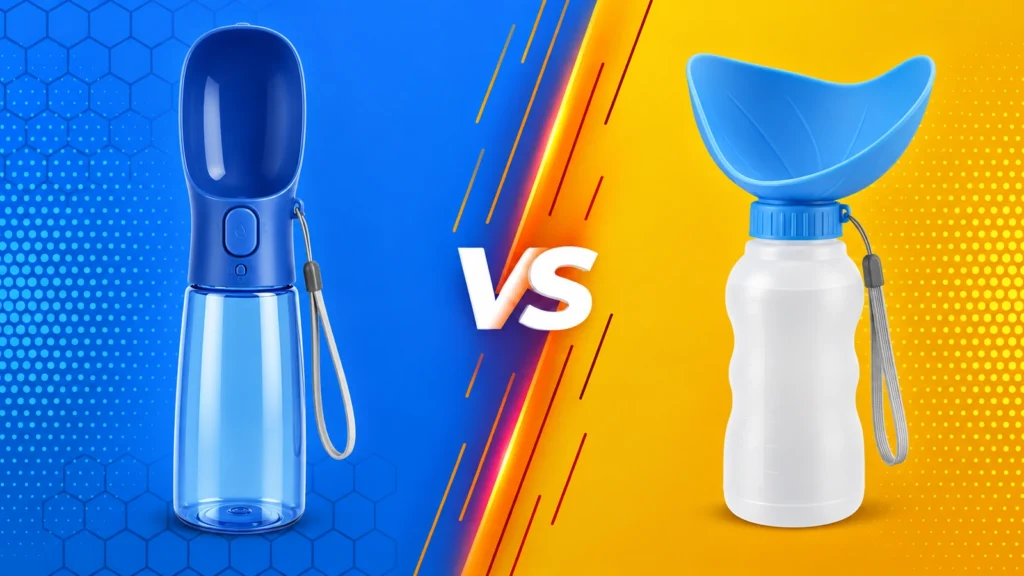
A portable dog water bottle keeps drinking water and a usable bowl in one hand. That is what makes water breaks realistic on neighborhood walks, hikes, road trips, and long waits at outdoor events. The best one is not the largest or the cleverest. It is the one you can open, offer, close, and carry without soaking the inside of your bag. For most families that comes down to two designs: a rigid bottle with a built-in trough, or a soft squeeze bottle whose top unfolds into a bowl.
Quick answer
Choose the Kalimdor portable dog water bottle if you want a compact, one-hand dispenser with a rigid drinking trough. Choose the lesotc dog water bottle if your dog is more comfortable drinking from a wider, bowl-shaped top and you do not mind squeezing the bottle to fill it.
Both were live on Amazon when checked, and prices and availability change, so compare the current listing before buying.
Why a portable dog water bottle earns its place
A shared public bowl is convenient, but you rarely know when it was last cleaned or what has been in it. Carrying your own water also means you are not relying on puddles, ornamental ponds, or slow-moving natural water. Leptospira bacteria survive for long periods in surface water such as swamps, streams, and rivers, and infection often spreads through contaminated water. The name is Greek and Latin for thin coil, the shape of the organism under a microscope.
Warm, stagnant lakes and ponds are also where blue-green algae blooms form. A bloom can look like blue-green or red-brown scum, mats, or foam, or the water can smell of rotting plants. There is no antidote once a dog is poisoned. If your dog drank from or swam in open water you are unsure about, rinse the coat with fresh water and drive to a veterinary hospital. Do not wait to see how the day goes.
One bottle also saves packing a separate flask and a collapsible bowl, and some let unused water drain back into the reservoir, which cuts waste.
Kalimdor vs. lesotc at a glance
The right choice depends on how your dog likes to drink and how you carry gear. Use the table for a quick check, then read the fit notes below.


Kalimdor: a one-hand rigid bottle
The Kalimdor portable dog water bottle combines a 19-ounce plastic reservoir with a narrow trough. A button releases water into the trough, and the listing describes a return-water function for unused clean water. The locking control and wrist strap make it practical for short walks and day trips when you want to work the bottle one-handed.
Its main tradeoff is the trough shape. Dogs with broad muzzles, or dogs that strongly prefer a normal bowl, may find a narrow channel less inviting. Offer the bottle at home first, without pressure, so you are not discovering that when your dog is hot and tired.
lesotc: a squeeze bottle with a fold-up bowl
The lesotc dog water bottle uses a soft reservoir with a fold-up bowl at the top. The live listing showed a capacity around 17.6 to 18 ounces. Squeezing the bottle moves water into the bowl, so dogs get a wider drinking area that feels more like a familiar travel bowl.
That wider top can help eager drinkers and larger muzzles, but a soft bottle behaves differently in a packed bag. Check that the valve is closed, keep it away from sharp objects, and give it a squeeze test over a sink before every outing.
What matters when choosing a bottle
Start with the drinking surface, not the color. A deeper or wider bowl usually gives a large dog more room, while a narrow trough is lighter and quicker for a small or medium dog. Check the valve as well, because you should be able to stop the flow deliberately and confirm the lock by sight or touch.
Cleaning comes next. Anything that traps moisture or cannot be reached with a small brush is hard to keep fresh. Persistent odor, discoloration, cracking, a sticky valve, or a damaged seal are reasons to replace the bottle rather than stretch one more season out of it.
Match the carrying method to the outing. A wrist strap may be enough for a short walk, but for a hike, or a road trip with your dog properly restrained, a bottle that sits upright in an outside backpack pocket is easier to monitor. No leakproof claim removes the need to test the bottle yourself, especially before packing it beside a phone, medication, food, or documents.
Capacity: bring enough without guessing
Water needs shift with body size, activity, temperature, humidity, diet, age, health, and medications. A cool twenty-minute walk with a small dog is not the same as a long hike with a large, active dog. A roughly 18- to 19-ounce bottle is a convenient unit, but it may be only part of what you carry.
Offer water at sensible breaks, before your dog is frantic to drink. For longer trips, carry extra clean water in a separate container and treat the portable bottle as the dispenser. I would rather someone carry a second bottle they never open than ration the first one on the way back. If your veterinarian has recommended a fluid restriction, or is monitoring a heart, kidney, hormonal, or urinary condition, follow that individual plan rather than general travel advice.
How to introduce and clean the bottle
Practice on a calm day at home. Fill the bottle with the same water your dog usually drinks, open the trough or bowl, and let your dog approach with the bottle held low and stable. Some dogs drink immediately; others need several short, low-pressure introductions. Never squirt water toward the face or push the muzzle into the bowl.
On the road, tip out water that has collected dirt, plant material, or heavy saliva, and do not put visibly dirty water back in the reservoir for storage. After the outing, empty the reservoir and wash every food-contact surface according to the manufacturer’s directions. Give the valves, threads, silicone seals, and folds particular attention, because that is where moisture lingers. Warm water and ordinary dish soap suit most hand-washable plastic, but the product instructions decide what may go in a dishwasher. Rinse until no soap film remains, air-dry the bottle open and disassembled, and start the next outing with fresh water rather than yesterday’s.
When thirst or heat signs need a veterinarian
A travel bottle supports normal hydration. It is not a treatment for heat illness. If your dog is struggling in the heat, stop and get out of the sun. Start cooling straight away by wetting the coat with cool water, then drive to the veterinary hospital with the air conditioning aimed at your dog. Cooling on the way matters more than arriving dry.
Heatstroke is a medical emergency that needs intensive care. A dog’s normal body temperature runs about 100.5 to 102.5 degrees Fahrenheit, and heatstroke begins around 105. Offer small chances to drink only if your dog is alert and swallowing normally. Do not force water into the mouth, and do not delay the drive while trying to make a dog finish a bottle.
Seek urgent veterinary help
Heavy or worsening panting, weakness, stumbling, collapse, vomiting, diarrhea, confusion, seizures, or gums that look unusually bright red, pale, gray, or blue can signal an emergency that needs immediate veterinary care. Call a veterinarian or emergency hospital for guidance and begin transport.
A marked new increase in thirst or urination outside the context of exercise or warm weather also deserves a veterinary appointment. The bottle can help you observe how much your dog drinks, but the pattern matters more than the brand of container.
A practical shopping checklist
- Your dog can comfortably reach the trough or bowl.
- The capacity matches the outing, with backup water for longer trips.
- The bottle fits your hand, cup holder, backpack pocket, or walking bag.
- The material is intact and free from persistent odor or damage.
The most dependable choice is the bottle you have tested, cleaned, filled, and actually remembered to bring. Pair it with shade, a cool surface to rest on, shorter routes in warm weather, and permission to turn around when your dog says the outing is enough.
This article is for educational purposes only and is not a substitute for professional veterinary care. Always consult a licensed veterinarian regarding your pet’s health and nutritional needs. As an Amazon Associate, Vet Explains earns from qualifying purchases.
Was the article helpful?