
If you are standing in the pet aisle holding two bottles, here is the short version. Most dogs need a plain, neutral pH cleaner, used after swimming or a bath, and on a regular schedule only if their ears are prone to trouble. A drying flush suits dogs whose heavy ears trap moisture. Wipes suit the dog who will not let you pour liquid into an ear at all. None of these treats an infection, and that difference is the whole point of this article.
Ear trouble is common enough to be worth heading off. In a large sample of dogs seen in general practice, just over seven in every hundred were diagnosed with ear inflammation in a single year. Owners who avoid that are rarely the ones cleaning the most. They are the ones cleaning the right amount, with a product suited to their dog, and stopping when the ear tells them to.
What a Dog Ear Cleaner Actually Does
A cleaner has two jobs. It softens and floats out wax and debris, and it leaves the canal drier than it found it. The first job is the work of ceruminolytic (from the Latin cera, wax, and the Greek lysis, a loosening) ingredients, which break up wax so your dog can shake it loose. The second is the work of mild drying agents, because a warm, damp canal is where yeast and bacteria get comfortable.
The bottles are not interchangeable. In laboratory testing, otic products differed widely in how far they spread through wax and how much of it they dissolved. A cleaner that cannot get through the debris in a waxy ear is not cleaning anything.
What no cleaner does is cure an infection. In dogs already receiving ear medication, adding a chlorhexidine and Tris-EDTA cleaner clearly reduced the bacteria and inflammatory cells seen under the microscope, yet the ears did not look better than the placebo group after two weeks. That can be worth doing alongside treatment when your vet asks for it. It is not a substitute for it.
Tris-EDTA earns its place for a different reason. In laboratory testing it showed antimicrobial activity of its own against the organisms commonly found in infected dog ears, and it is being studied as a way to help antibiotics work against resistant bacteria. It is also the cleaner ingredient vets choose when rod-shaped bacteria turn up on an ear swab, which is why your vet may hand you a flush rather than just a wash when an ear has been a problem before.
Which Dogs Actually Need Routine Cleaning
Ear shape decides most of this, and your dog was born with theirs. Compared with breeds that carry their ears upright, breeds with pendulous or V-shaped drop ears had close to twice the odds of ear inflammation. Basset Hounds carried nearly six times the odds of a crossbred dog, and Golden Retrievers carried more than twice.
Water is the other big one. A dog who swims, or who gets bathed often, is a dog whose canals stay wet. A clean and dry after each session in the water does more good than any fixed routine.
Skin disease sits underneath more ear problems than owners expect. In a series of a hundred dogs with ear inflammation, allergic skin disease was the single most common underlying cause. If your dog’s ears flare every spring and the feet are itchy too, the ears are a symptom rather than the disease, and a food reaction is one of the possibilities worth working through.
And some dogs need nothing. A dog with upright ears, healthy skin and no smell has a canal that is cleaning itself. Add that dog to a weekly flushing routine and you will create the irritation you were trying to prevent.
Reading the Label Before You Buy
Start with pH. A neutral pH wash is the right default, because a neutral cleaner is the least painful in an ear that is already inflamed, and you will not always know that it is. Save the acidic and strongly drying formulas for dogs who genuinely stay damp.
Alcohol is the ingredient that catches people out. It dries well, and it stings. If the canal is already red and sore, an alcohol heavy product will hurt, and your dog will remember it the next time the bottle comes out. The safer habit is to leave cleaners containing alcohol or hydrogen peroxide on the shelf.
Then look at what the product is for. A plain cleaner is maintenance. A Tris-EDTA or chlorhexidine flush is maintenance with a bit more muscle, worth choosing with your vet for a dog whose ears keep flaring. Anything containing hydrocortisone or an antibiotic has stopped being a cleaner and become a medication, and that is your vet’s call rather than a shelf decision.
Skip home remedies such as vinegar dilutions. They are cheap, they are popular online, and they irritate an ear that is already sore.
Compare These Dog Ear Cleaners
These three cover the shapes the problem usually takes. Epi-Otic Advanced is the neutral pH routine wash, the one I would pick for a healthy ear that simply gets wet. The Veterinary Formula Clinical Care Ear Therapy Cleaner is the alcohol free budget option, which matters if you are cleaning two or three dogs on a schedule. The Pet MD ear wipes handle the outer ear and the folds, and they are the honest answer for a dog who will not tolerate a bottle near the ear.


Buy for the ear in front of you rather than the strongest product available. A good routine with a gentle wash beats a powerful flush your dog fights you over every time.
How to Clean an Ear Without Making It Worse
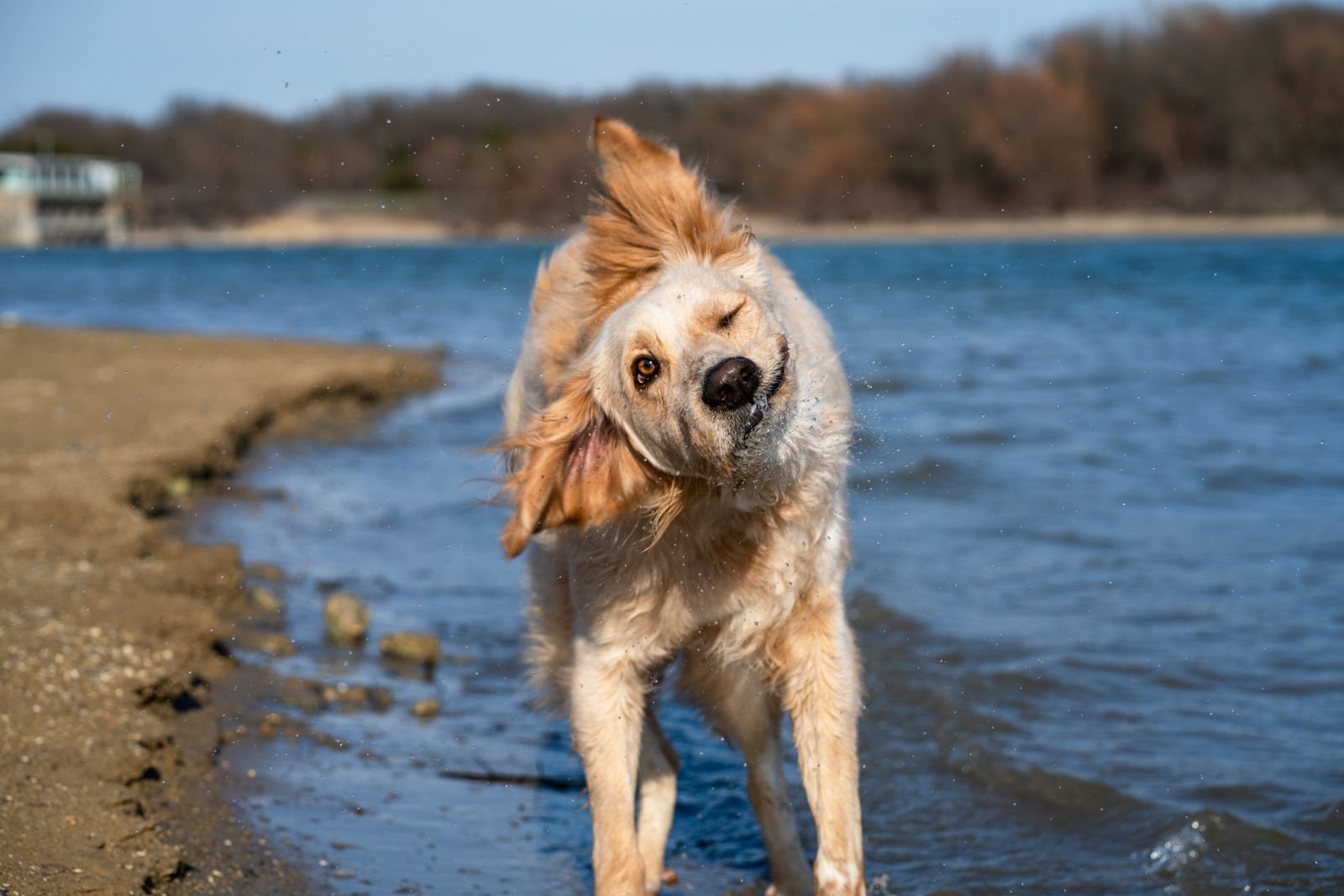
Technique matters more than the brand. Fill the canal with cleaner, resting the nozzle at the opening rather than pushing it in and squeezing hard, because a sealed, forceful squirt could rupture the eardrum. Massage the base of the ear until you hear a wet squelch. Then step back and let your dog shake, because that shake is what loosens the debris and brings it up where you can reach it. Wipe only what you can see, with gauze or a cotton ball.
Cotton buds have no place in a dog’s ear. The canal turns a corner, so a bud pushes wax around that bend rather than removing it. A cotton ball on your fingertip goes about one knuckle deep, and that is as far as you need to reach.
Frequency is where good intentions go wrong. The researchers behind that practice wide study specifically warned against overzealous ear cleaning. For a dog prone to ear trouble, maintenance cleaning every one to two weeks is a common schedule, plus a clean whenever the ears get wet. A healthy, normal ear needs cleaning only when you can see dirt or debris. Daily cleaning of a normal ear is not thoroughness. It is a slow irritant.
Build the habit while the ear is healthy, the same way a dog learns to accept having their nails done or having their teeth brushed. A dog who has had their ears handled kindly since puppyhood is a dog your vet can actually examine when something goes wrong.
When Cleaning Is the Wrong Move
Put the bottle down if the ear is painful to touch, if there is dark or yellow discharge, or if there is a smell you can notice across the room. Those ears need looking into with an otoscope first, and your vet will want to take samples before anything is flushed through them. Clean first and you wash away the evidence that decides the treatment.
There is a structural reason for caution too. In that series of a hundred affected dogs, the ear canal had narrowed in well over a third, and the eardrum was perforated in a quarter of them. A perforated tympanic membrane (from the Greek tympanon, a drum) means the fluid you pour in does not stay in the outer ear. Many ear products can damage hearing and balance once they get past the eardrum, which is why no one should flush an ear they have not been able to see inside.
Recurrence is a message rather than a cleaning failure. Nearly two thirds of those dogs had ears that kept coming back. A pattern like that points to something underneath, most often an allergy or the ear’s anatomy, that no cleaner reaches. If you are cleaning a dog’s ears constantly to stay ahead of a smell, the cleaner is not the thing that needs changing.
Some signs mean the problem has moved past the outer ear into the middle or inner ear, where infection reaches the balance system and the facial nerve. If you see any of the signs below, do not put anything into that ear, and go to a vet the same day.
- 01
Head tilt
The head stays tipped to one side
- 02
Stumbling or circling
Your dog loses balance or walks in circles
- 03
Flicking eyes
The eyes dart side to side or round and round on their own
- 04
Sudden deafness
Your dog stops responding to sounds they normally react to
- 05
A drooping face
One side cannot blink, or the lip hangs on that side
This article is for educational purposes only and is not a substitute for professional veterinary care. Always consult a licensed veterinarian regarding your pet’s health and nutritional needs. As an Amazon Associate, Vet Explains earns from qualifying purchases.
Was the article helpful?