
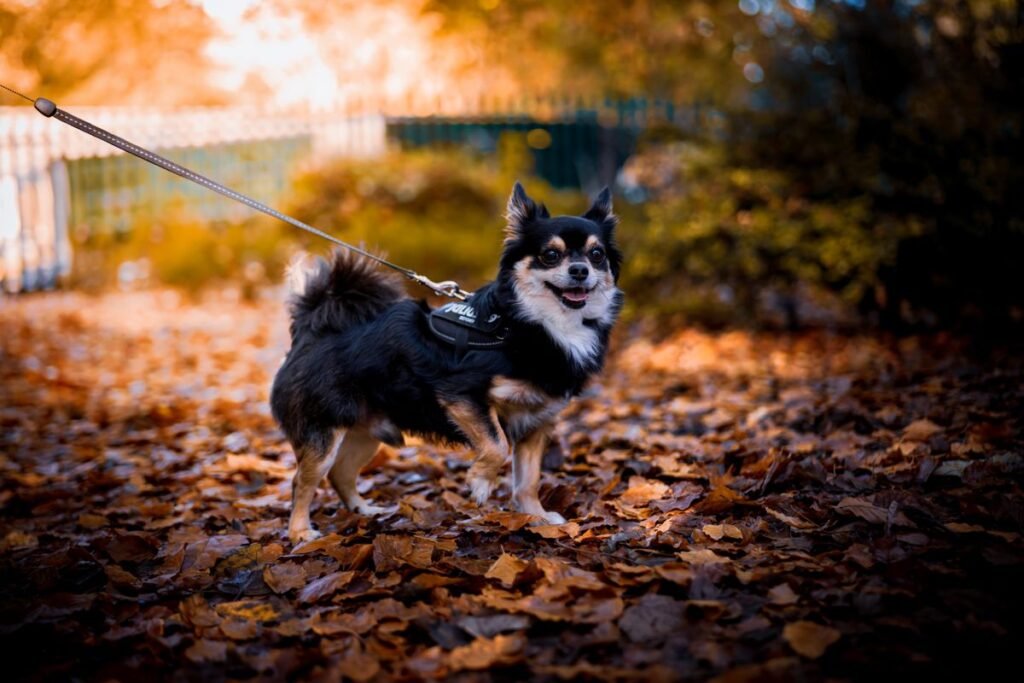
Your dog hits the end of the leash and the next twenty minutes are spent being towed down the sidewalk. Somewhere between the third lunge at a squirrel and the ache in your shoulder, a different harness starts to look like the answer. It partly is. Of all the gear sold for this problem, the design with real measurements behind it is a harness you clip the leash to at the chest. In a controlled comparison, a front-connection harness cut the pulling force a dog generated compared with a standard neck collar, and a metal prong collar did no better.
A plain back-clip vest is a different story, which is worth saying early because it is what most people already own. So the decision has three parts. Which attachment point your dog needs, whether the harness fits the shape of your dog, and whether the pulling is a training problem at all.
What a Front Chest Clip Actually Does
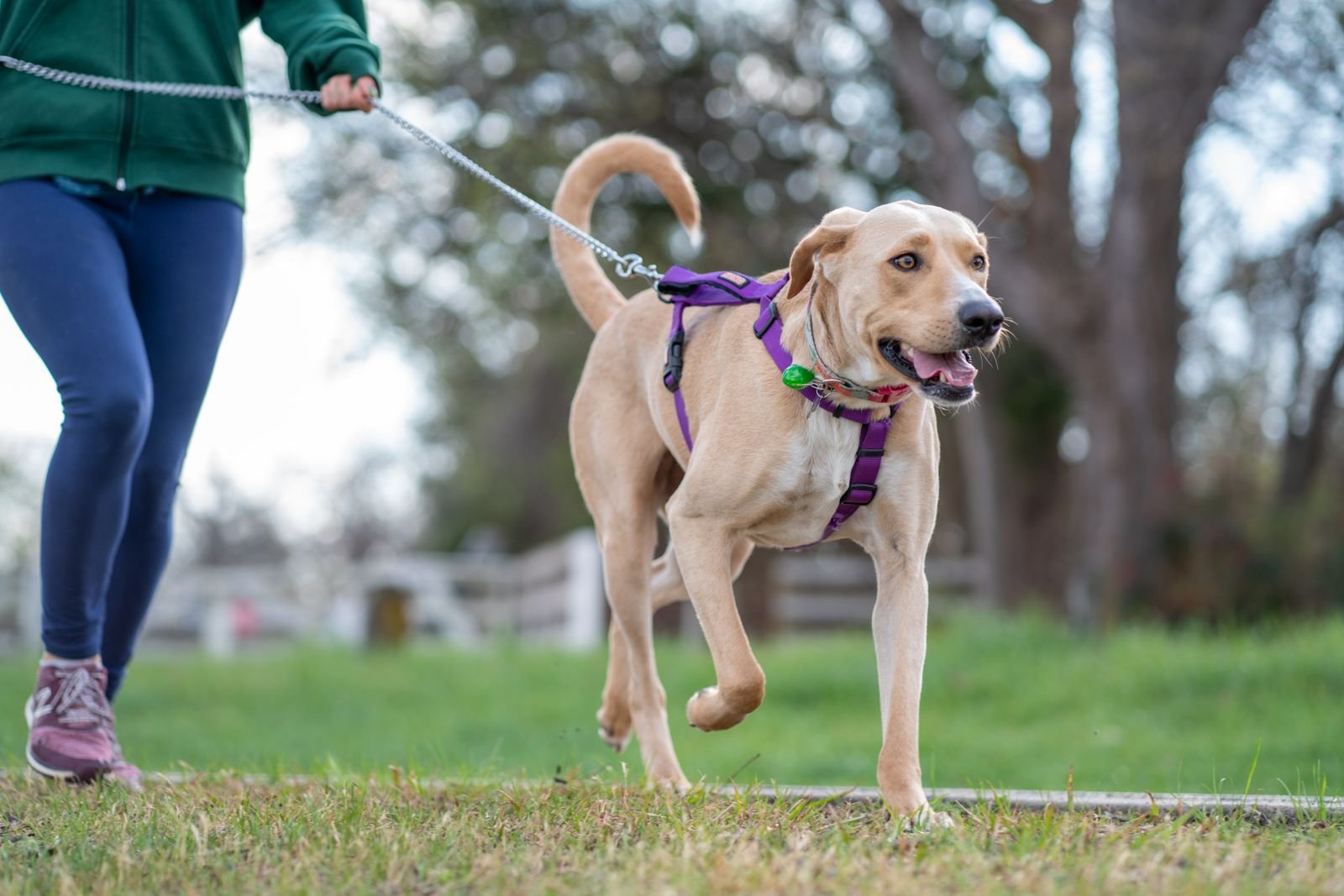
Picture where the force goes. With the leash on your dog’s back, every pull runs down the spine and into the strap. The harder you brace, the harder your dog leans in. Dogs push against steady pressure rather than yield to it, which is why a back-clip harness can feel like holding a rope tied to a small tractor. Move the attachment to the center of the chest and the geometry changes. A pull now turns your dog’s shoulders back toward you instead of driving them forward.
That difference is measurable. It came from walking twenty-three dogs on four setups with a strain gauge on the leash. For a tool that only changes where the leash sits, that is a lot of return.
What it will not do is teach your dog anything. A harness changes the mechanics of one walk, not what your dog believes about leashes. A dog rewarded by forward motion for two years still thinks pulling works. I would treat a no-pull harness as the thing that makes training possible, not the thing that replaces it.
There is a second reason to get the leash off the neck. When a dog pulls against a collar, the pressure on the neck raises intraocular pressure, the fluid pressure inside the eye. The same force applied through a harness does not. That matters most for dogs with glaucoma, thin or damaged corneas, or recent eye surgery, and it is one of the few places where the collar question is genuinely medical. The same logic applies to flat-faced breeds with narrowed airways, the brachycephalic breeds, where neck pressure lands on a windpipe already working harder than it should. Brachycephalic comes from the Greek brachys, “short,” and kephale, “head.”
Front Clip, Back Clip, or Both
A back clip is the easiest harness to live with. Nothing crosses the shoulders and the leash never tangles in the front legs, so for a dog who already walks politely it is the comfortable default. It is also the right choice for canicross and anything else where you want your dog to pull on purpose. What it is not is an anti-pull device. Dogs restrained by a back-connection harness pulled harder and for longer than the same dogs on a neck collar when a food treat was the lure. If you bought a padded vest hoping it would stop the dragging, that is why it did not.
A front clip takes more getting used to. The leash sits at the breastbone, so for the first few walks it can drift under a front leg. Keep a little tension on it and walk slightly ahead of the shoulder. Most dogs adapt within a week, and the payoff is that correcting a lunge becomes a turn of your wrist rather than a tug of war.
For most households the sensible purchase is a harness with both rings. Use the front for busy streets and training sessions, and the back for quiet trails once the walk is going well. A double-ended leash clipped to both points gives the finest control of all, and it is worth the fiddling for a strong dog.
One thing a walking harness is not is a car restraint. A seatbelt tether clipped to a nylon walking vest gives you the feeling of safety without the engineering. A crash-tested car restraint is a separate purchase with separate testing behind it.
Measuring and Fitting It
Buy by measurement, never by weight. Two dogs at forty pounds can need completely different harnesses if one is a barrel-chested bulldog and the other a deep-chested hound. Put a soft tape around the widest part of the chest, just behind the front legs. Measure again around the base of the neck where a collar would sit. If your dog falls between sizes, size up when the chest is the limiting measurement and down when the harness threatens to slide.
Once it is on, you should be able to slide two fingers flat under every strap without forcing them. Look at the front from eye level. A strap running straight across the points of the shoulders sits on the joint itself, while a Y-shaped front leaves the shoulder free to swing. Harnesses do measurably reduce how far the shoulder extends, and the designs sold as non-restrictive reduced it more than the restrictive ones. Treat the marketing label as noise and trust what you see on your own dog.
It is worth knowing that the evidence base here is thin. Most published work on dog-worn equipment covers pressures, leash forces, gait, and eye pressure, with little on long-term health risk. That is a reason to watch your own dog rather than the packaging.
So check the obvious things in the first week. Your dog should take a full normal stride, lower their head to sniff, lie down, and turn around without the harness bunching. Rubbing shows up first in the armpits, as thinned fur or pink skin. A new limp after a long walk deserves attention rather than a tighter buckle. Stiff, arthritic senior dogs often object to anything lifted over the head, and a step-in style they can walk into on the floor goes on more easily.
Compare These No-Pull Harnesses
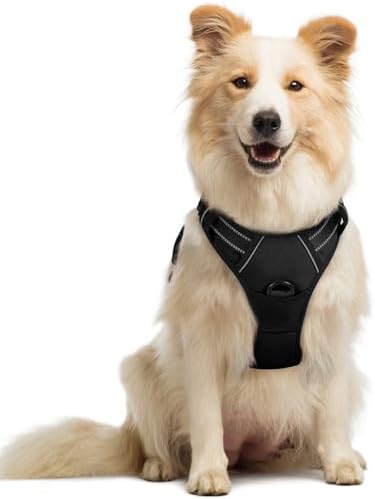
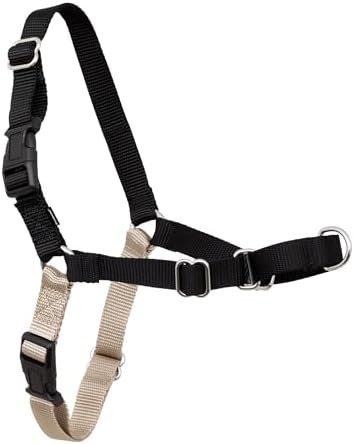
These three cover the useful range. The rabbitgoo is the budget all-rounder, a padded vest with front and back rings and the largest review volume of the three. The PetSafe Easy Walk is the specialist, a front-only chest loop that tightens gently across the shoulders. It is the closest thing on the shelf to the setup used in the pulling-force research. The Ruffwear Front Range is the premium everyday harness, foam padded with four adjustment points, an ID pocket, and reflective trim.

Fit beats brand every time. A cheap harness that sits properly on an awkwardly shaped dog is worth more than a premium one that rubs behind the elbows. I would rather buy twice from a listing with honest measurements and a real return policy than settle for something that almost fits.
Think about what else your dog wears on the same walk. Reflective trim on a harness helps, but on an unlit road it is no substitute for dedicated reflective dog gear for dark walks. If your dog also wears a raincoat over the harness, check that the leash port lines up with the ring you actually use. Otherwise the coat takes the pull instead of the harness.
Introducing It Without a Fight
Do not let the first wearing be the first walk. Leave the harness on the floor for a day and feed a few treats off it. Then drape it over your dog’s back for three seconds and take it straight off again. Fasten one buckle, reward, unfasten. Two or three of these sessions over a couple of days is usually enough, and the point of going slowly is that a dog who finds the harness boring will not fight it later.
The first outing should be short, familiar, and dull. Watch the gait rather than the scenery. A dog adjusting to a front clip may paw at the leash or step over it. A dog in a badly fitting harness will shorten their stride, pin their ears, or simply plant. Those look similar in the first minute and completely different by the fifth.
Afterward, hang the harness open so the padding dries, and run a thumb along the chest and armpit straps for grit. Sand and dried mud turn webbing into sandpaper, so clear it out before it rubs.
When Pulling Is Medical, Not Behavioral
Almost all leash pulling is enthusiasm. The version worth a phone call is the sudden change. A dog who walked beautifully for years and now lags behind or stops partway, pulls only to get home, or gags and retches whenever the leash tightens is telling you something. New gear does not explain a new behavior. Pain, breathing trouble, and failing vision all change how a dog moves on a leash.
One pattern should move you from a shopping decision to a veterinary one. A dry, honking cough that worsens when the neck is pressed can point to tracheal collapse, a weakening of the cartilage rings that hold the windpipe open. Excitement tends to make it worse, and no collar or harness fixes it. Book an exam rather than experimenting with equipment, because the cough is about the airway, not the hardware.
Go to an emergency vet now if your dog collapses on a walk, is struggling to breathe at rest, or has pale, blue, or grey gums. Those signs mean the body is not moving enough oxygen, which is an emergency in its own right, and no change of equipment will fix it.
For every other dog, this is a straightforward purchase. Measure first, start on the front ring, keep the early sessions short and boring, and look at the shoulders and armpits for the first week. A harness that fits is one of the few bits of gear that genuinely makes the walk better for both of you.
This article is for educational purposes only and is not a substitute for professional veterinary care. Always consult a licensed veterinarian regarding your pet’s health and nutritional needs. As an Amazon Associate, Vet Explains earns from qualifying purchases.
Was the article helpful?