
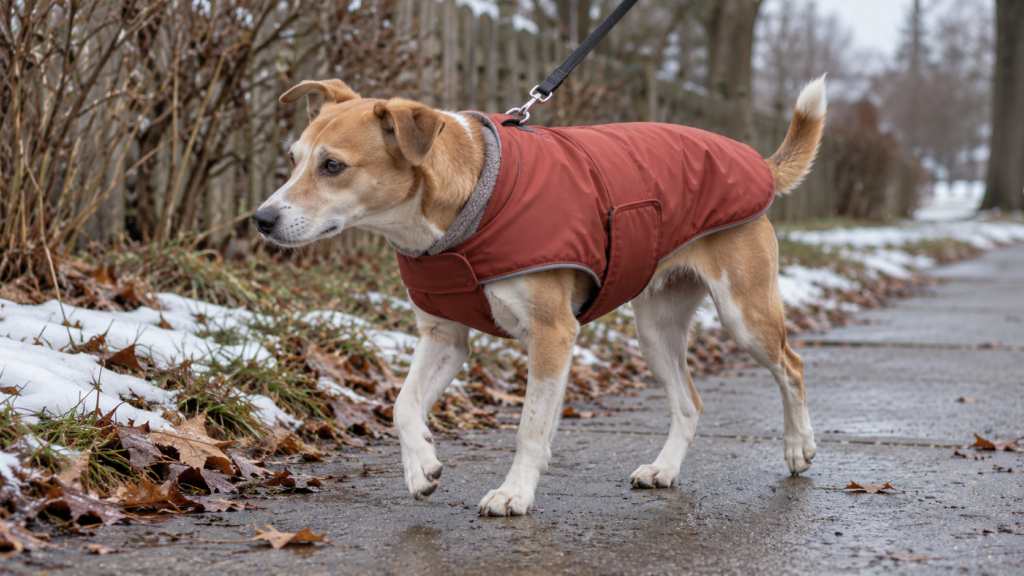
If you would want a jacket for the walk, your dog probably wants one too, and the smaller, thinner-coated, younger, or older the dog, the sooner that is true. As a guide, puppies and short-haired dogs should come inside once it drops below 40 degrees F. Below 20 degrees F, even dogs used to the cold belong indoors. Between 40 and 20 degrees, a winter coat that fits and covers the right places is what lets a thin-coated dog enjoy the walk. Not every dog needs one, but the ones that do benefit a lot from getting the fit and material right.
Which Dogs Actually Need a Winter Coat
A Bernese Mountain Dog or Alaskan Malamute has a dense double coat, and thick-coated breeds bred for colder climates tolerate winter weather better than most. Plenty of the dogs in a typical living room do not have that built-in protection.
Short-haired dogs feel the cold faster because they have less fur to trap warmth, and small breeds are especially sensitive to it. Chihuahuas, Greyhounds, Boxers, French Bulldogs, and Dachshunds fall into this group. So do puppies and senior dogs, who are more sensitive to cold than healthy adults. Dogs that are thin, unwell, or recovering from surgery have less in reserve to stay warm. Dogs with arthritis have a harder time walking on snow and ice, so they need the same consideration. Salt and ice are hard on every dog’s paws, which is where a good paw balm earns its place.
What to Look for in a Winter Coat
Fit matters more than anything else here. A coat that is too loose lets cold air in around the neck and belly; one that is too tight restricts movement and can chafe at the legs and shoulders. Measure three things before ordering: your dog’s neck, their chest at the widest point just behind the front legs, and their back length from the base of the neck to the base of the tail. Write all three numbers down, then check the brand’s own sizing chart rather than guessing by weight alone. Sizing varies a lot between brands, and most charts sort by back length first.
Coverage is the next thing to check. A coat that only covers the back leaves the chest and belly exposed, and short-legged dogs get cold faster because their bellies sit closer to snow-covered ground. Full-coverage or wrap-style coats do a better job here, so look for one that wraps under the chest instead of only draping over the back.
Material should be wind- and water-resistant on the outside, because a soaked coat can make your dog colder instead of warmer and gets heavy fast. An insulated or fleece-lined interior adds warmth for truly cold climates; a thin shell is fine for milder, take-the-edge-off weather.
Closures make a bigger difference than people expect. Velcro and buckles are easier to get on a dog who wriggles, but a determined dog can also pull them loose, and they can catch on fur. Zippers are more secure but slower to put on and can pinch if not seated properly. A leash hole or harness opening is worth having if your dog wears a harness on walks, so you are not fighting to clip a leash on through shifted fabric.
Coats vs. Sweaters: They Are Not the Same Thing
A knit sweater looks similar to a coat but does not do the same job. Sweaters add a little warmth and are fine for a heated apartment or a quick trip to the mailbox. Most are not wind-resistant or waterproof, though, and a wet sweater can make your dog colder instead of warmer. For a real walk in cold, wet, or windy conditions, a purpose-built coat with a weather-resistant shell is the right tool, however similar the two look hanging on a rack.
Two Coats Worth Considering
The two coats below cover most situations a pet owner is likely to run into: everyday cold-weather walks and harsher winter conditions.


Product prices and availability are accurate as of the date/time indicated and are subject to change.
If you are mostly dealing with cold morning walks and the occasional wet fall walk, a lighter reversible waterproof coat like the Kuoser is plenty. If your dog spends real time outside in harsh cold and wind, the extra coverage and insulation of a heavier chore-style coat like Carhartt’s Firm Duck Chore Coat is worth the higher price.
Getting a Coat-Averse Dog to Actually Wear One
Some dogs freeze up, flop over, or try to wriggle out the second a coat touches them. Rushing this usually makes it worse. Let your dog sniff the coat first. Then pair putting it on with something they already like, whether that is treats, a favorite toy, or an immediate walk out the door. Keep the first few sessions short: a minute or two indoors is enough to start. Many dogs settle into the routine after several short, low-pressure repetitions; a few need longer, and that is normal too.
Signs Your Dog Is Cold, Even in a Coat
A coat is not a guarantee against cold, and the temperature alone will not tell you when your dog has had enough. Watch for the early signs of hypothermia (from the Greek for “under” and “heat”), a body temperature that has dropped too low: whining, shivering, seeming anxious, slowing down or stopping, or looking for somewhere warm to burrow. Any of these means your dog needs to go back inside quickly, coat or not. In real cold, short, frequent walks are a better call than one long outing, even for well-coated dogs. The general precautions for keeping any dog safe in cold weather are worth knowing beyond the coat itself.
When Cold Weather Becomes a Vet Emergency
A coat helps, but it does not make a dog immune to cold injury. Hypothermia can progress past shivering into weakness and confusion. Frostbite, frozen skin on the ears, tail, paws, or nose, is harder to spot and may not be fully recognized until a few days after the damage is done. If you see any of the signs below, go to the vet immediately.
- 01
Shivering with weakness
Shivering along with unusual tiredness or weakness, an early sign of hypothermia
- 02
Confusion or lethargy
A dog who seems dull or disoriented after time in the cold
- 03
Stiff muscles or shallow breathing
Stiff movement or slow, shallow breaths point to more advanced hypothermia
- 04
Pale, gray, or firm skin
On the ears, tail, or paws, sometimes with limping, a possible sign of frostbite
Some dogs get into trouble sooner than others. Puppies, seniors, thin-coated dogs, and dogs with diabetes, heart disease, or a hormonal condition such as Cushing’s disease can have a harder time regulating body temperature, so they warrant extra caution on truly cold days.
This article is for educational purposes only and is not a substitute for professional veterinary care. Always consult a licensed veterinarian regarding your pet’s health and nutritional needs. As an Amazon Associate, Vet Explains earns from qualifying purchases.
Was the article helpful?