

Your vet has said the word Cushing’s, and now there is a quote in front of you for testing you have probably never had done on a dog before. Most dog blood tests are a needle, a short wait, and a number. Testing for Cushing’s disease is different. It books a morning or a whole working day, involves an injection and more than one blood draw, and the price reflects all of that.
The testing answers one question: are your dog’s adrenal glands making more cortisol than the body needs? Two tests can answer it, from opposite directions. The low-dose dexamethasone suppression test, the LDDST, is usually the first one offered and takes most of a working day. The ACTH stimulation test takes an hour or two and has a narrower job now, confirming Cushing’s caused by steroid medication and checking a treated dog that may be over-suppressed.
The Signs That Put a Dog on the Schedule
Dogs reach the testing schedule because of a combination, not one symptom. The classic signs of Cushing’s disease tend to arrive together. They include increased thirst and urination, a pot belly, thinning skin, hair loss along the trunk, and a ravenous appetite in a dog old enough to be slowing down.
None of these signs on its own means Cushing’s disease. Increased thirst has a long list of other causes, and so does hair loss. The guidance is clear on this: these tests are primarily meant for dogs that already have signs, because none of them is accurate enough to screen a healthy dog. A cortisol test does not belong on a routine wellness panel for a dog who feels fine.
Cortisol itself is ordinary and necessary, because every dog needs some of it to handle stress, inflammation, and blood sugar. The trouble in Cushing’s disease, which the textbooks call hyperadrenocorticism, is volume. The word joins the Greek hyper, “over,” with the Latin ad renes, “near the kidneys,” and cortex, “bark” or outer rind.
In 80 to 85 percent of dogs the cause is a tumor on the pituitary gland. In most of the rest, it is a tumor on an adrenal gland itself. Either way, cortisol keeps pouring out whether the body needs it or not. A physical exam cannot settle the question, because the outward signs overlap heavily with normal aging and with other diseases. Testing is how a suspicion becomes an answer.
See a vet the same day if your dog is drinking and urinating dramatically more than normal alongside vomiting, lethargy, or a swollen, painful abdomen. That combination can mean something more urgent than Cushing’s, such as a uterine infection in an unspayed female or a kidney or liver problem. It deserves same-day evaluation regardless of whether Cushing’s testing is already scheduled.
Which Test Your Vet Will Choose
There is no single correct test for every dog. The LDDST is the usual first choice because it misses fewer cases. The ACTH stimulation test is especially weak with adrenal tumors and comes back normal in nearly half of those dogs. Adrenal tumors account for most of the dogs who do not have the pituitary form. Cost, your dog’s other health problems, and how long your dog can stay at the clinic all matter too. None of that makes the ACTH stimulation test a lesser one, only a narrower one.
What Happens on Test Day
The first question on the morning of a test is whether this is the right morning at all. A dog who is sick with something else, recently hospitalized, or wound up from the car ride can give a false-positive result, because illness pushes cortisol up on its own. Your vet may therefore move the appointment to a calmer day, or run extra bloodwork alongside it. Waiting two weeks for a clean test is better than treating a dog for a disease it does not have. I would rather lose those two weeks than start a dog on daily medication because of a number that was never about Cushing’s.
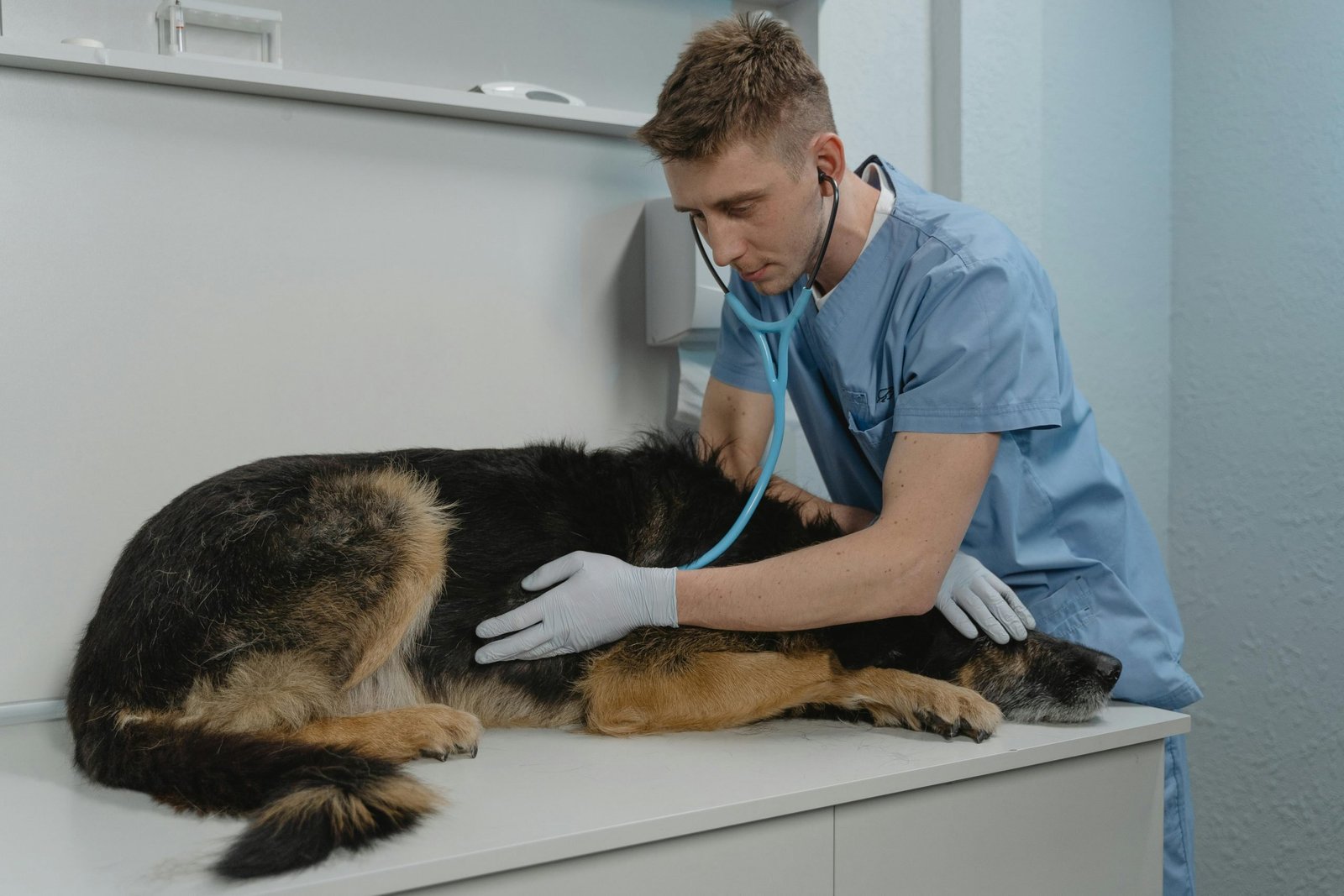
If it is the ACTH stimulation test, the visit is usually done in an hour or two. ACTH is the hormone that tells the adrenal glands to make more cortisol, so this test delivers that instruction artificially and watches what comes back. Your vet draws a baseline sample, injects synthetic ACTH, then draws a second sample an hour later. In a healthy dog, cortisol rises a predictable, modest amount. In a dog with Cushing’s disease, the adrenal glands overreact and cortisol climbs much higher than expected.
If it is the LDDST, the day belongs to the clinic. Dexamethasone is a synthetic steroid that should tell a normal dog’s brain to stop signaling for more cortisol. Cortisol levels should then drop and stay down for the rest of the day. It is the same feedback loop a thermostat uses: add heat, and the furnace should switch off. In a dog with Cushing’s disease, that suppression signal gets ignored, at least partially. Blood is drawn before the injection, then again four and eight hours afterward, which is where the eight-hour stay comes from.
Across either version the physical risk is low. These are blood draws and a single injection, and most dogs tolerate the day fine. The real cost is time and money. An LDDST means your dog stays at the clinic for most of a workday, and the repeated blood draws add up against the price of a routine wellness panel.

Reading the Results
The shape of an LDDST response carries more than a yes or a no. If cortisol does not drop the way it should, that supports a Cushing’s diagnosis. A complete failure to suppress strongly supports the diagnosis, while partial patterns only nudge the odds, and the pattern can also hint at whether the problem sits in the pituitary or in an adrenal gland. That hint is not a verdict on its own, and imaging or a further hormone test usually settles the location.
A positive result supports a diagnosis, but it does not stand alone. Your vet reads these numbers together with your dog’s symptoms, a full blood chemistry panel, and often an abdominal ultrasound. The ultrasound looks directly at the adrenal glands and checks for a tumor. On that panel, a raised alkaline phosphatase (ALP) is the most common lab clue.
A borderline or inconclusive result happens, and it does not mean anything went wrong with the test or that the day was wasted. Cushing’s is one of the harder endocrine conditions to pin down, and your vet may repeat a test or run the other one before settling on an answer.

After a Diagnosis
Treatment decisions and medication choices are your vet’s call, tailored to your dog’s case, the tumor location if one is found, and any other health conditions. What the testing buys is the chance to make those decisions at all, and that is worth having. In one primary-care study of dogs with the pituitary form, more than half of the dogs treated with trilostane were still alive two years after diagnosis. Untreated dogs in that study lived a median of about 17 months and carried a five-fold higher risk of death over that period. These are older dogs to begin with, so the aim is comfortable years rather than a cure.
For routine monitoring of dogs on trilostane, the ACTH stimulation test was never actually validated, and a cortisol drawn just before the daily dose lines up better with how the dog is doing at home. That version also needs one blood sample instead of two plus a vial of synthetic ACTH, so the monitoring bill often drops once treatment is under way. Rechecks stay part of the routine either way, timed to confirm the dose is controlling the signs without pushing cortisol too low.
Was the article helpful?