
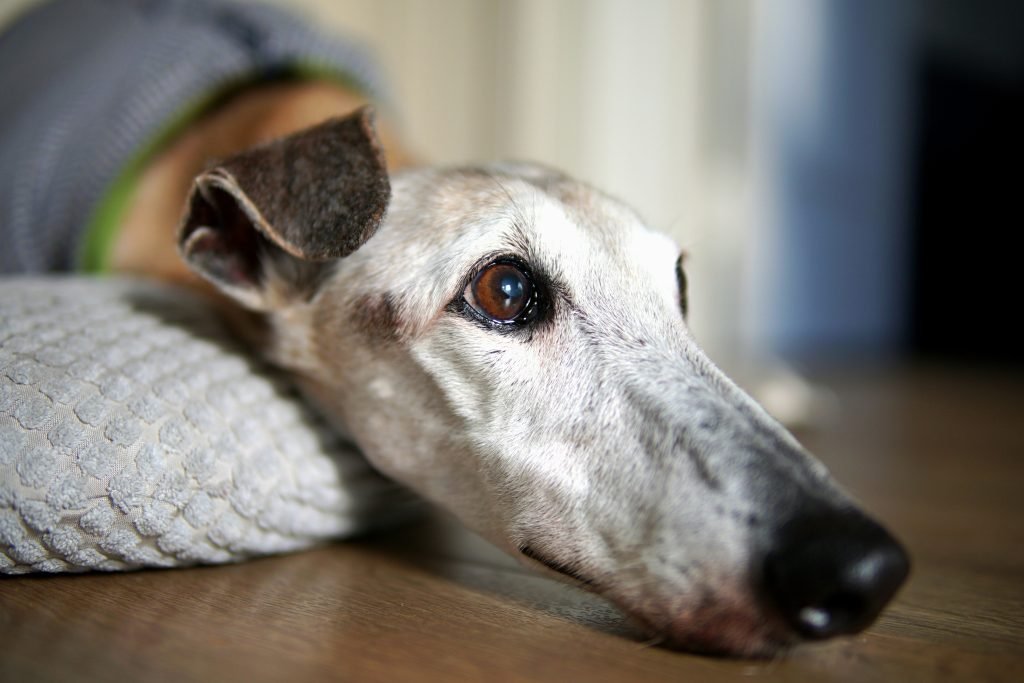
Watching a dog who used to leap onto the bed hesitate at the edge is one of the harder parts of living with an aging pet. It does not always mean something is seriously wrong. Often the jump has simply started to hurt, and a ramp or a set of steps hands back some of that independence. Roughly one in five dogs develops joint problems at some point in life [AAHA], and easier access to beds, couches and cars is part of the standard advice once they start [COAST]. The judgment call is whether the hesitation is the slow kind that gear solves, or the sudden kind that needs a vet first.
Table of Contents
Quick answer: For getting in and out of the car or up onto a couch, the PetSafe Happy Ride Folding Dog Ramp gives the longest, gentlest incline. For climbing onto a tall bed at home, the EHEYCIGA Dog Stairs are sturdier and take up less floor space than a full-length ramp.
Why Jumping Gets Harder as Dogs Age
Jumping loads the hips, knees and spine suddenly and all at once. In a young, healthy dog that is rarely a problem. In an older dog, or one with early arthritis, the same jump lands on cartilage that has thinned and joints that move through a smaller, stiffer range. The landing is harder to absorb and more likely to hurt.
Small and long-backed breeds carry a separate risk. Dachshunds are the clearest example. In a survey of more than 2,000 of them, 15.7 percent had been diagnosed with intervertebral disc disease, and lifetime estimates run to 19 to 24 percent [DachsLife]. Disc disease is a spinal problem rather than a joint one, and it can arrive suddenly in a middle-aged dog that has never limped.
It is tempting to conclude that banning the couch prevents all of this. The evidence does not support that. In the same survey, Dachshunds not allowed on furniture had higher odds of disc disease rather than lower, and more active dogs had lower odds. Owners often restrict access after a diagnosis, so cause and effect cannot be separated here [DachsLife].
The better-supported lever is body weight. Labradors fed to stay lean for life reached a median lifespan of 13.0 years against 11.2 years for their littermates, with later onset of osteoarthritis [BJN]. Weight control is also the one measure every stage of the current canine osteoarthritis consensus agrees on [COAST]. A ramp makes one climb easier. Body weight changes every step.
Ramp or Steps: Which One Does Your Dog Actually Need?
Buy the wrong one and it sits unused. A ramp suits a long, low-angle rise: into a car or SUV, onto a couch, or up to a bed where the dog needs a gentler path rather than a shorter one. Ramps also work for dogs who are wary of stairs or weak behind, because the climb is continuous instead of a series of small hops.
Steps make more sense for a tall bed, where a ramp gentle enough to help would run several feet across the bedroom floor. They also suit dogs that prefer a stepped climb to a slope. Steps are easier to move between rooms too, since most fold flatter or weigh less than a full ramp.
Quick answer: If the climb is long and low, like into a car, get a ramp. If the climb is short and steep, like onto a tall bed, steps usually work better and take up less space.
What Makes a Ramp or Steps Actually Safe
Weight capacity should comfortably exceed your dog’s actual weight rather than match it. A ramp rated exactly at your dog’s weight leaves no margin for a few extra pounds, for a heavier second pet, or for the moment you steady the dog with a hand on the deck.
Traction matters as much as capacity. A slick surface turns the ramp into its own hazard, because a slip partway up produces exactly the fall you were trying to prevent. Look for a textured non-slip deck or a washable carpet tread that stays grippy when damp. The same logic applies indoors, where non-slip flooring is part of the standard environmental advice for dogs with osteoarthritis [COAST].
Incline is the check that only applies to ramps, and it falls straight out of the arithmetic: length against height. A steep ramp asks the joints for something close to the jump it replaced. A 62-inch ramp reaching a 20-inch couch sits at roughly 19 degrees. The same ramp reaching a 30-inch SUV tailgate is closer to 29 degrees. Longer is gentler, and the trade is floor space.
The last thing to check is whether it stays put under load. Any ramp or step set that flexes or shifts under your dog’s full weight should be moved onto firmer ground or replaced.
Measure Before You Buy
The most common reason these get returned is a size mismatch a tape measure would have caught. For a car ramp, measure from the ground to the trunk lip or back seat, then check that against the ramp’s listed length. As a fitting rule, a length of at least four times the height keeps the slope near 14 degrees, and three times puts it near 19 degrees. Those are practical targets rather than clinical thresholds, but they let you compare two ramps honestly instead of trusting the photograph on the box.
For bed or couch steps, measure from the floor to the top of the mattress or cushion and compare that against the step set’s total height, not the number of steps. Two sets with five steps each can differ by several inches depending on the rise of each tread.
Measure the floor space too, particularly for a full-length ramp in a bedroom. A ramp that fits the height but not the room ends up folded in a closet.
Best Ramps and Steps Compared
The PetSafe Happy Ride Folding Dog Ramp extends to 62 inches and is rated to support dogs up to 150 pounds [PetSafe]. It folds in half for storage and has side rails and a high-traction surface. At 62 inches it gives a genuinely gradual slope onto a couch or a low car sill. Against a tall SUV tailgate the same ramp is steep, so measure your own vehicle before assuming it will be gentle.
The EHEYCIGA Dog Stairs are built for a tall bed: five steps, 22.5 inches of total height, and a non-slip washable cover over each tread. They take up far less floor space than a ramp long enough to cover the same rise, which is what makes them workable in a bedroom.


Whichever option you choose, spend a few sessions encouraging your dog onto it with treats and patience before expecting them to use it on their own. Most dogs need a short adjustment period before a ramp or steps replace the jump out of habit rather than hesitation.
When Reluctance to Jump Needs a Vet Visit
See a vet now: A sudden refusal to jump paired with limping, yelping when touched, reluctance to climb stairs at all, or noticeable stiffness after rest points to pain that gear alone will not fix. Treat it as a same-day emergency if the hind legs are wobbly, crossing, knuckling over or dragging, if the back is painful to touch, or if bladder control is lost. Those signs point to pressure on the spinal cord, usually from a disc, and they are most common in Dachshunds, French Bulldogs and Pekingese [Frontiers].
A gradual, age-related slowdown in jumping is common and often manageable with the right equipment. A change that shows up over a day or two is a different situation.
The outlook for a disc extrusion is good while the dog can still feel deep pain in the hind limbs. In a series of 1,501 surgically treated dogs, about 88 to 91 percent returned to normal walking, and dogs operated on the day signs began did better than those operated after five days, 92.1 percent against 86.6 percent [Acta]. That gap is the reason not to spend a weekend watching and waiting. Ramps and steps are a genuinely good tool for the slow decline. They are not a treatment for the sudden one.
Further Reading
Arthritis in Dogs: Early Signs and Treatment Options covers the most common reason older dogs start hesitating to jump in the first place.
Signs Your Dog Is Becoming a Senior is a useful companion for spotting other early aging changes alongside reduced mobility.
Cognitive Dysfunction in Dogs explains a separate but sometimes overlapping change worth knowing about in senior dogs.
This article is for educational purposes only and is not a substitute for professional veterinary care. Always consult a licensed veterinarian regarding your pet’s health and nutritional needs. As an Amazon Associate, Vet Explains earns from qualifying purchases.
Was the article helpful?