
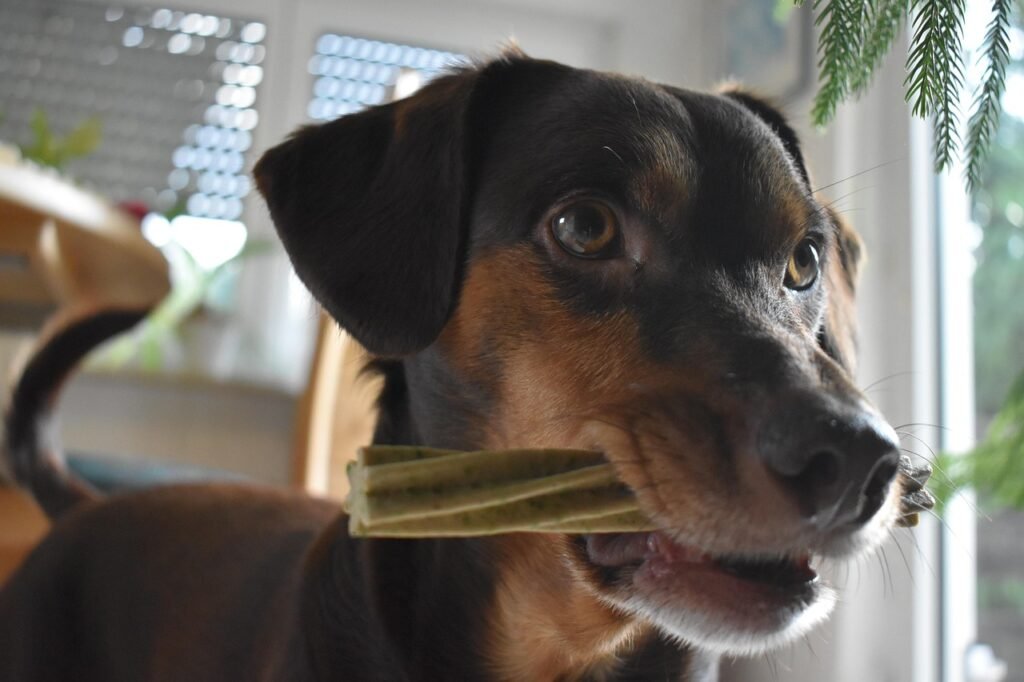
A toy has lost its squeaker, a sock has gone missing, and now your dog has vomited twice and walked away from breakfast. Dogs are naturally curious, and sometimes that curiosity ends with something swallowed that cannot pass. An intestinal blockage in dogs is a serious condition that can worsen quickly and often needs emergency care, and the earlier it is found, the better a dog’s chances.
If your dog is already vomiting over and over or has a sore, swollen belly, there is no need to finish reading first. Call your vet or the nearest emergency hospital now, and come back to the rest once your dog is in good hands.
What an Intestinal Blockage Is
A dog intestinal blockage, which vets also call a bowel obstruction, happens when something partly or fully stops food, fluid, and gas from moving through the digestive tract. With a partial blockage, a little material still squeezes past. With a complete blockage, nothing gets through, and that is a much bigger problem.
Most blockages are foreign body obstructions, meaning a swallowed object is physically stuck. Less often, part of the intestine slides into the next section like a collapsing telescope. Vets call this intussusception (from the Latin intus, “within,” and suscipere, “to take up”). It is more common in young dogs, often after intestinal parasites such as worms, parvovirus, or a foreign body. Growths inside the intestine can also narrow the passage.
Whatever the cause, the danger is the same. A section of gut that stays blocked can lose its blood supply, and the tissue starts to die. The wall may then tear and leak bacteria into the belly. That causes peritonitis (from the Greek peritonaion, the abdominal lining, and -itis, “inflammation”) and sepsis, an infection that spreads through the whole body.

What Dogs Swallow, and Which Dogs Do It
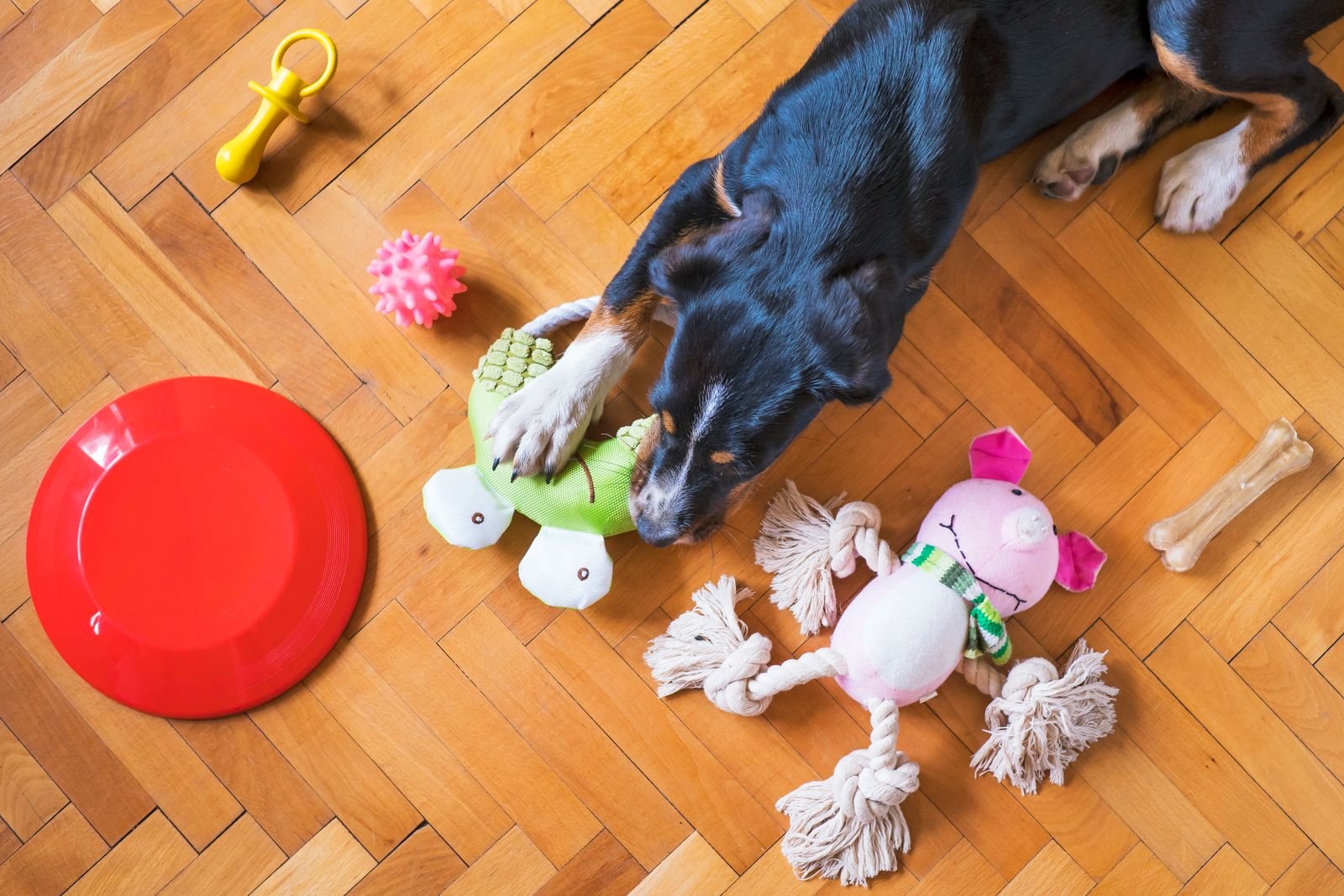
Toys, socks, bones, corn cobs, stones, and fruit pits are the usual suspects. In one multicenter study of 72 dogs that needed a swallowed object removed, children’s toys, coins and other metal objects, cloth, socks, balls, plastic, and peach stones topped the list. Shape and size matter as much as the material, so even a chunk of chew can lodge in the wrong place.
String, ribbon, yarn, dental floss, and frayed rope fibers deserve their own warning. These linear foreign bodies anchor at one end, often in the stomach, while the intestine keeps contracting and bunches up along the string like fabric on a drawstring. A taut string can saw through the intestinal wall. If you see string hanging from your dog’s mouth or from under the tail, do not pull on it, because the other end may still be caught inside.
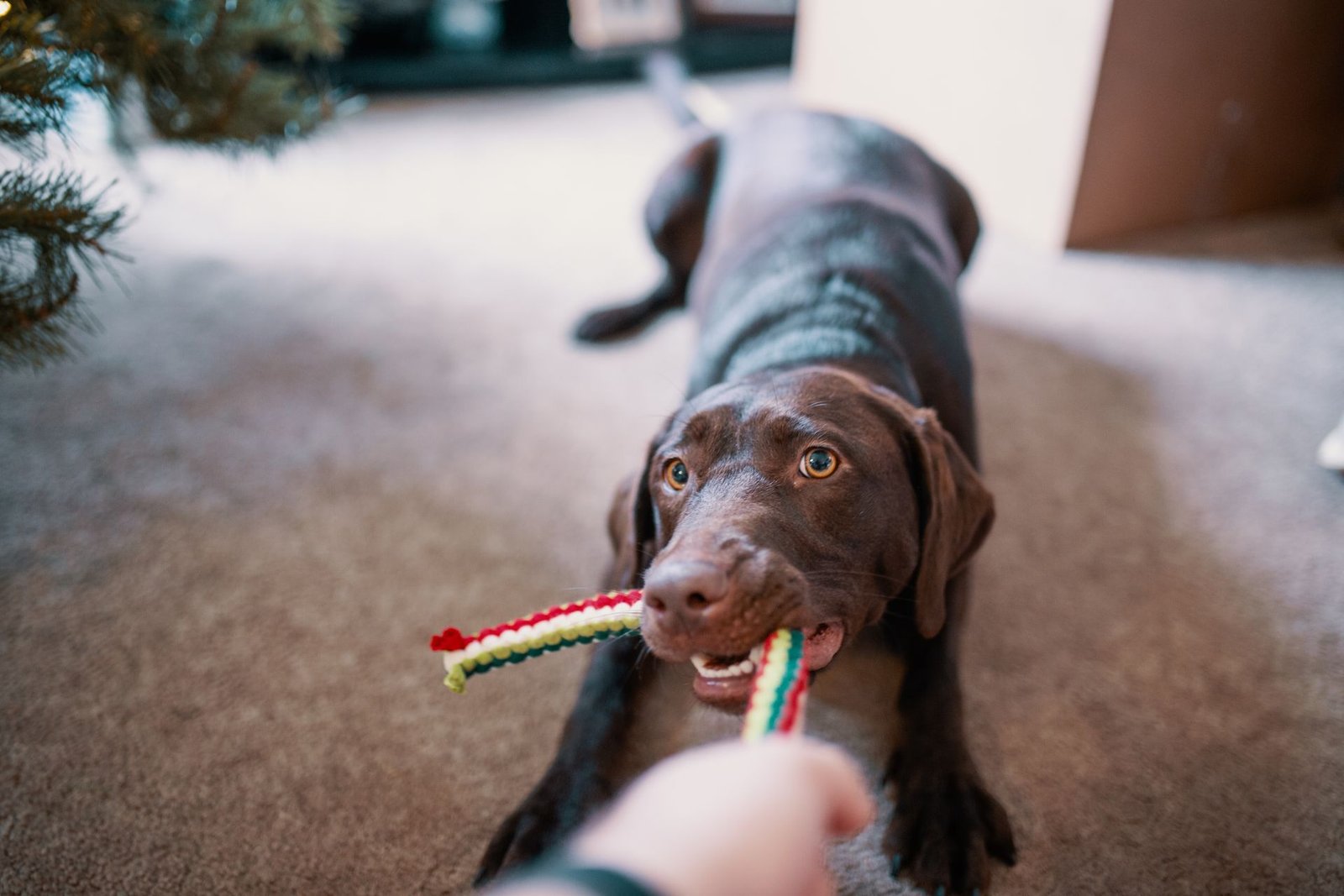
Young dogs are most at risk, and in that same study most of the dogs were young, male, and of larger breeds. Puppies explore with their mouths, and dogs with pica, the habit of repeatedly eating nonfood items like fabric, stones, or plastic, tend to do it again. Many dogs keep eating objects even after a bad experience. If yours has swallowed something once, choose safer chew toys and keep the floor clear.
Signs of Intestinal Blockage in Dogs
The signs of intestinal blockage in dogs can look like an ordinary upset stomach at first. That is exactly why owners sometimes wait too long. How sick a dog looks depends on where the object sits, how completely it blocks the gut, and how long it has been there. A partial blockage can cause vomiting that comes and goes, while a complete one usually makes a dog steadily worse.
- 01
Repeated vomiting
Vomiting that keeps happening or comes out forcefully, sometimes soon after every meal or drink.
- 02
No appetite
Your dog turns down food, or eats and brings it straight back up.
- 03
Painful or swollen belly
Whimpering, flinching, or a hunched stance when the belly is touched.
- 04
Lethargy or weakness
Your dog is unusually flat and tired, or reluctant to get up and move.
- 05
Straining or no stool
Straining to pass stool, or no bowel movements at all.
- 06
Signs of dehydration
Dry, tacky gums, or a dog that cannot keep water down.
Other problems, such as pancreatitis or a stomach bug, cause many of the same signs, so you cannot tell what is wrong just by looking at your dog. If you notice them, contact your vet promptly rather than waiting to see whether your dog feels better. Some signs cannot wait for a callback. Go to an emergency hospital right away if your dog retches again and again with nothing coming up, has a tight and painful belly, or collapses.
Can a Dog Pass a Blockage on Its Own?
Sometimes. A small object causing only a partial blockage may pass. Some dogs stay in the hospital for fluids and repeat X-rays to see whether it keeps moving. A complete blockage will not resolve without treatment and quickly becomes life-threatening. You cannot tell from the outside which one your dog has. The safest move is to let a vet take a look rather than waiting and hoping.
Timing matters more than most owners realize. In the study of 72 dogs, vomiting for more than 24 hours before treatment was significantly linked with death. Do not try to make your dog vomit at home either. Sharp or bulky objects can cause more damage on the way back up, so ask your vet or a pet poison line before trying anything.
How Vets Diagnose a Blockage
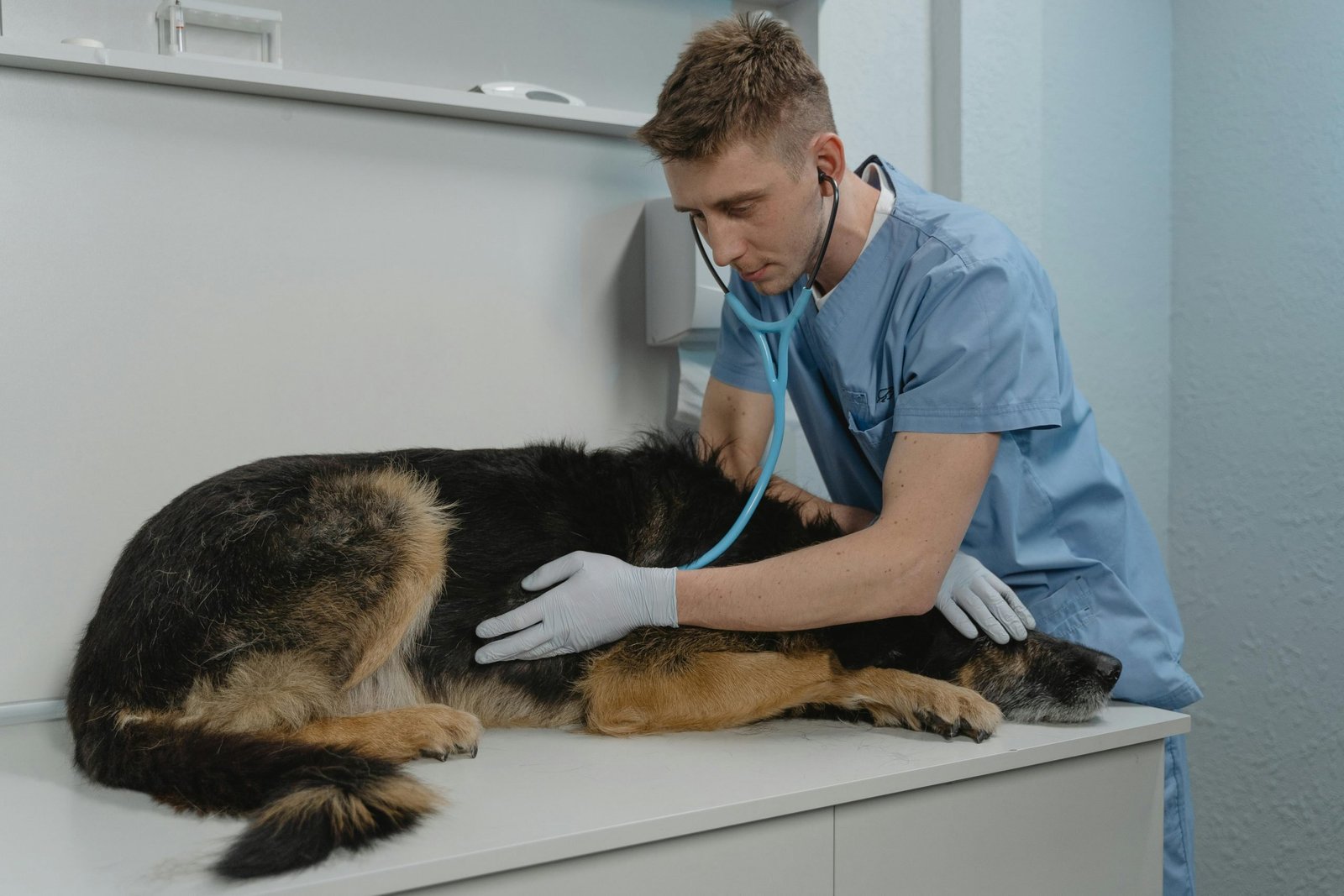
Diagnosis starts with a physical exam. Your vet will feel your dog’s belly for pain, swelling, or a firm object, check for dehydration, and ask what your dog might have eaten. If you can, bring the rest of the chewed toy or the missing sock’s twin.
Bloodwork and a urine test usually come next. A blood chemistry panel shows how your dog’s body is coping with dehydration and lost electrolytes, and helps rule out other causes of vomiting.
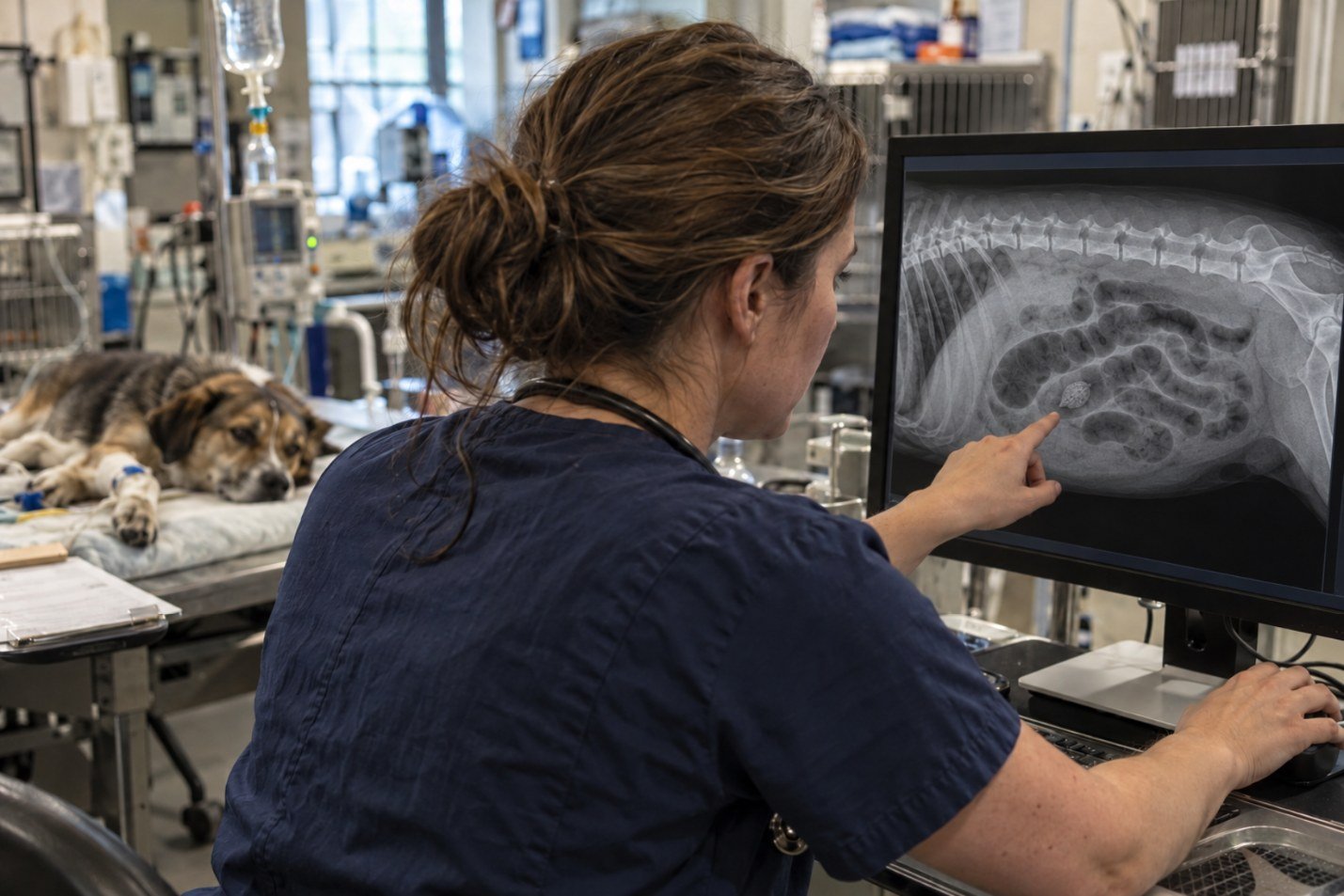
Imaging does most of the work. A dog blockage X-ray is typically the first step. It can show unusual gas patterns, some objects, and roughly where the obstruction sits, and X-rays are sometimes repeated with contrast to trace the path of the gut. Fabric, plastic, and string often do not show up themselves, so a normal X-ray does not always mean the coast is clear. Ultrasound gives a closer look at soft tissue and can find obstructions an X-ray misses.
When a case is complicated, a veterinary radiologist may get involved. That is a specialist trained specifically to interpret diagnostic images.
Endoscopy or Surgery
Treatment depends on where the object is, what it is, and how sick your dog is. If it is still in the stomach, endoscopy may be used to retrieve it. A long, flexible camera is passed through the mouth while the dog is under anesthesia, and the object is grasped and pulled back out. There is no incision, so recovery is usually quick.
Once the object has moved into the intestine, or the bowel is already damaged, surgery is the usual answer. The procedure is an exploratory laparotomy. The surgeon opens the abdomen, finds the problem, and removes the object through a small cut in the intestine, called an enterotomy (from the Greek enteron, “intestine,” and tome, “cutting”). If a section of bowel has lost its blood supply, that section is removed and the healthy ends are stitched back together, which is called a resection and anastomosis.
The outlook is generally good when treatment is prompt. In the same study, every dog survived when the object was removed from the stomach, by endoscope or by surgery, and 94 percent survived an enterotomy. Dogs that needed part of the intestine removed did markedly worse, which is one more reason not to wait while damage builds.
Not every case ends in the operating room. Some partial blockages are managed with IV fluids and close monitoring instead. Complex or high-risk cases may be referred to a board-certified veterinary surgeon, a vet who has completed advanced surgical training.
Intestinal Blockage Surgery Cost in Dogs
Intestinal blockage surgery costs for dogs vary widely. Pet insurance claim data put most of these surgeries between about $1,600 and $7,500, and one national cost survey puts the average foreign body enterotomy near $4,400. A resection, complications, or a long stay at a specialty hospital can push the bill past $10,000. Endoscopic removal, when it is possible, usually costs less than surgery.
After-hours care, your area, and a specialty hospital all raise the price, as do a longer stay and extra rechecks. Ask for a written estimate with a low and high range before treatment starts. It also helps to decide whether pet insurance is worth it before anything goes wrong, since policies will not cover a problem that already exists.
Recovery After Blockage Surgery
Dog blockage surgery recovery begins in the hospital with IV fluids, pain relief, and anti-nausea medication. Food is offered once your dog is ready, because eating early helps the gut heal. Many dogs go home within a day or two of an uncomplicated surgery, while a resection or complications mean a longer stay.
At home, recovery is mostly a patience game. Expect limited activity, short leash walks, and a simple bland diet in small, frequent meals if your vet recommends one. A sturdy dog gate or pen keeps a sore dog off the stairs and out of rough play while the incision heals. Give medications exactly as prescribed, and expect a recheck or two to look at the incision and remove stitches.
The complication everyone watches for is a leak where the intestine was stitched, which is most likely in the first three to five days. Call your vet that day if you notice vomiting again, a worsening appetite, lethargy, fever, or swelling, redness, or discharge at the incision. The reassuring news is that most dogs recover fully when the blockage is treated promptly.
Intestinal blockage in dogs is serious and can progress quickly, and early veterinary care gives your dog the best chance. If you know the warning signs, you are far more likely to act in time. Take a few minutes now to find a clinic you trust and an emergency animal hospital nearby, so you already have a plan if the worst happens.
Was the article helpful?