
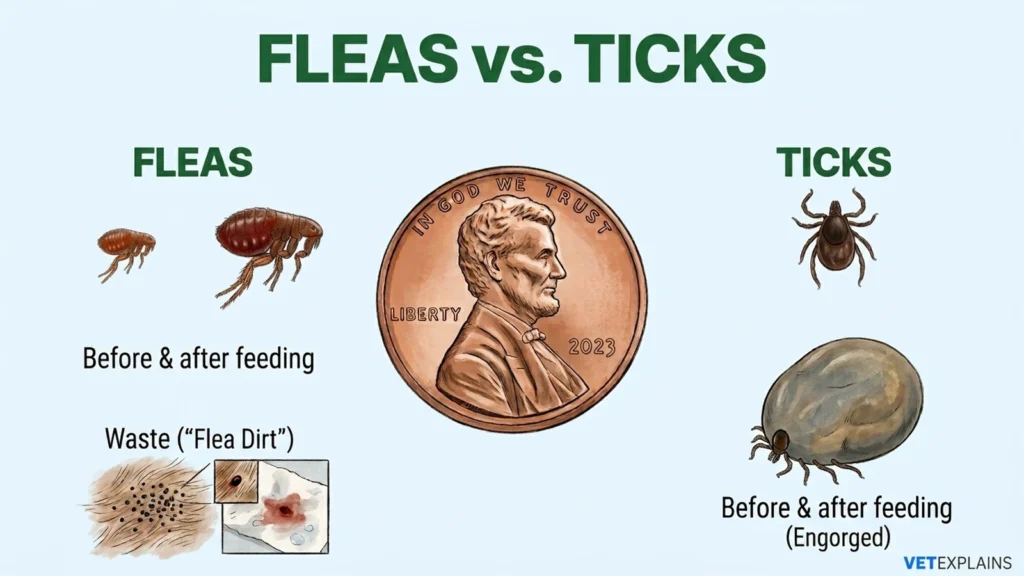
You ran a hand down your dog’s back after a walk and felt a small, firm bump, or you keep catching your cat chewing at the base of her tail. Either one could be a parasite, and whether it is a flea or a tick changes how fast you need to act. Most flea problems are uncomfortable and stubborn, a matter of itching and numbers that spreads into your home. A tick is one quiet animal whose real danger is what it may be carrying, such as Lyme disease, and it deserves attention the day you find it.
So the useful question is not which parasite is worse. It is which one you have found, because that decides how quickly you should call your veterinarian.
Fleas vs Ticks in Pets: How They Differ
Fleas are small wingless insects built to move fast. The adults jump onto your pet and spend their time in the coat, feeding on blood and laying eggs. Those eggs do not stay put. They fall off into carpets, furniture, and bedding within a few hours. That is why a flea problem so quickly turns into a household problem rather than just a pet problem.

Ticks are not insects at all. They are arachnids, related to spiders and mites. A tick climbs onto your pet from grass or brush, attaches firmly to the skin, and stays in one place while it feeds, which takes several days. That is why a tick usually turns up as a small bump under your hand rather than something you see moving. It also looks noticeably swollen the longer it has been feeding.
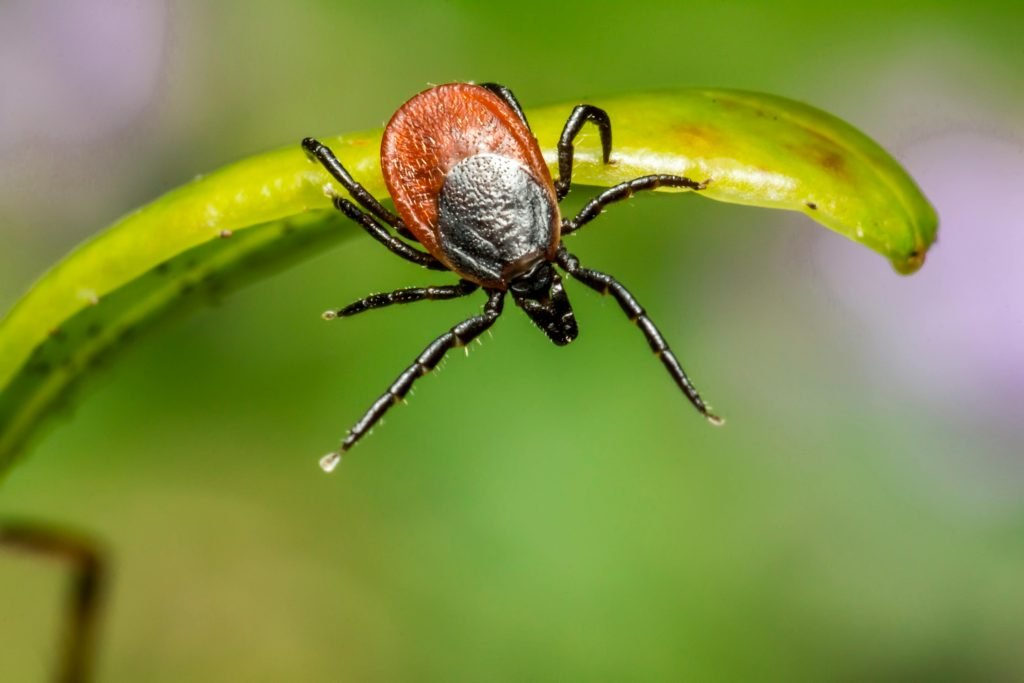
You can tell the two apart with nothing but your fingers. Something that moves, or that is gone the next time you part the fur, is a flea. Something anchored in place and firm against the skin is a tick. If you find no solid bump but the coat is full of dark specks, that is flea dirt, and it counts as finding fleas.
Why Ticks Are a Serious Concern
What makes ticks serious is not the bite itself. It is the infections they pass on while they feed. In dogs, these include Lyme disease, ehrlichiosis, and Rocky Mountain spotted fever. These illnesses can affect joints, organs, and overall energy levels, sometimes with lasting consequences if not treated promptly.
The bite site can cause trouble of its own, because the small wound can pick up a bacterial skin infection. Less often, a toxin made by some female ticks causes tick paralysis, a nervous system problem that requires immediate veterinary care. Signs usually start several days after the tick attaches. Dogs in North America usually improve greatly within 24 hours of the tick being removed. That is why finding the tick and removing it correctly matters as much as recognizing the signs.
I would rather you call about a bump that turned out to be a scab than wait on a dog whose back legs went weak over a weekend. After time outdoors, any of these signs can be early tick paralysis, which requires prompt treatment, so go to the vet immediately.
- 01
Sudden unsteadiness
Your pet suddenly seems unsteady after time outdoors.
- 02
Weak back legs
The back legs are weak, or standing up is a struggle.
- 03
A change in bark or breathing
Its bark or breathing sounds different.
Health Problems Caused by Fleas
Flea bites itch, but for many pets the reaction goes well beyond a scratch. A pet with flea allergy dermatitis is allergic to material in flea saliva, so even a few bites can set off intense itching, redness, and hair loss. In dogs, the damage often shows up as scabbing around the hips and the base of the tail.
Young animals face a second risk: a heavy infestation can take enough blood to cause anemia (Greek for without blood), and in young animals that blood loss can be fatal.
Fleas also spread a tapeworm, and many owners find that surprising. Dogs and cats pick up the flea tapeworm by swallowing an infected flea during normal grooming. So a pet with tapeworms has, at some point, eaten a flea, and the fleas are part of the problem too.

How to Check Your Pet at Home
A few minutes with your hands after every walk, hike, or session in the yard is the habit that finds both parasites early. Feel the skin rather than just looking at the coat. A tick is easier to find by touch than by sight, and fleas rarely hold still long enough to be seen. Work slowly through the places ticks like to hide:
- 01
Behind the ears
Fold each ear back and feel along its base and inner flap.
- 02
Under the collar
Slide the collar aside to reach skin you rarely see.
- 03
Along the neck
Run your fingers against the grain of the coat.
- 04
In the armpits
Check under both front legs, close to the body.
- 05
Around the tail base
Part the fur and look for flea dirt as well as ticks.
- 06
Between the toes
Spread each paw and look between the pads.
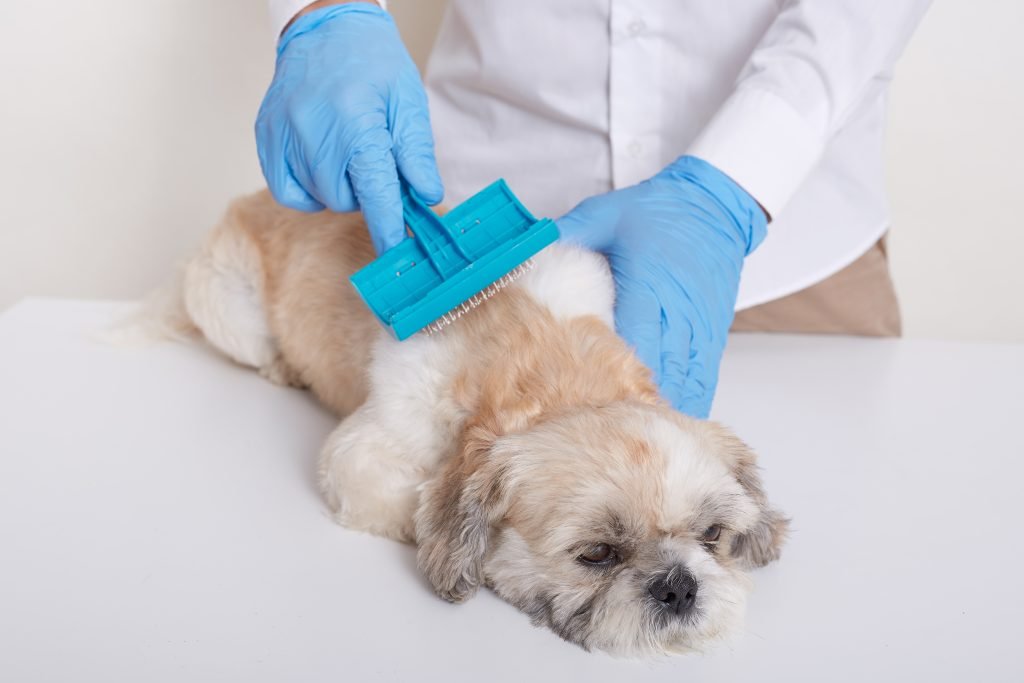
Fleas themselves are hard to catch in motion, so look for what they leave behind. Flea dirt looks like specks of black pepper in the fur, while a tick feels like a firm, attached bump sitting close to the skin. A fine-toothed flea comb makes these checks much easier, catching fleas and flea dirt that are hard to spot by eye alone, especially in pets with dense or long coats. If you notice unusual itching, skin changes, or a sudden change in your pet’s behavior, contact your veterinarian rather than waiting it out.
Preventing Fleas and Ticks
Consistent prevention is far easier than clearing an infestation or treating a tick-borne disease. Year-round parasite control that covers fleas and ticks is the current recommendation, and that includes indoor-only cats. Products work best as part of a consistent prevention plan, given on schedule and chosen for the right species. If you have a cat, check which flea treatments are actually safe for cats first. If you are weighing natural alternatives, the evidence on natural flea treatments is worth reading before you decide.
Because flea eggs fall off your pet, the home needs attention too. Regular vacuuming and washing your pet’s bedding are part of controlling fleas in the environment, and an established infestation calls for a room-by-room plan for fleas in the house. Routine grooming also lets you notice changes in your pet’s skin or coat before they become serious.
This article is for educational purposes only and is not a substitute for professional veterinary care. Always consult a licensed veterinarian regarding your pet’s health and nutritional needs. As an Amazon Associate, Vet Explains earns from qualifying purchases.
Was the article helpful?