

Your dog feels fine, a routine screening test comes back, and one line you were not expecting says Lyme positive. That result means your dog has met the bacterium at some point. It does not mean your dog has Lyme disease, and on its own it is not a reason for antibiotics. What matters next is whether your dog shows signs of illness and whether there is protein in the urine.
Blacklegged Ticks and Where Lyme Is Common
Lyme disease is caused by bacteria that infected blacklegged ticks pass on while they feed. The tick usually has to feed for roughly 24 to 48 hours before that happens. That window is why a tick check after every walk and prompt removal of any attached tick do real work. A tick you pull off the same evening has had far less chance to infect your dog.
Risk is highest in parts of the Northeast, the mid-Atlantic, and the upper Midwest, though exposure varies by location. A dog that travels to those regions picks up the risk that comes with them.

Shifting Lameness and Other Signs
Most exposed dogs stay healthy. No more than about 10 percent develop Lyme arthritis, the joint form of the disease. A positive test in a bright, comfortable dog is usually just a record of a past tick.
The pattern to watch for is lameness that shifts between legs, along with fever, swollen joints, tiredness, or poor appetite. If these appear after possible tick exposure, arrange a veterinary examination rather than waiting to see if they pass. These signs can fit Lyme disease, but they do not prove it, because plenty of other problems make a dog limp. Signs also show up well after the tick bite, not in the first few days, so you will rarely be able to trace them to one particular tick.

Reading a Positive Screening Test
The screening blood test looks for antibodies to the Lyme bacterium, not for the bacterium itself. So a positive result shows exposure, not active disease, and your veterinarian has to read it alongside your dog’s signs and other findings. The result alone is not a diagnosis.
Expect a urine sample to come next, even if your dog seems well. Your veterinarian may check the urine for protein, because protein loss can signal kidney disease and needs evaluation. Even then, a positive Lyme test plus protein in the urine does not prove Lyme caused it. Other causes must be considered.
For a healthy dog with no urine protein, automatic antibiotics are not supported by strong evidence. In the 2018 ACVIM consensus, most panelists did not recommend routine treatment for these dogs. Their reasons were practical: there is no proof that treating a healthy dog lowers its risk of illness, and it adds to antibiotic overuse. Ask about tick prevention and a urine monitoring plan instead.
How Is Lyme Disease Treated?
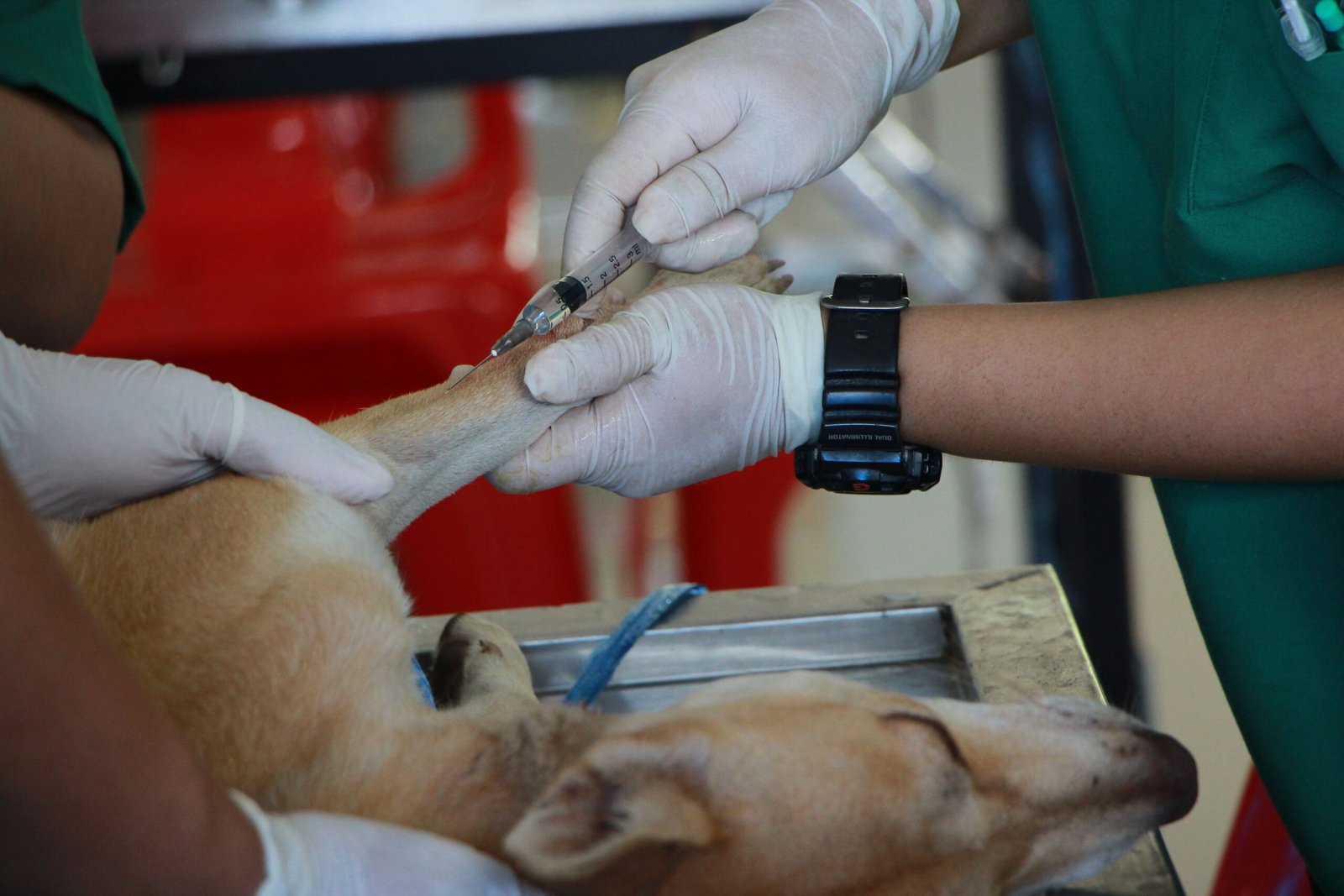
Dogs with signs consistent with Lyme arthritis are usually treated with doxycycline for four weeks. If the lameness truly comes from Lyme disease, improvement often comes fast, within a day or two. A dog that is no better after that deserves a fresh look at other causes. That quick response is a clinical clue, not proof of infection.
Joint signs often improve with treatment, but antibiotics may not clear every organism, and a dog that lives among ticks can be exposed again. That is why tick prevention and urine monitoring still matter after the course is finished.
Do not be surprised if a later screening test is still positive. The test can stay positive long after treatment, because the antibodies reflect past exposure as well as current infection. A repeat positive is not, by itself, a sign that treatment failed.

Lyme Nephritis and Urine Protein Checks
Lyme nephritis (nephritis comes from the Greek word for kidney) is a serious form of protein-losing kidney disease seen in some Lyme-positive dogs, and it is the reason the urine matters as much as the blood test. Yet protein loss may have other causes, so a positive Lyme test cannot prove it caused the kidney problem.
Ask when your dog’s urine should be checked again. The usual advice is to recheck Lyme-positive dogs for urine protein at least two to three times a year, although the ideal frequency and duration are uncertain. If protein appears, your veterinarian will assess it rather than assume Lyme is the cause. Our guide to kidney test results explains how different findings fit together.
Retrievers may be overrepresented among dogs with suspected Lyme nephritis. That possible breed risk is one more reason to discuss monitoring and vaccination with your veterinarian if you own a retriever.

How Do I Prevent Lyme Disease?
Tick control does most of the work. Use year-round tick prevention where ticks are a risk, since ticks can turn active on a mild winter day, and check your dog after outdoor time. Remove attached ticks promptly. No single measure replaces the others.
A Lyme vaccine can add protection for dogs with meaningful tick exposure in endemic or emerging areas. AAHA advises considering it according to risk; an earlier ACVIM panel did not reach consensus about vaccination. That makes it a judgment call, so discuss your dog’s location, travel, and tick exposure with your veterinarian. Vaccination does not replace tick control.

Was the article helpful?
Pingback: Why Is My Dog So Tired All the Time? Causes to Rule Out