

Yes. A cat who has never set foot outside can still get fleas, because living indoors lowers the risk without closing every door, which is why flea prevention is recommended even for indoor-only pets.
Fleas care about warmth, food, and shelter, and a home offers all three, whether or not a cat goes outdoors. A spotless house is no protection on its own, because the problem is how fleas arrive, not how often anyone dusts. One part of this is not reassuring, so it goes first.

The One Mistake That Turns an Itch Into an Emergency
Fleas on an indoor cat are usually an inconvenience with a clear fix. The dangerous part is not the fleas, but the product someone reaches for.
Cats are especially sensitive to certain flea-control chemicals, above all permethrin, a common ingredient in dog spot-on flea and tick products. A cat’s liver cannot break it down the way a dog’s can. Exposure does not even have to be direct: a cat that grooms or snuggles a dog that was just treated can develop drooling, muscle twitching, seizures, or even die. If your cat has had any contact with a dog flea product and starts drooling or twitching, head straight to an emergency clinic. Never put a dog product on a cat, and use only a product labeled for cats; which flea treatments are safe for cats walks through the options.
I would check that label twice before anything else. The rest is far less alarming.
How Fleas Get Into a House With No Cat Door
Fleas often jump off wildlife into the yard and ride inside on socks, shoes, or trouser legs. Other pets are the second route in: a dog that goes out even briefly, or a new animal joining the household, can easily bring fleas into a home.
Flea problems seem to appear overnight for a reason. Flea eggs fall off the cat within a few hours of being laid and land wherever she sleeps or walks: carpets, rugs, sofa cushions, bedding, and the cracks along floors and baseboards. There they develop into new adult fleas, so by the time one turns up on your cat, the next generation may already be growing in the house.
What It Looks Like on a Cat
The crusty bumps have a name, miliary dermatitis (milium is Latin for millet, because they look like tiny seeds), and sit over the back, neck, and face.
- 01
More scratching
Scratching more often than your cat usually does
- 02
More grooming
Licking and grooming more than your cat usually does
- 03
Thinning hair
Patches where the coat looks sparser than before
- 04
Small crusty bumps
Tiny scabs over the back, neck, and face
- 05
Flea dirt
Black specks in the coat that turn reddish brown when wet
Other cats are subtler, and the most useful clue is flea dirt, droppings that look like tiny black specks in the coat. Comb a few onto a damp paper towel and they dissolve into a reddish brown smear, because they are made of digested blood. Not every cat with fleas looks itchy, so a quiet change in the coat still counts. If what you see is hard to place, fleas and ticks look different up close, and are not treated the same way.
Fleas Carry More Than an Itch
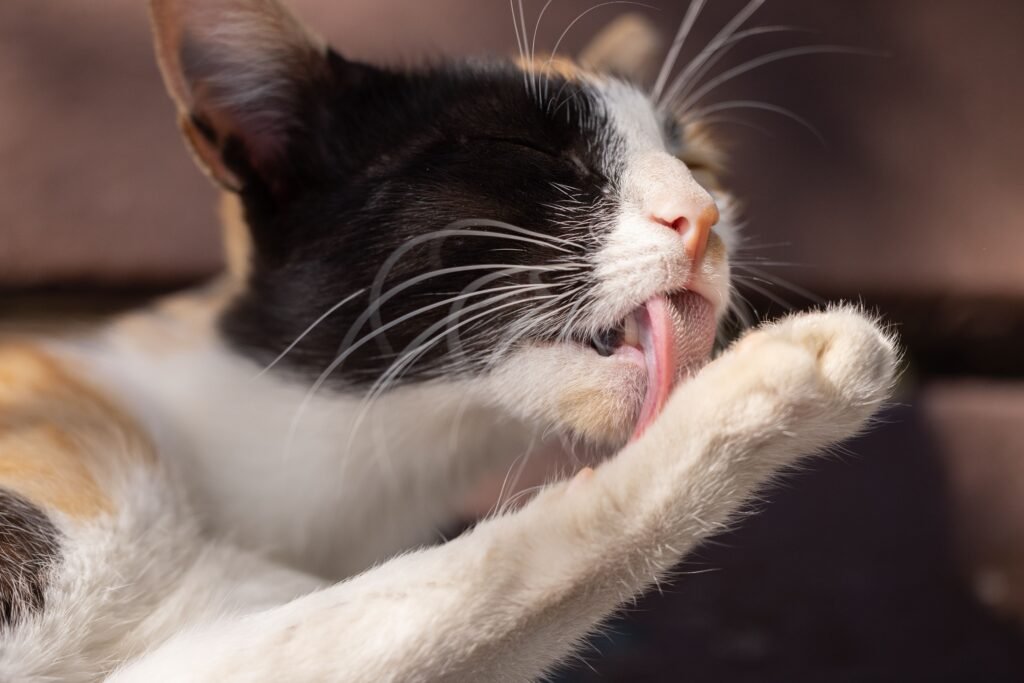
Cats swallow fleas during normal grooming, which is how they pick up the flea tapeworm living inside the flea, so a cat with fleas can end up with tapeworms too.
Flea saliva can also trigger flea allergy dermatitis, an allergic reaction in which even a single bite can cause days of intense itching. A very allergic cat may groom so much that you cannot find a single flea on her, even while she scratches.
Clearing It, and Keeping It Clear
Finding fleas on a cat who never goes outside feels unfair, but it is manageable. What makes it drag on is doing half the job: treat only the cat you saw scratching, and the fleas on the other pets and the eggs in the carpet restart the cycle. Every pet in the home needs to be treated, and the house needs attention too.
In practice that comes down to a few steps. Treat every pet at once, dogs and cats together even if only one seems affected, using a cat product for every cat. Vacuum floors, furniture, resting spots, and sofa crevices to remove eggs and larvae, and wash pet blankets, throw rugs, and carriers. A heavy infestation can also call for a household spray, so ask your veterinarian which one.
Then be patient. Because of those eggs, bringing an infestation under control typically takes two to three months, and another flea in the first few weeks does not mean the plan failed. Getting fleas out of your house covers the home side.
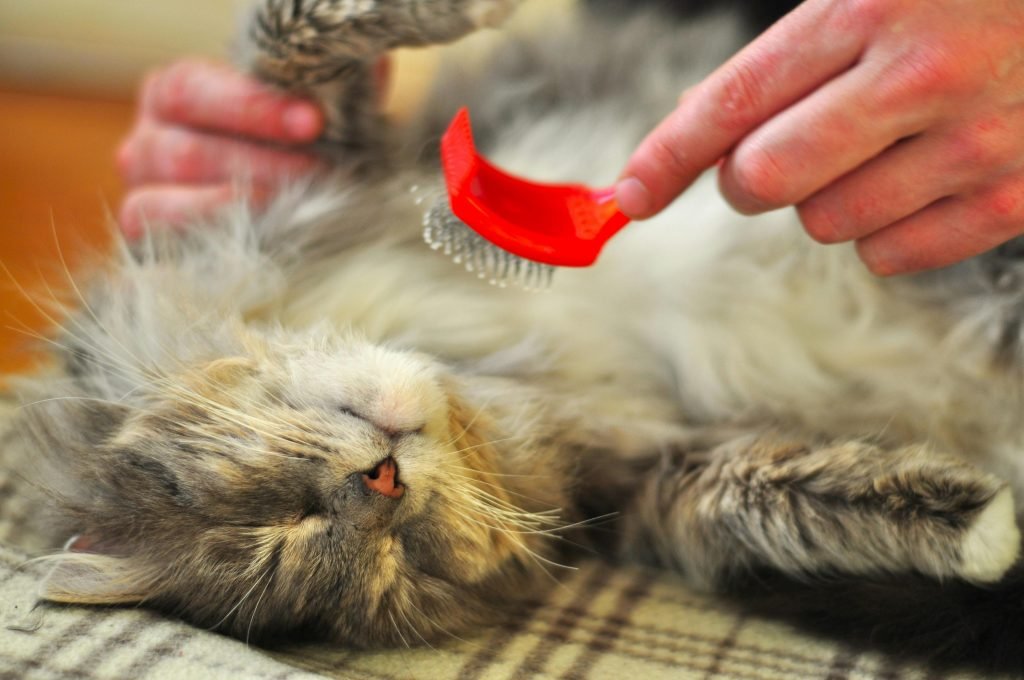
Prevention is easier than treatment. Year-round flea control is recommended for all cats, including one that never sets a paw outside, and fits into a broader parasite-prevention routine. It matters most where there is more than one pet. Grooming doubles as a flea check, so running a fine-toothed tool such as the Safari double-row flea comb through the coat, especially over the back and neck, catches fleas and flea dirt early. It does not replace a prevention product your veterinarian recommends.
Those products come as topicals, oral tablets, and collars. Most are given monthly, while some topicals last about 12 weeks and some collars up to about eight months. Which suits depends on your cat and your household, so choose it with your veterinarian rather than guessing, and know that natural flea treatments rarely hold up as a substitute for something proven. The Cornell Feline Health Center’s flea guide covers the wider risks.
This article is for educational purposes only and is not a substitute for professional veterinary care. Always consult a licensed veterinarian regarding your pet’s health and nutritional needs. As an Amazon Associate, Vet Explains earns from qualifying purchases.
Was the article helpful?