
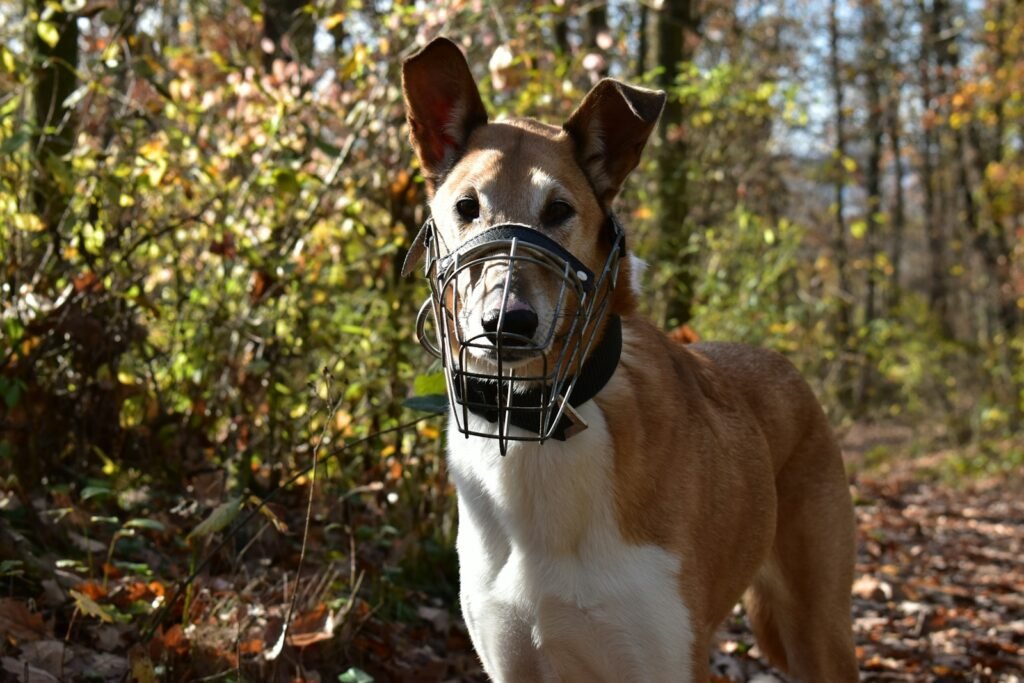
Somebody has told you your dog needs a muzzle. Maybe the clinic, after a nail trim went badly. Maybe the groomer. Maybe you watched him launch at a stranger and decided not to wait for the next time. Now you are staring at forty muzzles, and most of them are the wrong tool for the job.
For nearly every owner the answer is a basket muzzle, the cage-shaped kind that sits around the snout instead of squeezing it shut. A basket gives the most protection and suits longer wear, and a dog in one can pant, drink and take treats while still being unable to bite. The soft fabric sleeves are the ones to be careful with. They have a place, and that place is measured in minutes.
Here are the three worth buying, side by side. The sections below cover how to measure for one and how to teach your dog to wear it.


Product prices and availability are accurate as of the date/time indicated and are subject to change.
What a Muzzle Is Actually For
A muzzle prevents a bite. That is the whole job. It is not a punishment, and it is not a confession that you have failed as an owner. The sweetest dog on the street will bite if you squeeze a sore hip hard enough, which is why clinics keep a drawer of them.
A handful of situations earn one. Muzzles are used for dogs who swallow dangerous things, for injured dogs who might bite the person helping them, as part of a behavior plan for aggression, and to get a dog used to being handled at the vet. Add home grooming and that is the list.
Framed that way, the muzzle is what lets your dog stay in the room. A dog who is genuinely lame often cannot help snapping when the painful leg is flexed, and five muzzled minutes buy him a proper exam. A dog who hoovers up whatever he finds outdoors can go back to running in a field.
Three Kinds of Muzzle, and Only One Is for Everyday Use
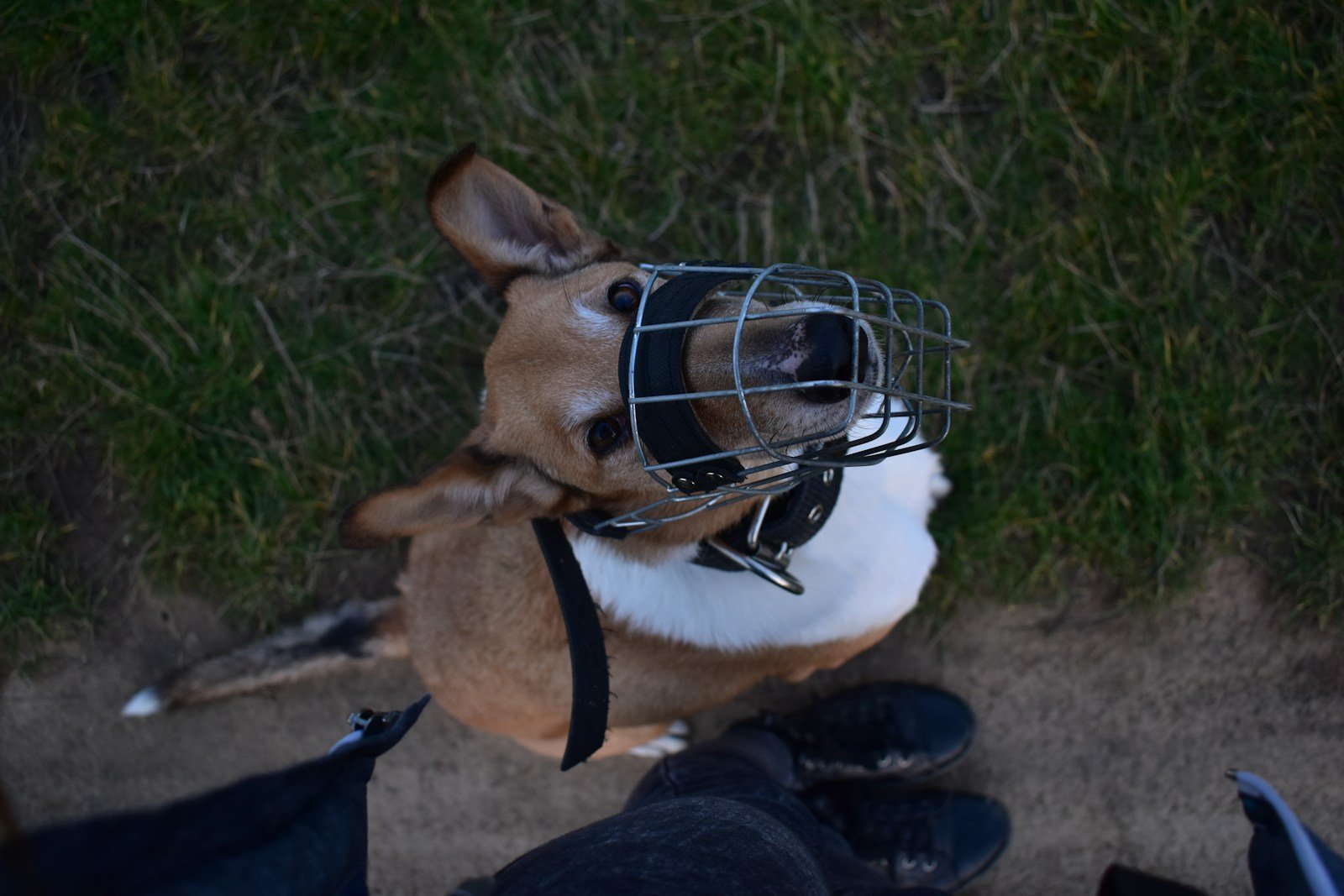
The basket is the one you want for anything longer than a moment. It is a rigid cage of plastic, rubber or wire, with straps that buckle behind the head. The point of the design is the empty space at the front. Your dog can open his mouth, pant, drink and eat a hot dog pushed through the bars. He just cannot close his jaws.
Soft sleeve muzzles are the fabric or mesh tubes that pull snugly over the snout. They are cheap, they fold into a pocket, and they are the easiest mistake to make in this category. A sleeve limits panting and drinking, a determined dog can still nip through one, and it suits only something brief like a nail trim. The third kind, a gauze loop improvised from roll gauze or a spare leash, is emergency restraint and not something you buy.
The reason is worth understanding rather than memorizing. Dogs have sweat glands only on their paws, so panting is how they shed heat. Hold the mouth shut and you have switched off the cooling system of an animal who is already stressed and breathing hard.
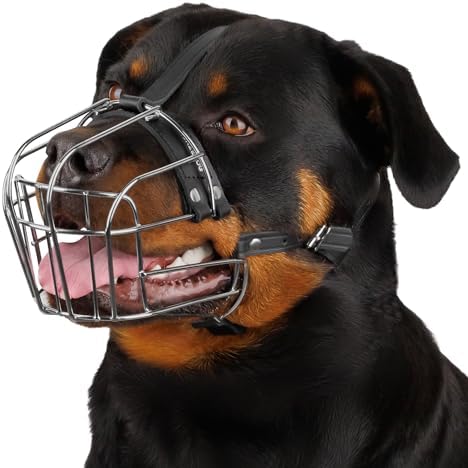
Within the basket group, material matters less than people think. Plastic and rubber are lighter against the face and take treats more easily. Wire gives the most airflow and keeps its shape under a dog who leans into it. Either will get you through a bath, a session with the nail grinder or cleaning a sore ear.
Getting the Fit Right
Read the one-star reviews on any muzzle and you find the same complaint: it did not fit. Almost none are faulty products. Muzzle sizes run by snout measurement, not by breed, and two Labradors of the same weight can need different sizes. Measure the circumference of your dog’s snout and its length before you buy anything.
Once it arrives, run a short checklist. The muzzle should be sturdy enough to stop a bite, let your dog pant and eat treats, sit clear of the soft flesh of the nose and the nostrils, avoid touching the eyes, and resist being pulled off. Adjust the neck strap so one or two fingers slide underneath. Tighter than that is uncomfortable. Looser and he will have it off before you reach the clinic door.
Check the front of the basket too. He should be able to open his jaws fully inside it without his tongue pressing on the end, because a tongue that cannot extend cannot cool him.
Flat-faced dogs are the real problem case. A standard basket is built around a snout, and a Frenchie or a Pug does not have one. Ordinary muzzles ride up into the eyes or slide off. These brachycephalic dogs can least afford to lose any airway, so fit matters more here than anywhere. Look for a short-snout model, and expect to return the first one. Some short-nosed dogs do better learning to wear a cone collar instead, so ask your vet whether that suits yours.
Three Muzzles Worth Buying
One all-round basket for a dog of ordinary shape, one budget option, and one built for a large dog with real strength in his jaws.
The Baskerville Ultra is the one I would put on most dogs. The body is a thermoplastic rubber you can soften in warm water and reshape to your dog’s face, much like a sports mouthguard, which solves the fit problem that ruins most muzzle purchases. Six sizes, padded straps, no metalwork near the face. Its four-star average is held down by people who ordered the wrong size.
The BARKLESS basket is the honest cheap option at about twenty dollars. The plastic is softer, the bar spacing is wide enough to post treats through, and the medium suits a snout in the Beagle to Husky range. Buy it if you need a muzzle for a few appointments a year rather than daily walks.
The BRONZEDOG wire basket is for the big powerful dog who flexes plastic out of shape. Stainless steel cage, leather straps, four adjustment points, a neoprene pad on the nose. It gives the best airflow of the three, and it reads as far more alarming to people on the street.
Teaching Your Dog to Wear It
A muzzle your dog hates is a muzzle that comes off. Worse, a dog who first wears one in a waiting room learns that the muzzle means something bad is coming. The conditioning is easy, but it has to happen before you need it.
The method is simple. Smear something genuinely good inside the nose end, such as peanut butter or cream cheese, and let your dog put his own nose in to get it, then take the muzzle away before he chooses to leave. Repeat until he pushes his nose in willingly with nothing in there. Keep sessions to a minute or two, a few times a week. Only then fasten the strap, loosely, and reward him the instant it clicks.
Two cautions. Do not use the muzzle in frightening situations while he is still learning it, and never leave it on a dog you are not watching. An unsupervised dog works at it until he gets it off or swallows a piece of it. Once he is truly comfortable, an hour or more of wear is reasonable, as long as you offer water when he wants it.
The muzzle is one part of the picture. For a dog who comes apart at the clinic, your vet may prescribe medication to give at home beforehand, such as gabapentin given before the visit or trazodone for situational fear. The stress of a bad grooming session spills over into a dog’s fear of all veterinary care, so it pays to get this right early. A calming wrap can sit alongside that plan, though it is a smaller tool.
What a Muzzle Cannot Fix
This is where owners of reactive dogs get into trouble. A muzzle removes the bite and nothing else. A basket muzzle prevents the possibility of a bite, but a muzzled dog should still be relaxed rather than lunging and barking, and his space should be respected exactly as though he were not wearing one. Walking a snarling dog into a crowd because his mouth is caged leaves him frustrated that nobody is listening, and aggression can escalate from there.
A muzzle is management, not treatment. It buys safety while a proper behavior plan does the real work, and for aggression that plan is often best built with a veterinary behaviorist. A gate across the hallway does more for a dog who guards the front door than any muzzle will, and a harness you can steer him in keeps walks from becoming a tug of war.
Two uses to rule out entirely. A muzzle is not for holding a dog’s mouth shut, and it is not a tool for stopping barking. The anti-bark sleeves sold for that purpose treat a symptom by making the animal less able to cope. Destructive chewing is the same story: the dog is bored or anxious, and the answer is something worth doing with his brain, not a strap on his jaws.
A muzzled dog who cannot cool down is the one true emergency here. Because dogs shed heat by panting, a muzzle that holds the mouth shut can push a stressed or warm dog toward heatstroke, a collapse of the body’s temperature control that damages the kidneys, the clotting system and the brain, and that can be fatal. Heavy panting, drooling, vomiting, weakness or collapse are the early signs, and flat-faced, elderly, overweight and thick-coated dogs tip over soonest. Get the muzzle off, wet him with cool water and drive to a vet with the air conditioning on him, rather than waiting to see whether he settles. Never muzzle a dog who is already struggling to breathe or overheating on a warm day.
This article is for educational purposes only and is not a substitute for professional veterinary care. Always consult a licensed veterinarian regarding your pet’s health and nutritional needs. As an Amazon Associate, Vet Explains earns from qualifying purchases.
Was the article helpful?