

Most diarrhea in dogs is the gut reacting to something ordinary: a raid on the trash, a food switch made too quickly, a stressful weekend away. Those cases usually settle on their own within a few days. A smaller number are the first sign of something that needs real treatment, such as intestinal parasites or pancreatitis, and on the first morning the two can look identical.
What you need to decide right now is whether your dog can be watched at home or needs to be seen. A few signs settle that question, so they come first below, followed by home care, the usual causes, and what a vet visit involves.
Signs Your Dog Should Be Seen Without Waiting
A few findings take a dog out of wait-and-see, and most of them are about behavior rather than what the stool looks like. The one appearance worth knowing by name is black, tarry stool, melena (Greek: melaina, “black”), because the color comes from partially digested blood higher up in the digestive tract. Vomiting on top of the diarrhea, or a dog who has stopped eating, matters because the fluid lost adds up quickly and little is going in to replace it. If you notice any of the signs below, get your dog seen sooner rather than waiting it out.
- 01
Blood or black stool
Blood or excessive mucus in the stool, or black, tarry stool
- 02
Vomiting or not eating
Vomiting along with the diarrhea, or a dog who stops eating
- 03
Fever, weakness, or collapse
Fever, weakness, unusual tiredness, or collapse
- 04
Dehydration
Signs of dehydration, such as dry gums
- 05
A more vulnerable dog
A puppy, a senior dog, or a dog with an ongoing medical condition, since they decline faster
Age and medical history move the line, because a puppy, a senior dog, or a dog with an ongoing condition declines faster than a healthy adult. There is also a clock. Diarrhea that lasts beyond about 48 hours deserves a veterinary evaluation.
Sometimes there is no specific red flag, just a sense that something is not right. That instinct is worth listening to. If your dog seems painful, uncomfortable, or simply different in a way that bothers you, call rather than wait it out. I would rather hear about a false alarm than about a dog who waited two days too long.

When Your Dog Can Be Watched at Home
If none of that applies, how your dog is acting tells you more than the stool does. A dog who is bright, alert, eating, drinking, and playing normally points toward something minor, and mild diarrhea in that dog usually is not an emergency. A dog who seems flat or off points toward something bigger. Most uncomplicated cases resolve within a few days as the gut settles, so the stool should be improving rather than holding steady. If your dog is still having diarrhea after two days, or is worse than yesterday, call your veterinarian.

Home care advice has changed. Older guidance called for a twelve- to twenty-four-hour fast to let the gut rest. Veterinary nutritionists now advise against it, because the gut needs nutrients while it is recovering and withholding food can delay healing. For a dog who is otherwise bright, eating, and drinking, I would skip the fast and go straight to small, easy-to-digest meals. Keep fresh water available at all times unless your veterinarian tells you otherwise.
What goes in the bowl has changed too. A veterinary gastrointestinal diet from your vet is now the preferred choice, because plain boiled chicken and white rice, the traditional bland meal, is not complete or balanced. Whatever you feed, offer small portions several times a day rather than one large meal, which eases the load on a gut that is already struggling. Our guide to feeding a bland diet covers ratios, how long to stay on it, and when it is not the right choice.
Skip human medications such as Pepto-Bismol or Imodium unless your veterinarian has told you to use one, because they can be harmful to some dogs. Hydration matters just as much, since the fluid lost to ongoing diarrhea adds up quickly.
Where It Usually Comes From
Diarrhea is not itself a disease. It is a sign that the intestines are not absorbing water and nutrients the way they should, because digestion is moving too fast or because the lining is irritated. Ordinary things cause most of it.
Dietary indiscretion, which is a polite way of describing the trash can, is the most commonly recorded trigger for acute diarrhea in dogs. Dogs get into garbage, spoiled food, fatty table scraps, or a treat that did not agree with them. It does not take much, either: even a small amount of something rich can irritate the gut.
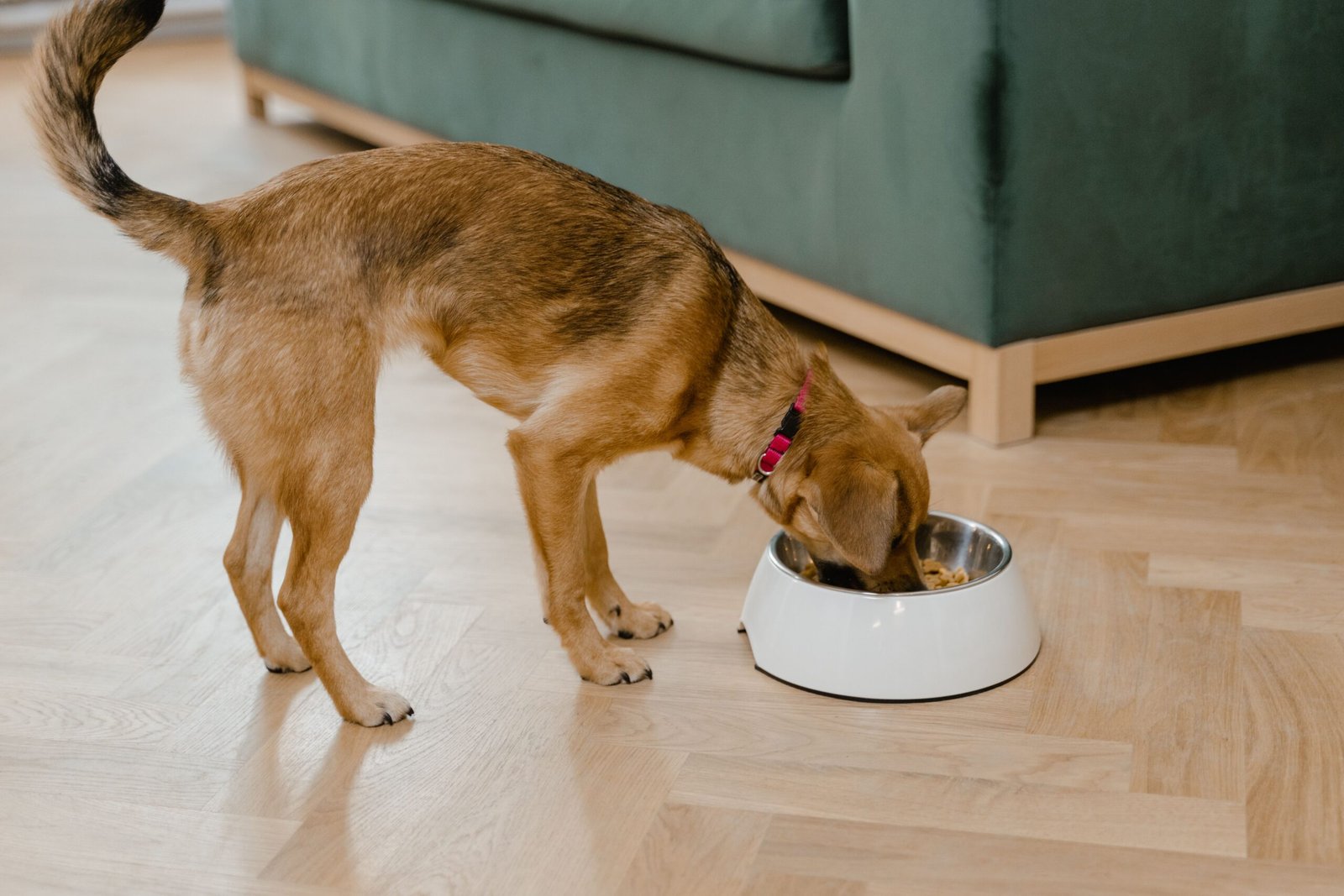
Sudden diet changes are another frequent trigger, since switching foods too fast can upset the gut. Stress plays a part as well. Travel, boarding, houseguests, fireworks, or a disrupted routine can all upset digestion in a sensitive dog.
Intestinal parasites are the other big group. Roundworms, hookworms, and Giardia are especially common in puppies and young dogs, which is one reason your vet will likely ask for a fresh stool sample. Bacterial or viral infections can cause diarrhea too, sometimes with vomiting or fever.
Some dogs have food intolerances that flare up again and again rather than causing one clean episode. Diarrhea alongside vomiting, appetite loss, and belly pain can also point toward pancreatitis, which needs a different approach than a routine stomach bug.
What a Vet Visit Actually Involves
A vet visit for diarrhea usually starts with questions, not tests: timing, diet changes, stress, and possible exposure to new foods or environments. That history often points toward the likely cause, so it helps to arrive knowing what your dog ate and when the diarrhea started.
From there, a fecal exam checks for parasites. Bloodwork such as a chemistry panel can assess hydration, inflammation, or organ function, and can also help tell pancreatitis apart from gastroenteritis when the picture is not clear. Imaging such as X-rays or ultrasound comes in if there is concern about an obstruction or something more serious.

There is no single treatment that fits every dog with diarrhea. Some improve with a diet change and supportive care alone. Others need dewormers, probiotics, or fluids, a prescription diet, or medication for infection or inflammation. Antibiotics help with certain bacterial infections, but overuse can harm gut health, so they are not a routine fix for a simple upset stomach. Either way, the goal is the same: treat what is actually causing it while keeping your dog hydrated and letting the gut heal.
Lowering the Odds Next Time
Not all diarrhea can be prevented, but a few habits lower the odds. Switch foods gradually over about a week, mixing in a little more of the new food every couple of days. A sudden change is one of the easiest triggers to avoid. Secure the trash and go easy on rich table scraps, keep up with routine parasite prevention, and keep diet and treats consistent if your dog has a sensitive stomach. Regular wellness visits catch slow-building problems early.

Was the article helpful?