
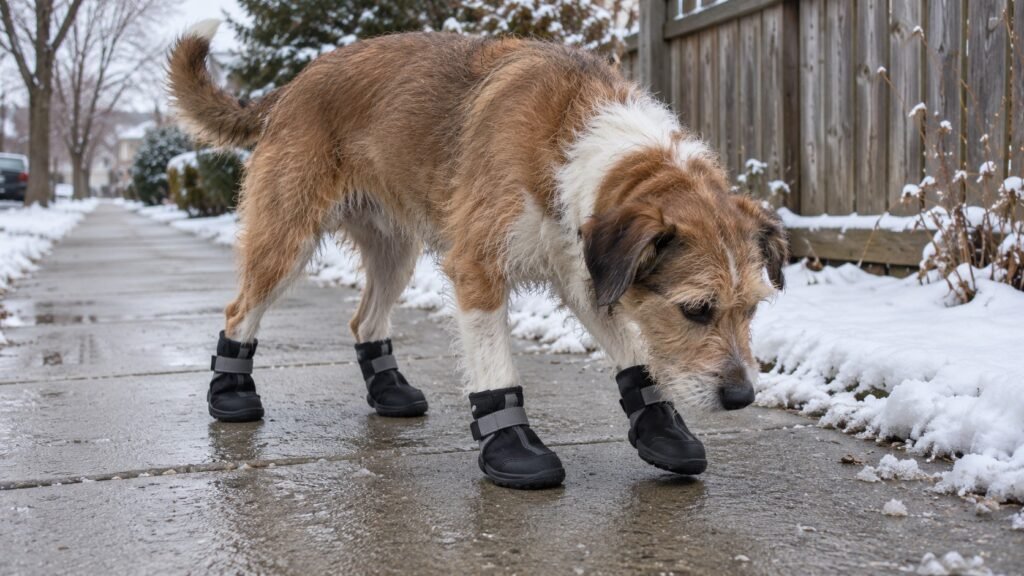
The first hard freeze arrives. Three houses down the block, your dog stops dead with one front paw held in the air. Nothing is bleeding. It is probably road salt or a ball of ice packed between the toes, and the walk is over. Dog boots for winter prevent both, as long as they fit.
Not every dog needs boots in winter. Boots help dogs that walk on salted sidewalks or cover real distance in snow. They also help dogs whose pads crack every winter, and older dogs that slide on ice. On salted sidewalks, use a waterproof boot with a grippy sole. On trails and in deep snow, use a hiking boot with real tread. If your dog fights a stiff sole, start with soft neoprene.
If the size is wrong or you skip practice at home, even a good boot ends up in the closet. Here are the five side by side.


Product prices and availability are accurate as of the date/time indicated and are subject to change.
What Boots Actually Protect Against
A boot does three jobs. It keeps chemicals off the skin and ice and grit off the pads. A treaded sole also adds grip.
Owners often underestimate the chemicals. Salt and ice melting agents stay on bare paws. At home, your dog licks its paws clean and swallows the chemicals. De-icing agents also leave paws stinging and irritated.
The ice job is simpler. A sudden limp on a walk can mean an injury, or just ice packed between the toes. Boots keep the ice out. Trimming the hair between the toes helps too.
Boots do not keep a dog warm. For warmth, use a coat that covers the chest and belly, and limit how long your dog stays out in the cold. Even with boots on, wipe your dog’s feet and belly when you come back inside. The legs and belly pick up de-icer that boots do not cover.
How Cold Is Cold Enough to Bother
No chart tells you when it is cold enough for boots. Every dog handles cold differently. It depends on coat, body fat, activity level and overall health. Dogs with short coats feel the cold sooner. So do short legged dogs, whose bellies ride close to the snow.
So watch the dog, not the thermometer. A dog that keeps lifting its paws off the ground is telling you the ground is the problem. Not wanting to walk means the same thing. When you see either, cut the walk short and head somewhere warm and dry.
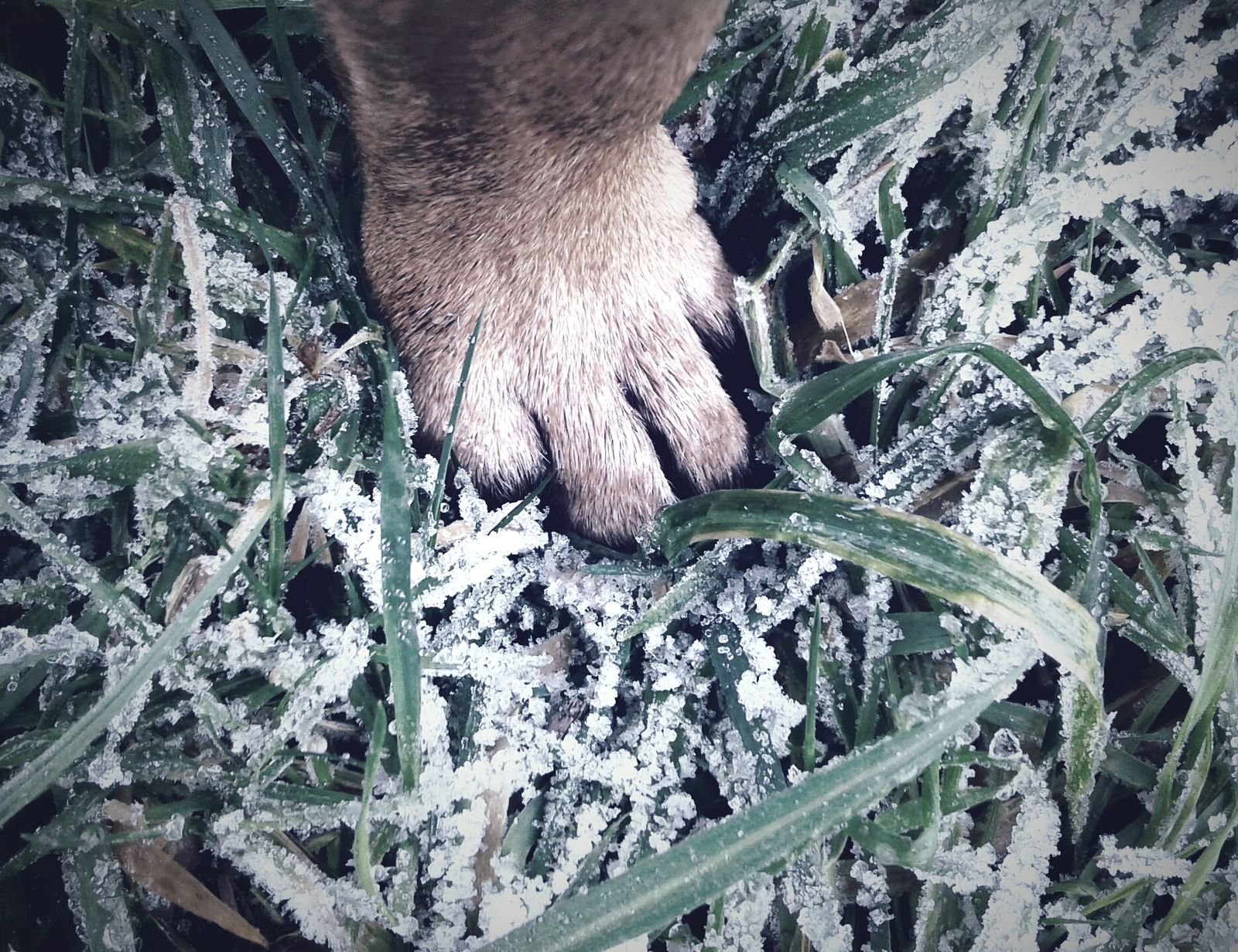
At home, check the pads for cracks or bleeding and the skin between the toes for redness. Any of those means the paws need protection. Road salt alone can crack and sting pads, so on salted sidewalks boots make sense even on a milder day.
Getting the Size Right
Measure before you order. A boot that does not fit ends up unused. Stand your dog on a sheet of paper and lift the opposite paw. This way the paw carries weight, as it will inside the boot. Hold the pen straight up and down, mark either side of the widest point, and measure between the marks. Size charts are based on width.
Do the front and back paws separately. Front paws are usually bigger, so some dogs need two sizes. If your dog is between two sizes, Ruffwear advises going smaller, because a snug boot rubs and slips less.
Then check the fit when the boots arrive. A boot should sit securely and follow the natural shape of the paw. One that is too loose or too tight is uncomfortable, and one that rubs can cause a sore. If the fit is off, swap it for another size before the first real walk.
Teaching a Dog to Accept Winter Boots
Boots are often the hardest piece of winter gear for a dog to accept. The first time, many dogs lift each paw high, as if they forgot how to walk. That is normal. With time and patience, most dogs walk normally again.
Start indoors with one boot for a few moments, and give a really good treat. Keep each training session short, and add a little time to the next one. If your dog tries to pull the boot off, go back to shorter sessions. Build to two boots, then all four. Once your dog will eat treats or play at home in all four, try a short walk.
I would put in those sessions before deciding the boots are faulty and buying another brand. Start before you need the boots, ideally before the cold arrives. If the first try is the night the pavement freezes, you have skipped every step above.
Which Winter Boots Suit Which Dog
For everyday walks on salted sidewalks, the QUMY and CovertSafe boots are the two to look at first. QUMY sells its boot for both snow and hot pavement. CovertSafe says its boot is non-slip and waterproof. If you are not yet sure your dog will tolerate boots at all, buy whichever of the two costs less today.
If you hike, the Ruffwear Grip Trex is the one worth real money. It has a rugged outsole built for traction. It is sized by paw width and sold in pairs, so the front and back paws can each have their own size. A full set means buying two pairs. For a dog that only walks around the block, it is more boot than you need.
The Bark Brite boot is the neoprene option. Its soft, breathable neoprene shapes to the paw, and the rubber sole has tread. That makes it the one I would try for a dog that fights a stiff boot. Its reflective strap helps on dark winter afternoons. If you walk near traffic, add other reflective gear.
The fifth pair is a plain waterproof, anti-slip boot with reflective straps, listed for medium and large dogs. It is sized by paw width and by weight. The link opens on one of the bigger sizes, so pick your own dog’s size on the listing before you order.
When Boots Are the Wrong Answer
If your walks are short and on untreated ground, skip the boots. Instead, rub a wax or balm into the pads before you go out. If your dog truly panics in boots, do the same and add a rinse at the door. A paw cleaner or a bowl of warm water by the mat washes off the salt. Dry the feet afterward.
A Boot Is Not a Bandage
A cut pad needs cleaning and covering, and a boot pulled over it does neither. If you find an open cut, a bleeding split pad or a raw patch between the toes, clean and bandage it. Call your veterinarian if it is more than a scrape. If the bleeding has not stopped within 10 to 15 minutes, treat it as an emergency and go to the vet.
Winter Boots for an Older Dog on Ice
Grip is a good reason to buy boots, and stiff older dogs may benefit most. Arthritic and elderly dogs have more trouble on snow and ice and slip more easily. Well fitting boots may help with balance. Pick a sole with tread for this dog. But if your old dog also slips on the hallway floor, boots only treat the symptom. If your dog is stiff or avoids stairs, have your vet check for arthritis before you buy anything.
Cold paws after a walk are normal. A paw that stays cold is not. If a paw is still pale, gray or bluish and cold to the touch well after your dog is back indoors, it may be frostbite. The cold narrows the blood vessels near the skin until the tissue itself starts to freeze. Frozen tissue can die, so go to the vet immediately.
Do not rub the area, and do not put a hairdryer or a heating pad on it. If you warm the paw before you leave, use water that feels comfortable on your own hand, because water that is too hot can add to the damage. The paws, ears and tail are hit most often, a wet or damp dog is more vulnerable, and the full damage can take several days to show. A dog that will not put weight on a paw at all needs a vet visit too, boots or no boots.
This article is for educational purposes only and is not a substitute for professional veterinary care. Always consult a licensed veterinarian regarding your pet’s health and nutritional needs. As an Amazon Associate, Vet Explains earns from qualifying purchases.
Was the article helpful?