
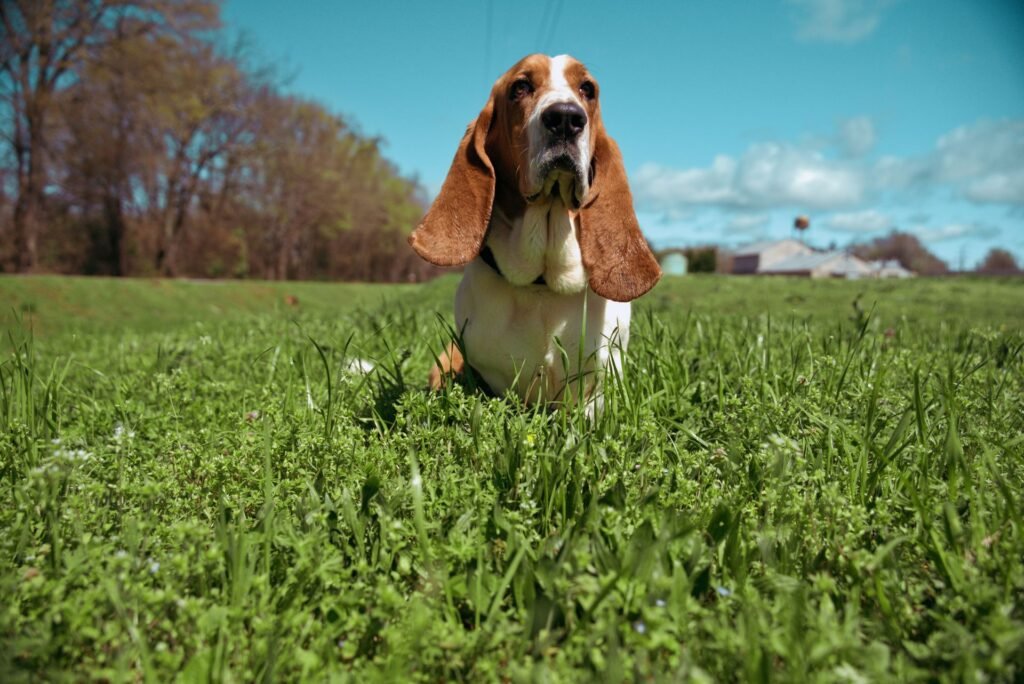
Watch a Basset Hound on a good trail and the picture never changes: nose down, tail up, and those long Basset Hound ears sweeping the grass like two velvet brooms. It looks like a design flaw. It is closer to a job description, though the full story mixes history, genetics and a little breed lore.
Built Low on Purpose
The name comes from the French word bas, which means low. These hounds were bred to follow small game through thick cover at a pace a hunter on foot could keep up with. An extra copy of a gene called FGF4 explains the short legs of Bassets, dachshunds and corgis. Short legs keep the head close to the ground.
The ears have their own genetics. A 2025 study of more than 3,000 canines found DNA variants near two genes, MSRB3 and HMGA2. Those genes help decide whether ears droop and how long they grow. The study did not test what long ears actually do.
The Scent Funnel Idea
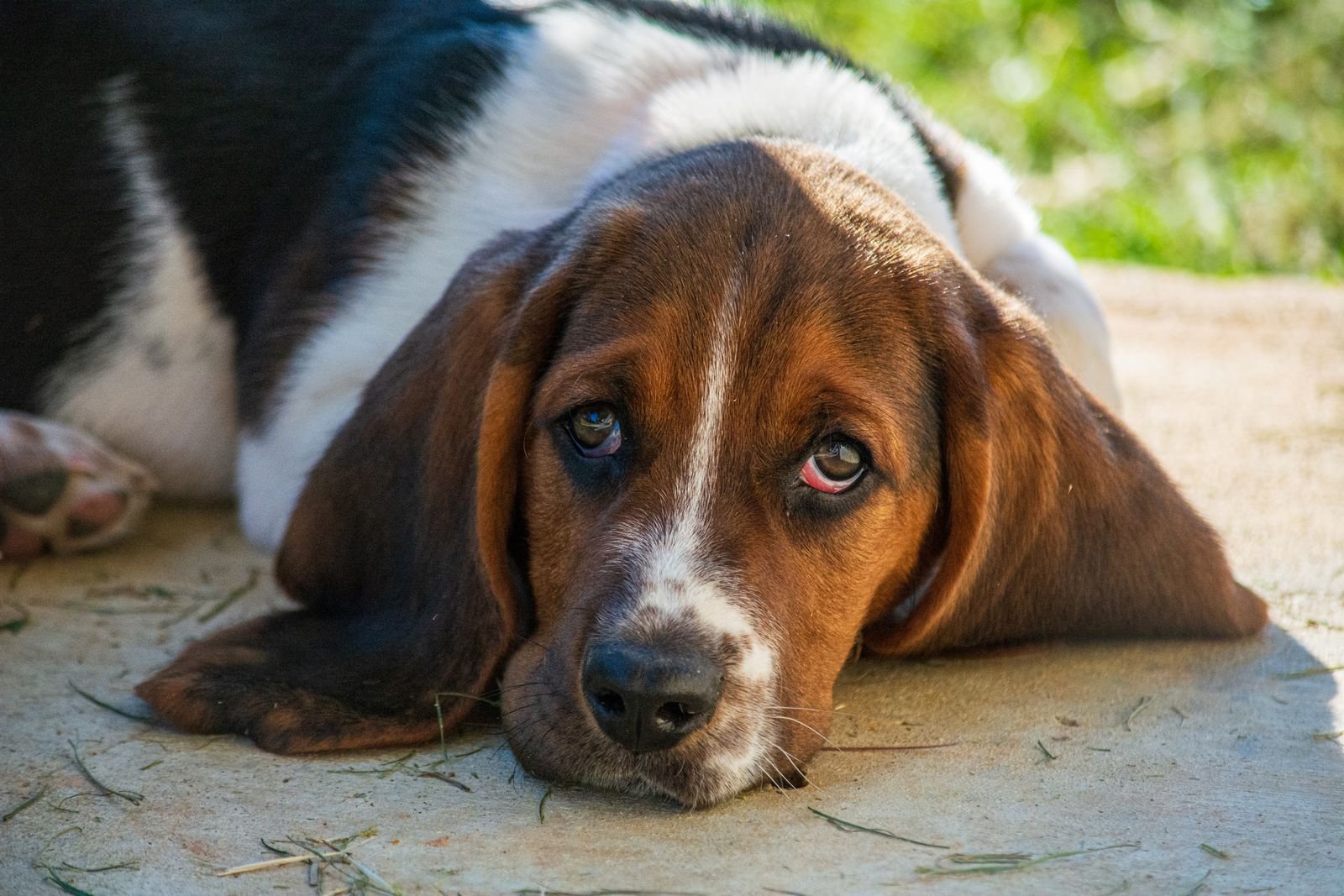
Many breed clubs say the long ears stir scent up from the ground, while the loose facial skin and dewlap (the fold of skin under the throat) hold it close to the nose. Shakespeare gave his hounds “ears that sweep away the morning dew,” so the picture is old.
It is a popular theory, and an unproven one. Researchers once built a 3D printed dog nose to see how scent travels. The movement came from the nose’s own sniffing, about five sniffs a second drawing air toward the nostrils. Ears were not part of that test. The real scent work is probably done by the nose, as your dog will show you on every walk. A few puzzle toys give that nose a job at home.
One Dog, Two Standards
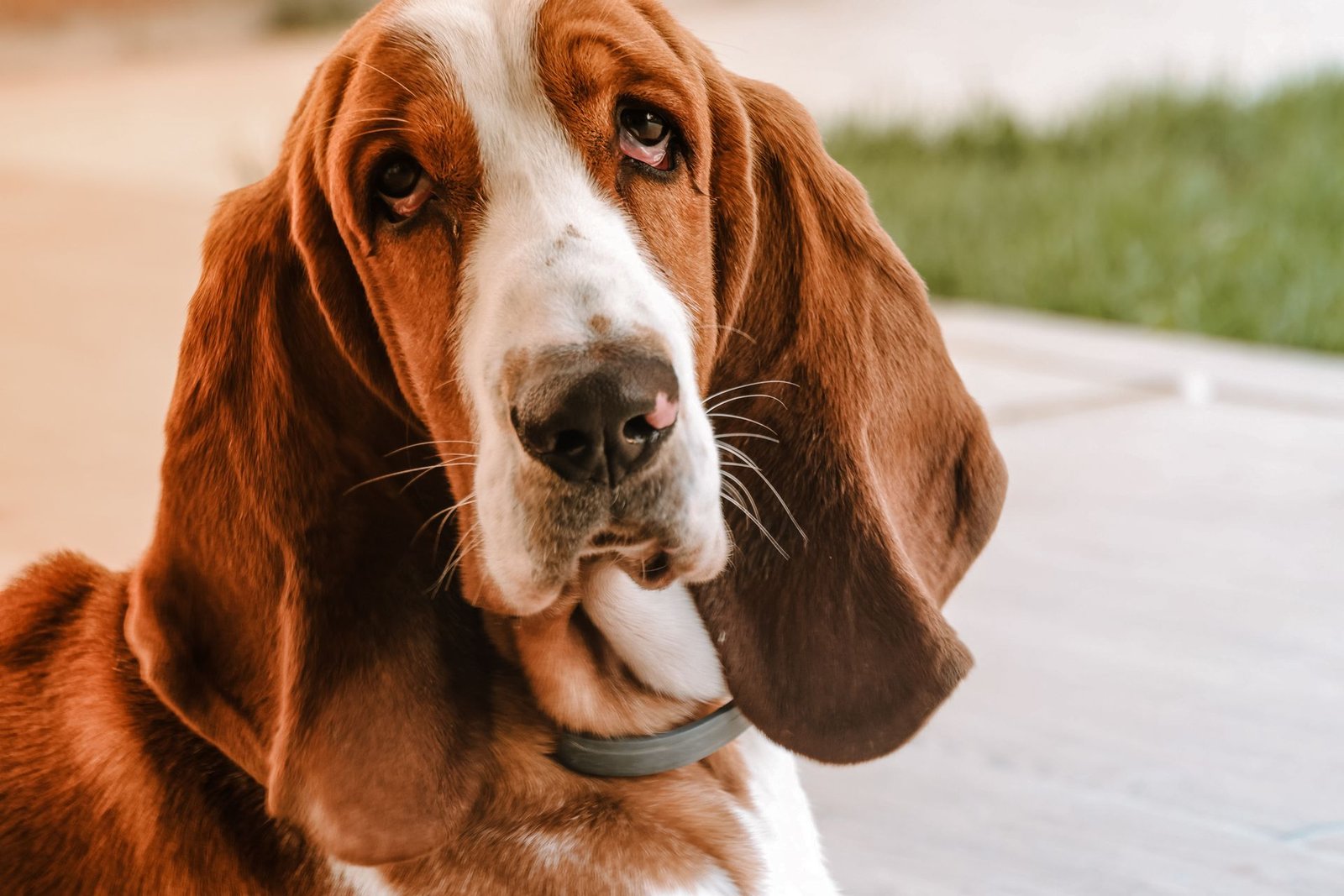
The American standard asks for ears that are extremely long and fold well over the end of the nose when drawn forward. The UK standard is more restrained: ears reach only slightly beyond the end of the muzzle. UK show judges are even asked to watch for longer ears under the Breed Watch scheme. So the same dog can be judged differently depending on which side of the Atlantic the ring is on.
Both standards agree on the feel: velvety and curling inward. Our Basset Hound profile covers the rest of the breed.
Why Basset Hound Ears Need a Little Routine
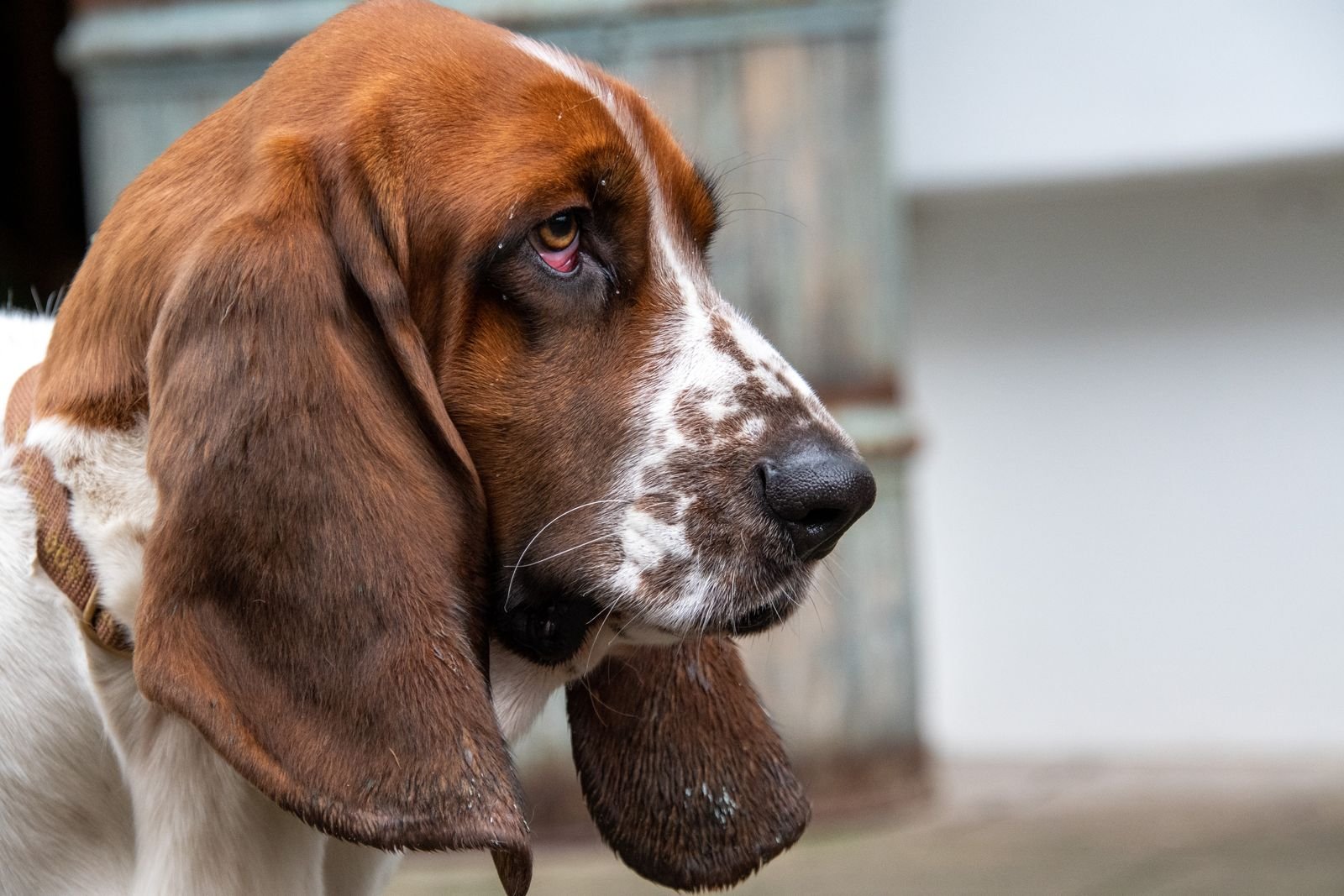
The ear flap, called the pinna (from the Latin for “feather” or “wing”), is cartilage covered by skin. It sits over an ear canal that is much longer than ours, with a bend in it. A hanging flap can keep moisture in, and that bend tends to hold fluid. In a large UK study, Basset Hounds had nearly six times the odds of ear inflammation of crossbred dogs, the highest of any breed. A good ear cleaner is worth having on the shelf. Allergies are a common driver, and ears that keep acting up can be an early sign of a food allergy.
Breed clubs suggest checking and cleaning the ears weekly. Veterinary pages add that many dogs need little cleaning, and that over-cleaning can itself cause irritation. A sensible middle path is a weekly look and sniff, with cleaning only when you see wax or dirt. Use a cleaner your vet recommends, a cotton ball and never a cotton swab. Dry the ears after baths and swims, and give them a glance after a walk through long grass, where seeds and other debris like to hide.
Head shaking, a sour smell, redness or a sore ear is a good reason to call your vet before cleaning anything. These are common ear problems, and your vet can find the cause. Skin folds on the face deserve a look and a dry wipe too, because Bassets are prone to yeast there. More tips live on our Basset grooming page.
Veterinarian’s Perspective
Final Thoughts From a Veterinarian
Those ears are part of the Basset charm, and they ask for a small routine: a weekly look, dry ears after water, and a calm call to your vet when something smells off. The rest is your dog following its nose.
Dr. Vojtech Gabriel
Was the article helpful?