

Table of Contents
If your dog’s bloodwork flagged high potassium in dogs, especially alongside vomiting, weakness, or a trip to the emergency vet, I know this feels frightening. Potassium is one of the values we take seriously right away, and I want to explain exactly why, and what usually happens next.
Potassium gets urgent attention because of what it does to the heart, not because a high number is inherently rare. Even a moderate elevation can disrupt the electrical signal that keeps a heartbeat regular, which is why your vet may want an ECG or a quick recheck before anything else. A meaningful share of high readings, though, turn out to be a lab artifact from how the blood was drawn, not a true elevation at all. The same is true of other values on the panel, like elevated calcium, where the right response depends on the underlying cause rather than the number alone.
In this article I will explain what potassium measures, the common reasons it rises, what a mild elevation often means, and the situations that make this value urgent. Potassium is part of the electrolyte group on the dog chemistry panel.
What Does Potassium on the Bloodwork Measure?
Potassium is an electrolyte that plays a central role in how nerves fire and how muscles, including the heart, contract. Your dog’s body keeps blood potassium within a narrow range, because both too little and too much interfere with that electrical signaling.
Most of the body’s potassium actually sits inside cells rather than in the bloodstream, so the blood level is a small but carefully guarded window into a much larger system. When that balance shifts, the heart is usually the organ most sensitive to the change.
The typical reference range for canine serum potassium is about 4.1 to 5.4 mEq/L. Levels climbing past roughly 7 mEq/L can already be a genuine cardiac emergency, even before the ECG shows it, since the two do not always move together.
The kidneys and certain hormones, particularly aldosterone, are the main regulators keeping potassium in its normal range.

Why Does Blood Potassium Rise in Dogs?
Potassium can rise for reasons ranging from a meaningless sample issue to a genuine medical emergency, so it truly matters which one applies.
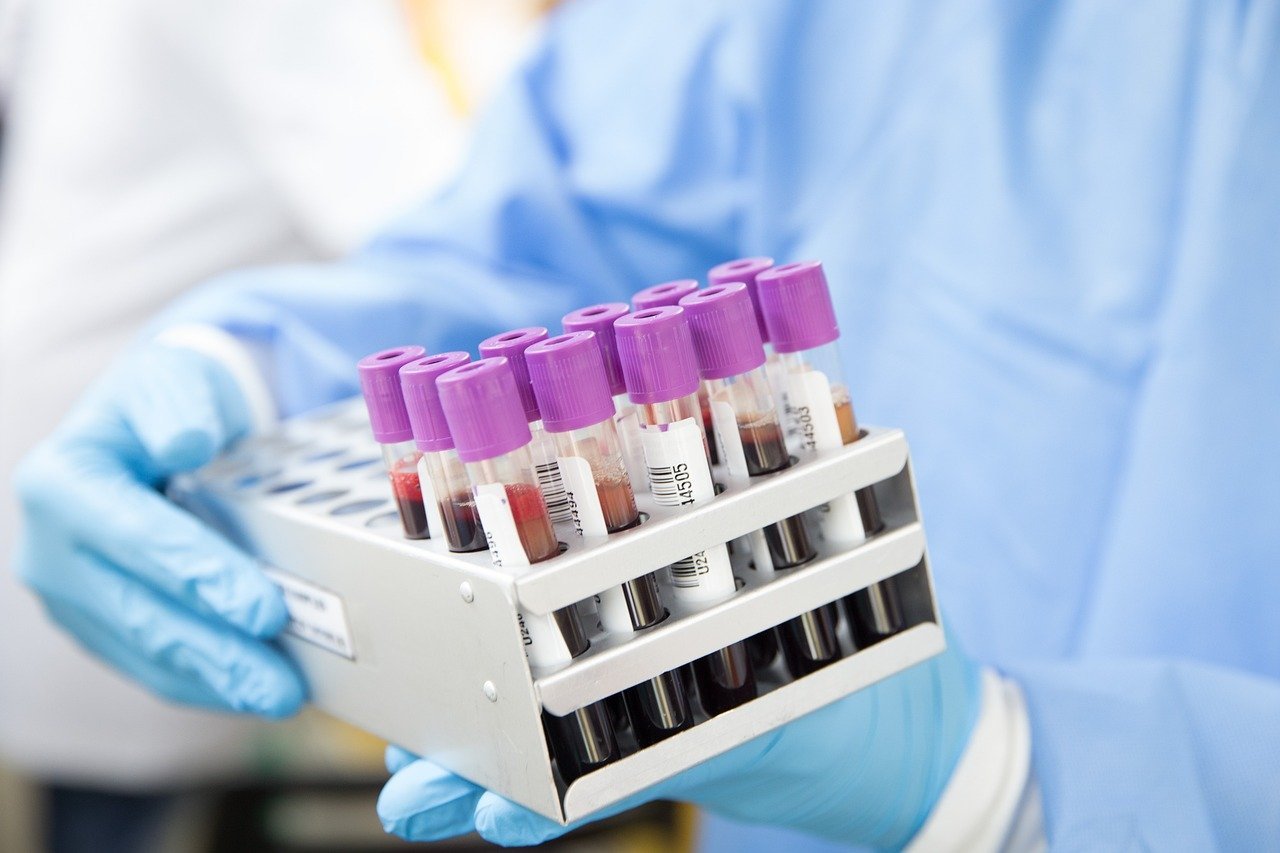
The most common reason a healthy-looking dog shows high potassium is a sample artifact. A delay in processing the blood sample, a difficult blood draw, or a fragile red blood cell sample can all cause potassium to leak out of cells and falsely raise the reading. Vets call this pattern pseudohyperkalemia (from the Greek pseudes, “false,” + hyper, “over,” + kalium, “potassium,” + -emia, “blood condition”). About a quarter of Akitas carry an inherited red blood cell type that runs a true plasma potassium near 6.6 mEq/L with no ECG changes at all, a trait well known in the breed. A similar false elevation has also been reported in a Chinese Shar-Pei. Blood from Japanese breeds and their crosses should be separated from the clot right away for this reason.
Addison’s disease, also called hypoadrenocorticism, is one of the classic causes in dogs, along with urinary obstruction, acute kidney injury, severe dehydration, and significant tissue or muscle damage. Certain medications can contribute as well.

What Does a Mildly High Potassium Usually Mean?
A mild elevation in a dog who feels completely well, especially after a difficult blood draw, is often nothing more than a sample artifact. This is a fairly common and reassuring explanation.
In these cases, the most useful next step is simply to recheck the sample, drawn cleanly and processed promptly, before assuming anything is medically wrong.
A single mildly high potassium in a well-behaving dog is frequently explained by how the sample was handled, not a medical condition.
If the recheck comes back normal, the original result was very likely artifactual. If it stays high, that is the signal to look further in an organized way.

When Is High Potassium Something to Worry About?
Potassium deserves urgent attention when it is significantly elevated or paired with symptoms, because of how directly it affects the heart. The signs to watch for at home include:
- Weakness or collapse
- Vomiting or diarrhea
- Reduced appetite and lethargy
- Straining to urinate or an inability to pass urine
- A slow or irregular heartbeat
How vets classify potassium disorders can help make sense of where a specific case fits once the reading is confirmed.
If your dog is weak, collapsed, straining to urinate without producing much urine, or vomiting repeatedly alongside a high potassium result, this is an emergency and needs same-day veterinary care. Male dogs unable to urinate and dogs with suspected Addison’s disease in crisis both fall into this category, and neither should wait.

How Do Veterinarians Interpret High Potassium?
Vets interpret potassium alongside your dog’s symptoms, hydration, kidney values, and sodium. A low sodium-to-potassium ratio, roughly under 27:1, raises suspicion for Addison’s disease, though about a quarter of confirmed cases have normal electrolytes, so a normal ratio does not rule it out. An ECG is often used directly, because it shows in real time whether the heart is being affected.
Confirming the elevation is real, rather than an artifact, is usually the first deliberate step for a dog who otherwise looks well. From there, the pattern of accompanying values and symptoms guides which underlying cause vets investigate.
| Pattern | What it often suggests |
|---|---|
| Mild high potassium, difficult blood draw, dog feels well | Likely artifact; recheck a clean sample |
| High potassium with low sodium, vomiting, lethargy | Addison’s disease considered |
| High potassium with inability to urinate | Urinary obstruction; urgent |
| High potassium with elevated kidney values | Kidney involvement considered |
| Normal on clean recheck | Original result likely artifactual |
Trends, symptoms, and how your dog is acting matter as much as the number itself, and an ECG can settle the question quickly when there is any doubt about the heart. The same trend-over-number approach applies when kidney values move into urgent territory, since potassium problems and kidney disease often show up together.
What Happens Next After a High Potassium Result?
For a mild, unconfirmed elevation in a well dog, a clean recheck is often the sensible first step. For a confirmed or symptomatic elevation, your veterinarian will move quickly to identify the cause, since treatment for high potassium itself can begin even before every underlying answer is known.
Because the causes range from harmless to urgent, this is firmly a value to act on with your veterinarian rather than to interpret alone from a printout.
If your dog shows any of the emergency signs above, do not wait for a scheduled appointment.
Was the article helpful?