

You come home to a scratched door frame, a puddle by the entrance, or a neighbor’s note about howling. That might be separation anxiety, but it might not be. Two different dogs leave the same marks. One panics the moment it is left alone, and the other simply had eight hours and nothing to do. Boredom, incomplete housetraining, and noise from outside produce the same chewing, the same barking, and the same accidents, so the wreckage alone cannot tell you which dog you have.
Only the first dog has separation anxiety, one specific form of anxiety in dogs, and it is not a training failure or a grudge. The distinction matters because the two dogs need very different things: a dog that panics needs a graduated plan and often a veterinarian, while a bored dog needs a better day. Everything below depends on knowing which dog is behind the door.

How to Tell Separation Anxiety From a Bored Dog
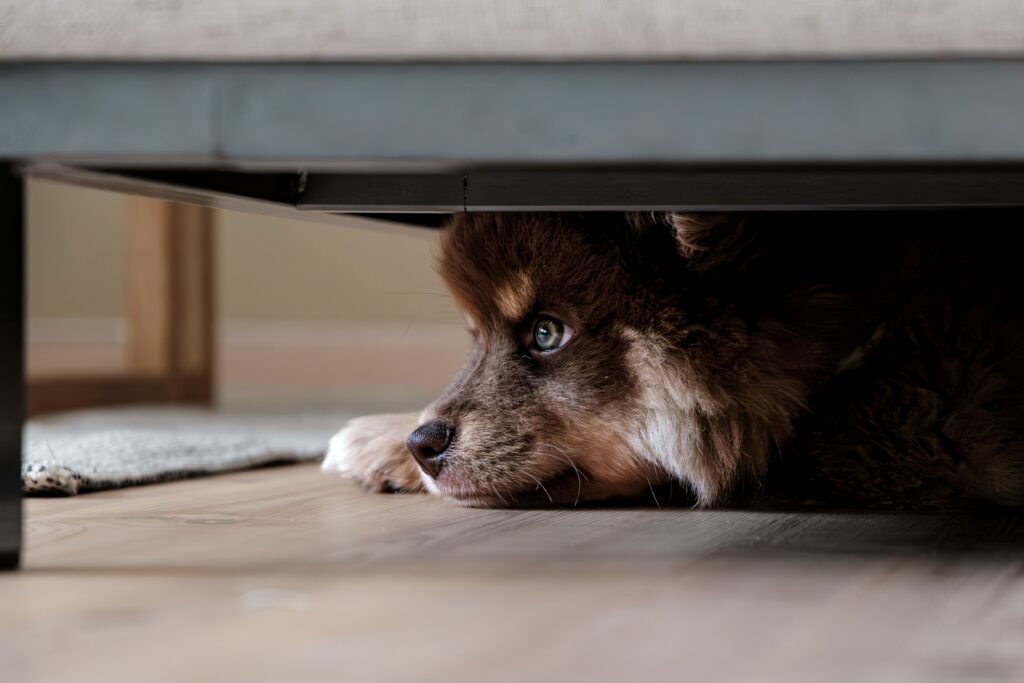
Timing tells you more than the damage does. The signs of separation anxiety appear when the dog is alone or about to be, and they are usually most intense in the first half hour after you leave. Many dogs get restless when you pick up your keys, well before the door opens. When you come home, the greeting is often frantic and slow to settle. What owners typically find or hear:
- 01
Damage at exits
Chewed or scratched door frames, window sills, and crate bars, the places the dog tried to get out.
- 02
Howling or barking
Distress vocalizing that starts soon after you leave, often reported by neighbors.
- 03
Accidents indoors
Urine or stool in the house from a dog that is reliably housetrained when you are home.
- 04
Pacing and drooling
Restless pacing and wet patches of drool near the door.
- 05
Escape attempts
Digging or clawing at doors and crates, sometimes hard enough to injure themselves.
- 06
Distress before you leave
Restlessness or whining as you put on shoes, grab keys, or reach for your coat.
Damage alone cannot settle it, so the most useful step costs nothing: record your dog when left alone for the first half hour. A pet camera or an old phone on a shelf is enough, and the video helps your veterinarian tell separation anxiety from look-alike problems.

Separation Anxiety Is Not Misbehavior
A dog with separation anxiety is not acting out of spite or getting back at you for leaving. It is panicking, which is a different thing from misbehaving and responds to different handling. It is also not proof that you failed at training, because well-trained, well-cared-for dogs develop it too. That is why punishment does not help: scolding a dog for a mess found hours later adds fear to an already frightening situation and makes the next departure harder.
A close bond does not cause it either. Dogs are social animals, and following you from room to room is not a warning sign on its own: dogs that shadow their owners around the house are at no greater risk of separation anxiety than dogs that do not. Behavior professionals often link separation problems to a shelter or rehoming history, although studies disagree on how strong that link is. The same research points to changes in routine as a common starting point: a move, new work hours, or someone leaving the household. A frightening event while the dog is alone, such as a thunderstorm, can also set it off. If your dog panics during storms or fireworks, that noise fear usually needs its own plan alongside the separation work.

How You Can Help Your Dog
The core of treatment is gradual desensitization. The word comes from the Latin sentire, “to feel,” with de- meaning “away from.” It means exposing your dog to being alone in small, systematic steps. Start with absences short enough that your dog stays relaxed, even under a minute, and lengthen them only while your dog stays calm. If your dog panics, the step was too big, so go back to the last length that went well. For moderate or severe cases, graduated departure training can take months, and I would rather an owner knew that from the start than found it out in week three.
Keep departures and arrivals calm and low-key. Long goodbyes and excited greetings make your leaving a bigger event than it needs to be. It also helps to minimize the cues that predict you are leaving, or practice them without going anywhere, so the jingle of keys stops meaning a long absence.
Give your dog something good to do while you are gone. A food-stuffed chew toy or puzzle feeder handed over as you leave fills the first few minutes, when distress peaks. Introduce it while you are home first, so it is already a favorite. Daily exercise and play on a consistent routine meet needs that otherwise come out on the furniture.
Do not assume a crate will help. Confined dogs with separation anxiety often destroy crates and doors trying to get out, so film your dog in the crate before relying on it.
Vests, Diffusers, and Calming Chews
Products can support a training plan, but none of them fixes separation anxiety on its own, and the evidence behind most of them is modest. A ThunderShirt anxiety vest may help some dogs a little: studies on pressure vests show a small benefit in some anxious dogs and none in others. A pheromone diffuser such as the ThunderEase diffuser kit is unlikely to do harm. Still, the evidence for dog appeasing pheromone in adult dogs remains weak.
Calming chews such as VetriScience Composure calming chews or Zesty Paws Calming Chews are popular, but research on calming supplement ingredients is limited and mixed. If you try one, treat it as an extra rather than the plan, and tell your veterinarian what you are giving. Our guide to calming wearables for anxious dogs compares more options.
When Professional Help Is Needed
Call your veterinarian if your dog is injuring itself trying to get out or the distress is severe or getting worse. The same goes if several weeks of consistent work bring no change. Expect a medical exam first, because other health problems can sit alongside anxiety. In a senior dog, distress that appears for the first time late in life can be part of cognitive dysfunction, so mention any night waking or confusion too. Your vet may run bloodwork, thyroid testing, and a urinalysis before starting medication.
Medication is often part of the plan. Two drugs, fluoxetine and clomipramine, are FDA-approved for canine separation anxiety when used together with a behavior modification plan. Faster-acting medicines can help during the early weeks. The goal is to lower your dog’s overall anxiety so the training can take hold, not to replace the training.
For moderate or severe cases, ask about a referral to a board-certified veterinary behaviorist or a trainer who uses reward-based methods. They can build a graduated departure plan around your schedule and adjust it as your dog progresses.
This article is for educational purposes only and is not a substitute for professional veterinary care. Always consult a licensed veterinarian regarding your pet’s health and nutritional needs. As an Amazon Associate, Vet Explains earns from qualifying purchases.
Was the article helpful?