
Finding out your cat has diabetes is unsettling, mostly because the word carries so much baggage from human medicine. Maybe it started with a water bowl that kept running dry, or a litter box that suddenly needed changing twice as often. Here is the plain version: feline diabetes is manageable, the treatment options have widened in the last few years, and some cats recover well enough to come off treatment altogether. The one thing that cannot wait is a diabetic cat that stops eating, vomits repeatedly or turns weak. That can be diabetic ketoacidosis, a life-threatening complication of uncontrolled diabetes, so go to the vet immediately.
What a Diabetes Diagnosis Means in Cats
The full name, diabetes mellitus, borrows the Latin word for honey, because untreated diabetic urine really does carry enough sugar to taste sweet. Sugar that should be fuel inside the cells spills out into the urine instead.
In practical terms, your cat’s blood sugar runs high because insulin is not doing its job. Feline diabetes closely resembles type 2 diabetes in people. The pancreas often still makes some insulin, but the cells have stopped listening to it, and it cannot make enough to compensate. Not every cat fits that pattern. Sometimes another condition is driving the insulin resistance, which is why the diagnosis is a starting point rather than the end of the workup.
Why Is My Cat Suddenly Drinking and Peeing So Much?
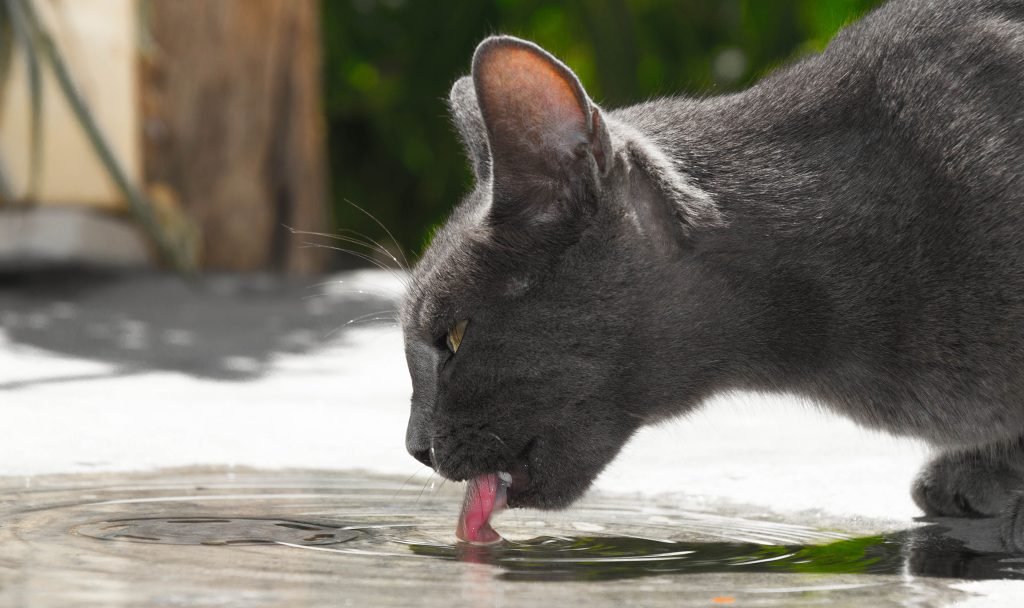
This is usually the first thing owners notice, and there is a simple reason for it. When blood sugar climbs too high, the kidneys cannot reabsorb it all, so sugar spills into the urine and drags extra water out with it. Vets call the sugar in the urine glycosuria (from the Greek glyko- “sweet” + -ouron, “urine”) and the flood of urine itself polyuria (poly- “much”). Your cat drinks more to keep up, which is polydipsia (poly- “much” + dipsa, “thirst”).
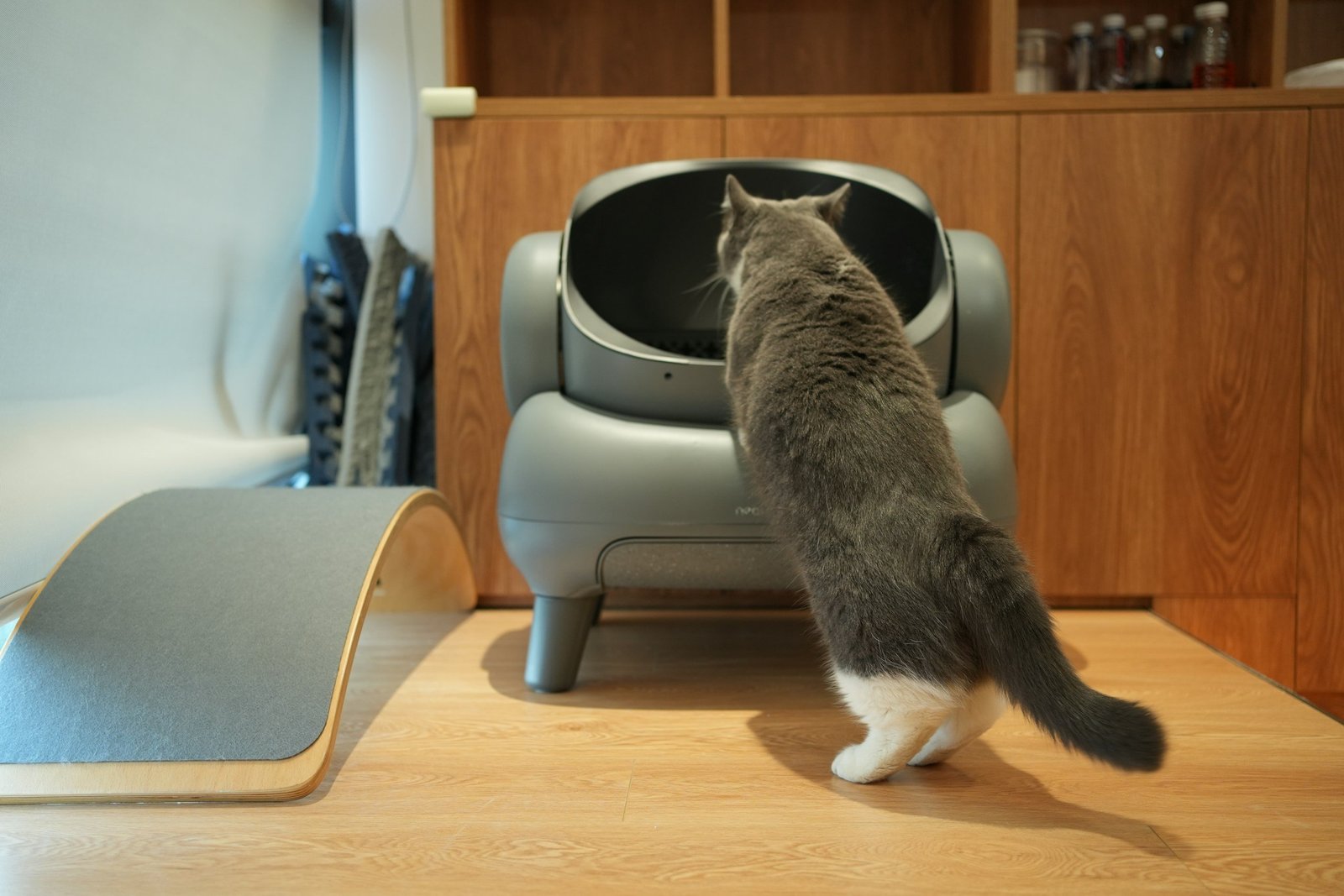
A cat that suddenly drains the water bowl and soaks the litter box is worth reporting even if nothing else seems wrong. Diabetes is not the only explanation, though. Increased thirst and urination can also point toward kidney disease in cats. And if urine outside the litter box was what first caught your attention, the list of causes is longer still. Bloodwork and a urine sample are what sort them apart.
Other Signs Worth Watching For
Beyond the thirst and urination, watch for weight loss despite a normal or even larger appetite. A coat that looks unkempt or greasy is another early hint, since grooming is usually the first thing to slip. In more advanced cases the back legs sink into a flat-footed, hocks-down walk called a plantigrade stance (from the Latin planta, “sole of the foot,” + gradi, “to walk”). That walk comes from nerve damage caused by high blood sugar. Vets call it diabetic neuropathy (from the Greek neuron, “nerve,” + -patheia, “suffering”), and it makes running and jumping hard. Do not wait on it.
Why Some Cats Get Diabetes
Obesity is the biggest risk factor, because extra body fat makes cells more resistant to insulin’s signal. Long-term steroid treatment and breed shift the odds too, with Burmese cats among the predisposed breeds.
One cause is worth knowing by name, awkward as it is: hypersomatotropism, an excess of growth hormone that makes insulin resistance refuse to budge on ordinary treatment. It is a prevalent underlying cause of feline diabetes, and its outward signs are not reliably present, so a cat can have it and still look ordinary on examination. If your cat’s insulin requirement keeps climbing, this is the test to ask your vet about.
How Feline Diabetes Is Diagnosed
Diagnosis takes more than one test, because a frightened cat at the vet’s office can run a high blood sugar without being diabetic at all. That is a real response to fear, not a lab error, and it is why a single glucose reading on your cat’s blood test results is not enough to diagnose diabetes. What your vet needs is proof that the sugar stays high once the stress has passed.
Fructosamine is the test that separates true diabetes from a stress spike, since it reflects average blood sugar over the previous 7 to 10 days or so rather than one moment on the table. It has one limitation worth knowing. Conditions that burn through blood proteins faster, hyperthyroidism in cats among them, can pull the number down and make a diabetic cat look deceptively normal.
What Daily Management Looks Like
Food comes first. A low-carbohydrate diet with plenty of protein is the usual starting point, since carbohydrate turns into blood sugar quickly, and an overweight cat needs a careful weight-loss plan alongside it. Beyond the food, treatment splits into two paths. Which one your cat starts on depends mostly on how well it is at diagnosis.
Insulin injections remain the mainstay, and they are the right choice for any cat that is unwell, dehydrated, off its food, or already on insulin. The needles are finer than most owners expect, and cats usually mind them less than their people do. One rule outranks the rest: never increase a dose or add an injection on your own. If your cat seems wobbly or dull, skip or reduce that dose and call your vet straight away.
The newer option is a once-daily tablet or liquid, an SGLT2 inhibitor sold as Bexacat (bexagliflozin) or Senvelgo (velagliflozin). Avoiding injections is a real advantage, and for the right cat these work well. The right cat is newly diagnosed, otherwise healthy, and has never had insulin.
They are not for a cat that is lethargic, dehydrated, off its food, or that has kidney, liver or pancreatic disease. The trade-off for skipping the needle is that serious problems including ketoacidosis can happen with or without warning, even in a cat whose blood sugar has been steady on the drug. So if a cat on one of these loses interest in food, stop giving it and call your vet immediately.
Home glucose monitoring has become far easier than it used to be, often through a small sensor worn on the skin rather than repeated needle sticks. It shows your vet the whole day at home rather than one number taken at the clinic, the least representative place possible for a nervous cat.
Can Diabetes in Cats Go Into Remission?
Yes, and this is one of the real differences between feline and human diabetes. Remission (from the Latin remittere, “to send back”) means the cat holds a normal blood sugar for more than four weeks with no insulin and no oral medication.
How often it happens is harder to pin down. Reported remission rates in cats run from 11% to over 60% depending on the study, which says as much about how different diabetic cats are from one another as about any one treatment. Among cats that do remit, more than half get there within six months of diagnosis. The best odds go to cats that are diagnosed early, shed excess weight, eat a low-carbohydrate diet, and reach good control quickly. Remission is not a cure. These cats probably still do not handle sugar normally and relapse can happen, so the diet, the weight control and the rechecks continue. All of which is the argument for treating properly from day one rather than easing into it.
When It Is an Emergency
See a vet immediately if: your diabetic cat stops eating, is vomiting repeatedly, seems weak or wobbly, or has breath with a sweet or acetone-like smell. These can be signs of diabetic ketoacidosis, a life-threatening complication that needs same-day emergency care, not a routine appointment. If your cat is on an SGLT2 inhibitor, do not let a normal glucose reading reassure you, because ketoacidosis on these drugs can develop while blood sugar still looks fine.
Low blood sugar from an insulin mismatch is just as urgent, in the other direction. Wobbliness, disorientation, tremors or collapse in a cat receiving insulin needs immediate veterinary attention. On the way in, offer food if the cat is alert enough to swallow. If it is barely responsive, rub about a teaspoon of corn syrup onto the gums with a cotton swab or syringe. Never put your fingers into the mouth of a cat that is seizing or unresponsive.
Was the article helpful?