
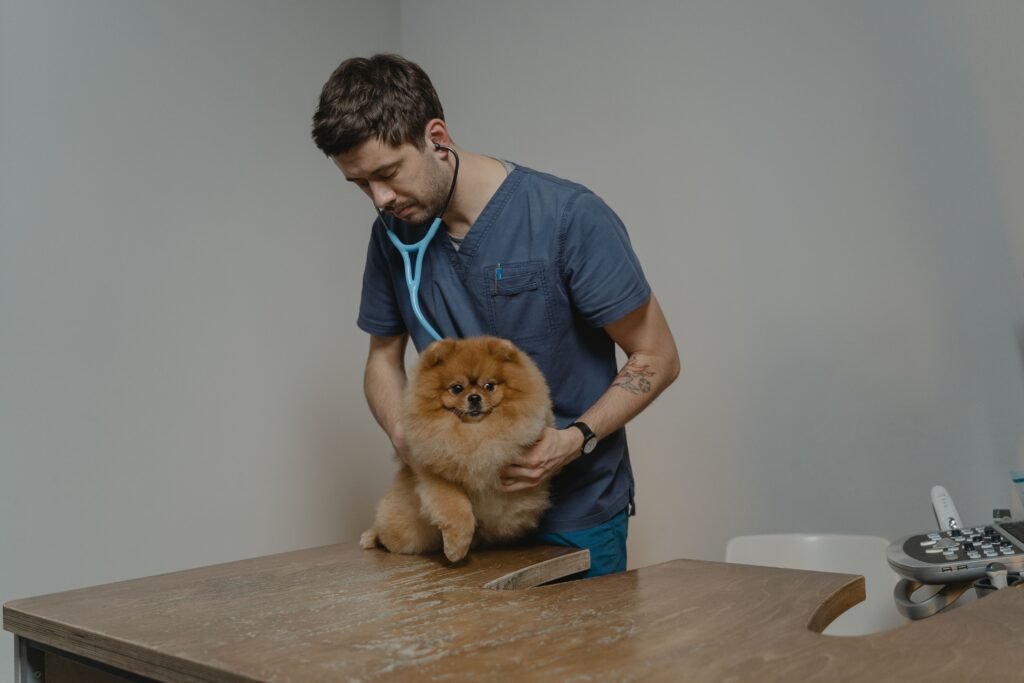
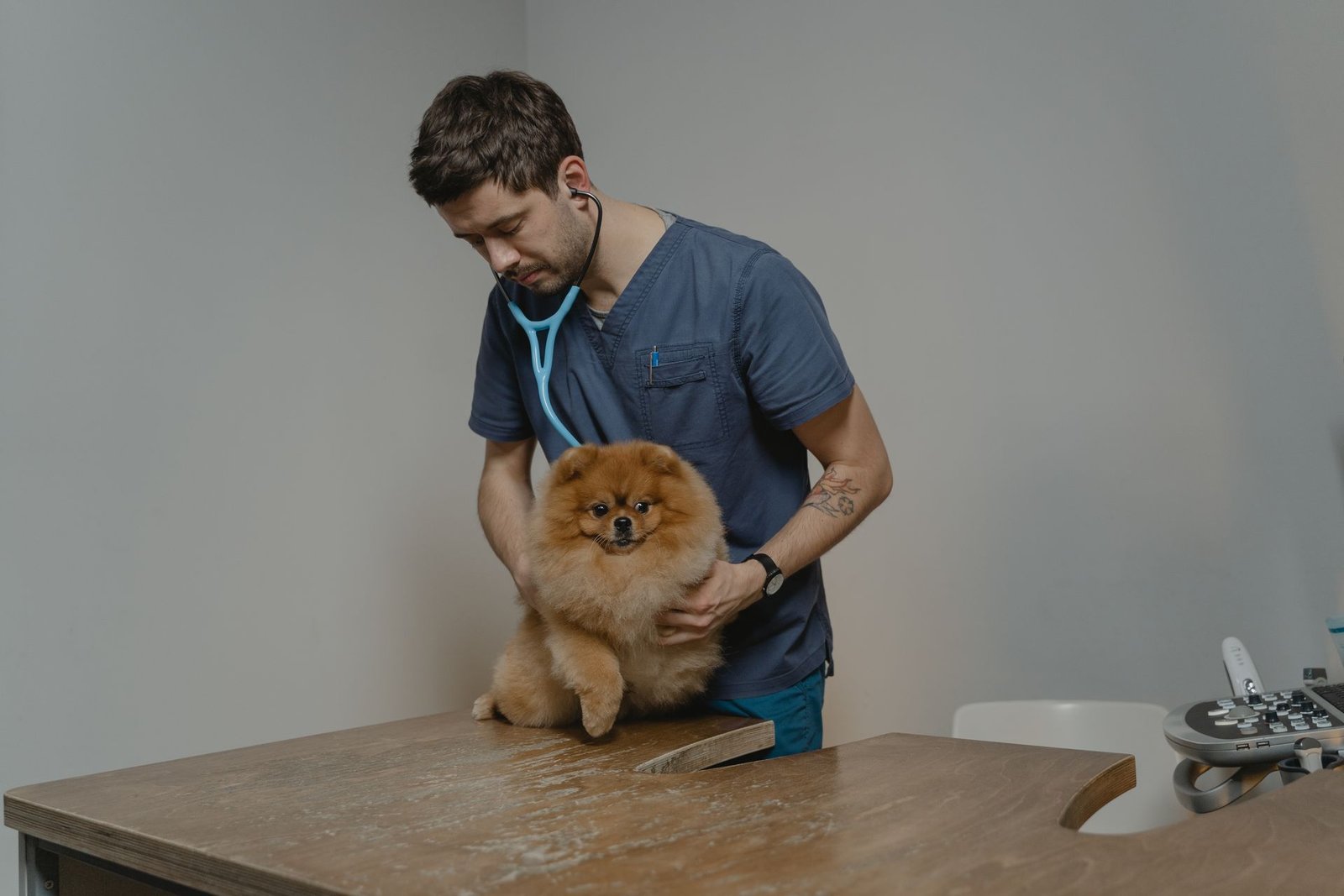
Your dog trots into a routine checkup, and a minute later the vet looks up from the stethoscope and says there is a heart murmur. Heart disease in dogs is often found exactly like this, before your dog shows any sign. It usually develops slowly, and many dogs go years between that first murmur and any symptom.
If you ever see hard, fast breathing at rest, blue, gray or pale gums, or a sudden collapse, the heart may have reached congestive heart failure, where fluid backs up into the lungs. That cannot wait, so go to an emergency vet immediately.
What Heart Disease in Dogs Means
Heart disease and heart failure are not the same thing. Heart disease means something in the heart is abnormal, most often a leaky valve or a weak heart muscle. The body can compensate for that, often for years. Heart failure only begins when it no longer can.
A heart murmur is an extra whooshing sound with the heartbeat. It is a finding, not a diagnosis. Soft murmurs in puppies are often harmless, and most are outgrown by 6 months of age. A murmur that first appears in an adult dog usually comes from a valve or heart muscle problem.
Two conditions cause most cases. In mitral valve disease, a valve on the left side of the heart degenerates and leaks blood backward. It accounts for about three in four cases of heart disease in dogs. In dilated cardiomyopathy (from the Greek kardia, meaning heart, myos, meaning muscle, and pathos, meaning disease), the heart muscle loses its ability to contract, and the heart becomes enlarged and weak.
Which Dogs Are at Risk
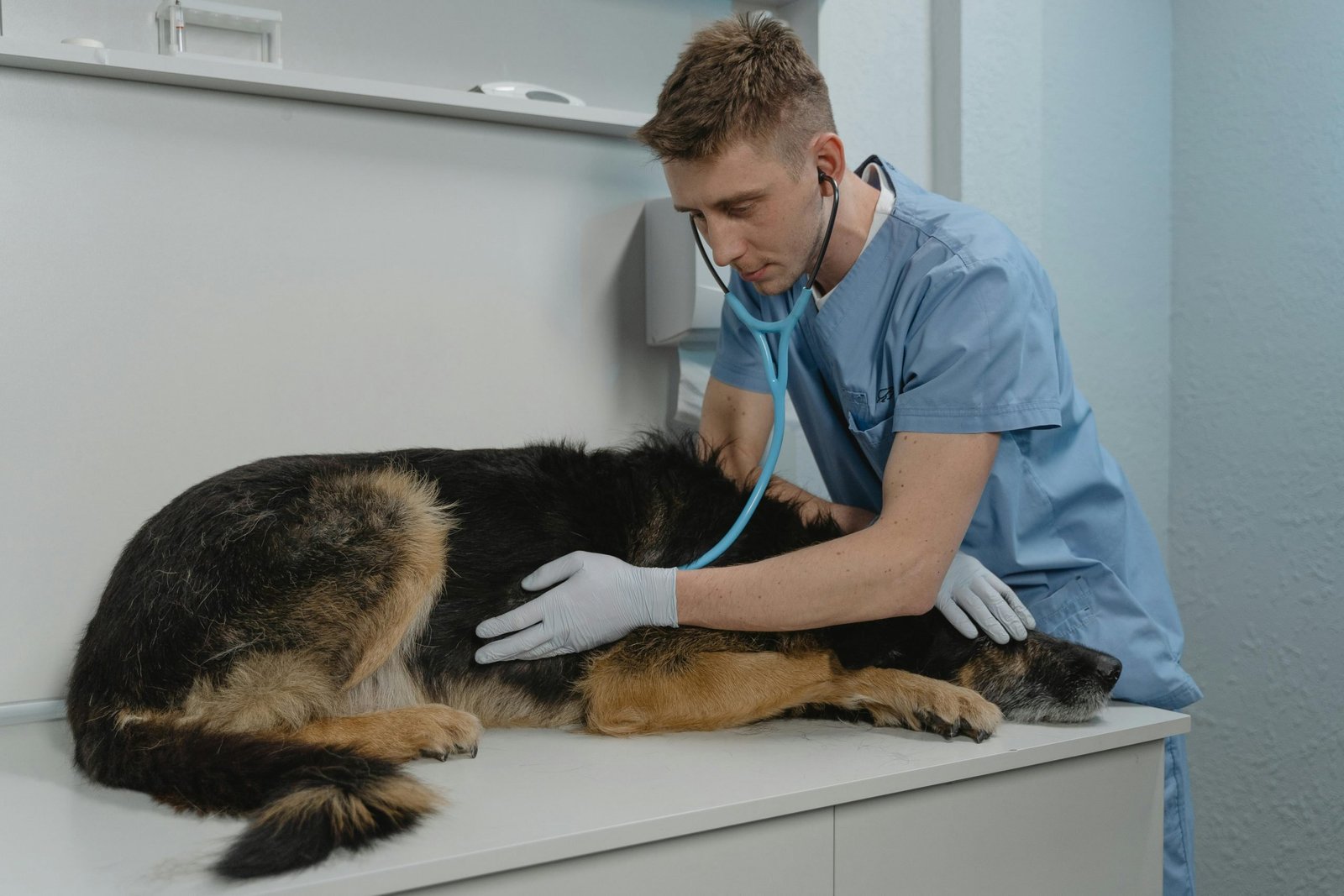
Mitral valve disease is mostly a problem of older small dogs. Dachshunds are prone to it, and nearly all Cavalier King Charles Spaniels develop it eventually, often at a relatively young age. Dilated cardiomyopathy mostly affects large breeds, especially Doberman Pinschers, Boxers and Great Danes.
A few dogs are born with a heart defect, usually found as a murmur at the first puppy visits. Diet can play a part too. Some dogs eating grain-free diets rich in peas or lentils have developed dilated cardiomyopathy, including breeds not normally prone to it. The link is not proven, which is why your vet will ask exactly what your dog eats, treats included. In some regions, heartworm disease is another common cause.
Signs You Can See at Home
Early heart disease is silent. Your dog acts normal and the murmur is the only sign, which is why vets listen to the chest at routine checkups. The signs below come later, as the disease progresses.
- 01
A soft, dry cough
Especially at night or after lying down.
- 02
Less stamina
Your dog tires sooner on walks or during play.
- 03
Faster breathing at rest
The rate climbs while your dog is relaxed or asleep.
- 04
Fainting or collapse
Not a sign to watch at home. It is an emergency.
- 05
A swollen belly
Fluid in the abdomen, seen in advanced cases.
None of these proves heart disease on its own. A new cough in an older small dog often comes from the airways, even when a murmur is present. A dog who tires easily may have a problem that has nothing to do with the heart.
For a dog with a murmur or known heart disease, the most useful home habit is to count sleeping breaths. Wait until your dog is asleep, count the breaths for 30 seconds, and double the number. A healthy dog takes 15 to 30 breaths a minute at rest. A rising count is the best early warning that heart failure is close.
If the count stays above 30 when you check again over the next couple of hours, call your vet right away. With hard breathing, restlessness or weakness, treat it as an emergency.
When It Becomes Heart Failure
Congestive heart failure is not a separate disease. It is the stage where the heart can no longer pump enough blood, so fluid backs up, usually into the lungs and sometimes into the abdomen. Fluid in the lungs makes a dog struggle to breathe, and that is the emergency.
- 01
Hard, fast breathing at rest
Often with an open mouth and the belly heaving.
- 02
Head and neck stretched out
Your dog reaches forward to get more air.
- 03
Blue, gray or pale gums
A sign the blood is short of oxygen.
- 04
Collapse or sudden weakness
Your dog faints, falls, or cannot stand.
If you are not sure whether it counts, go anyway. Call the clinic on the way so the team is ready, keep your dog calm, and keep the car cool, because heat causes panting that can make the breathing worse.
How Vets Confirm and Stage It
A murmur tells your vet that something is wrong, but not what it is or how far it has gone. Chest X-rays show whether the heart is enlarged and whether there is fluid in the lungs. An echocardiogram (from the Greek kardia, meaning heart, and gramma, meaning a recording, using echoing sound waves) is an ultrasound of the heart, and it is the test that confirms the diagnosis. It is non-invasive and is usually done without sedation.
An ECG picks up irregular heart rhythms. A blood test called proBNP measures a marker that rises when the heart muscle is stretched and under strain. A normal result in a coughing dog makes heart failure an unlikely cause of the cough.
As a guide to cost, one university hospital lists a typical outpatient heart evaluation at $600 to $1,400. Ask for an estimate first, and ask what the drugs and rechecks will cost each month.
For mitral valve disease, the results place your dog in a lettered stage, and the stage decides the plan.
| Stage | What’s Happening | Typical Approach |
|---|---|---|
| B1 | Murmur, heart normal or only mildly enlarged, no symptoms | No medication, recheck in 6 to 12 months |
| B2 | Heart clearly enlarged on imaging, still no symptoms | Daily heart medication usually starts |
| C | Signs of heart failure, now or in the past | Several medications, regular rechecks |
| D | Heart failure that standard treatment no longer controls | Advanced or specialist treatment |
Treatment and Your Part in It
Treatment follows the stage. A dog in stage B1 needs no drug and no special diet, only rechecks. At stage B2, vets usually start pimobendan, which helps the heart muscle contract. In a large trial of dogs at this stage, it delayed heart failure by about 15 months.
Once heart failure appears, the plan grows. Furosemide, a diuretic, clears the extra fluid. Pimobendan continues, and vets usually add an ACE inhibitor such as enalapril, which widens the blood vessels, along with spironolactone. Expect a blood test within about two weeks of starting, because your vet needs to check kidney values and electrolytes.
Your part is the daily routine. These drugs are usually given for life, and they must be given exactly as directed. Skipped or changed doses can make them stop working and can cause serious harm, so never stop or change a heart medication without your vet’s guidance. If giving pills is a daily fight, pill pockets can make it easier.
Diet plays a smaller part. Avoid salty treats and table scraps. A strict low-sodium diet is usually kept for dogs with severe heart failure. Keep your dog eating well too, because dogs in heart failure can lose muscle, and that loss is much easier to prevent than to treat.
How Long Can a Dog Live With Heart Disease?
It depends on the type and the stage. Mitral valve disease usually progresses slowly, though at times unpredictably. Only about 30% of dogs with a leaky mitral valve go on to develop heart failure, and some live a normal lifespan. Dogs that do develop it can still live for many months to years with treatment.

Dilated cardiomyopathy carries a more guarded outlook. The outlook is poor in most Dobermans, and many dogs of other breeds live only months after diagnosis, although pimobendan can add months for some. Diet-linked cases are the exception. Some of those dogs improve after a diet change, though slowly and often not completely.
Was the article helpful?