

Your cat just threw up on the rug, again, and you are trying to work out whether this is another hairball or a reason to call the vet. Vomiting is not a disease by itself. It is a sign that something is upsetting the stomach or intestines, and sometimes an organ elsewhere in the body, such as the kidneys or the thyroid gland. How often it happens, what comes up, and how your cat acts in between usually tell you which kind of vomiting you are dealing with.

What Is Normal Vomiting in Cats?
For many cats, throwing up once in a while is normal. Bringing up a hairball once every week or two is common and nothing to worry about on its own, because swallowed hair cannot be digested and tends to clump in the stomach. Some cats also throw up when they eat too quickly or try a food that does not agree with them.
Normal vomiting is occasional, and the cat feels fine otherwise. Appetite, weight, energy, and litter box habits stay the same. What comes up is food, hair, or clear fluid, with no blood in it.
Regular vomiting is different. If your cat vomits more than once a week, or the episodes are getting more frequent, that is not normal, and your vet should examine her promptly.
When Vomiting Becomes a Concern
Frequent vomiting costs a cat more than a messy floor. Long-term vomiting can bring on dehydration, electrolyte imbalances, and weight loss. Those changes are easy to miss at home. Cats are also good at hiding illness, so vomiting is sometimes the first sign an owner actually notices.
Vomiting that comes with any of these other changes suggests the gut or another organ is involved. It needs a prompt vet visit, not more waiting:
- 01
Eating less
Leaving food in the bowl or skipping meals altogether
- 02
Tiredness or lethargy
Sleeping more than usual and showing little interest in play
- 03
Diarrhea
Loose stool in the litter box on top of the vomiting
- 04
Increased thirst
Emptying the water bowl faster than usual
- 05
Behavior changes
Hiding, irritability, or acting unlike herself
Many owners assume regular vomiting is just something cats do. It is not. A cat that vomits every week has a reason for it, and finding that reason is the whole point of the visit.

Hairballs are one of the most common reasons cats throw up, and long-haired breeds such as Persians and Maine Coons are at greater risk than short-haired cats. It is normal for a cat to bring up a hairball from time to time. What is not normal is repeated retching that produces nothing, or a cat that is lethargic and refuses food for more than a day or so. Either one needs a veterinarian without delay, not another day of watching.
When Vomiting Is an Emergency
See a vet now: Vomiting more than once or twice in a day is not a wait-and-see situation. Neither is vomiting with blood, a cat that cannot keep food or water down, or vomiting alongside weakness, lethargy, or belly pain.
Blood is not always obvious. Fresh blood looks red, but digested blood looks dark and grainy, like coffee grounds, and it is just as urgent.
Cats that play with string, yarn, or dental floss sometimes swallow it. A long piece can anchor at the base of the tongue while the rest trails into the intestine, where normal gut movement saws at the intestinal wall until it can cut through. If a cat with access to these things vomits, especially with a poor appetite or hiding, get her seen right away. If you can see string under the tongue or hanging from the mouth, do not pull on it, because an anchored string can tear the tissue it is caught on. Leave it for your vet.
A male cat who vomits while straining in the litter box may have a urinary blockage, not a stomach problem. Watch for frequent trips that produce little or no pee. A blocked cat cannot pee, so waste builds up in the blood and brings on vomiting. Because a complete blockage can become fatal within a day or two, go to a vet immediately, even in the middle of the night.
Poisoning can also start with vomiting. Poisonous plants, human medications, and antifreeze are among the culprits. If your cat may have gotten into any of them, call your vet or a pet poison hotline right away.
Why Do Cats Vomit? Common Medical Causes
Many causes of vomiting sit outside the stomach. Vomiting can be a sign of metabolic disease, including kidney disease, diabetes, and hyperthyroidism (Greek hyper-, “over”, and thyreos, “shield”, for an overactive thyroid gland). It can also come from liver disease or pancreatitis. In these cases the problem is an internal imbalance and the stomach is only reporting it, so treating the stomach alone will not fix it.
Food can be the problem too. A cat can develop a food allergy even after eating the same diet for years, and some allergic cats show digestive signs such as vomiting and diarrhea. That is why a long-standing diet does not rule food out.
Intestinal parasites are another cause, and a fecal test can check for them. When vomiting comes with weight loss over weeks, two look-alikes come up: inflammatory bowel disease and intestinal lymphoma, a cancer that affects the intestine. The two can be very hard to tell apart, and only a biopsy of the stomach or intestine settles it.

The Difference Between Vomiting and Regurgitation
Owners often call anything that comes back up vomiting, but your vet will want to know which one you saw. Vomiting is an active process with forceful contractions of the belly muscles, so you usually see your cat heave or retch first. What comes up may be partly digested or mixed with fluid.
Regurgitation (Latin regurgitare, “to flood back”) is passive. The food slides back up without that heaving, and it tends to be undigested, sometimes in a tube shape that matches the esophagus. That shape is a clue that the problem sits in the esophagus rather than the stomach. That is why describing exactly what you saw helps your vet narrow things down.
How Veterinarians Evaluate Chronic Vomiting
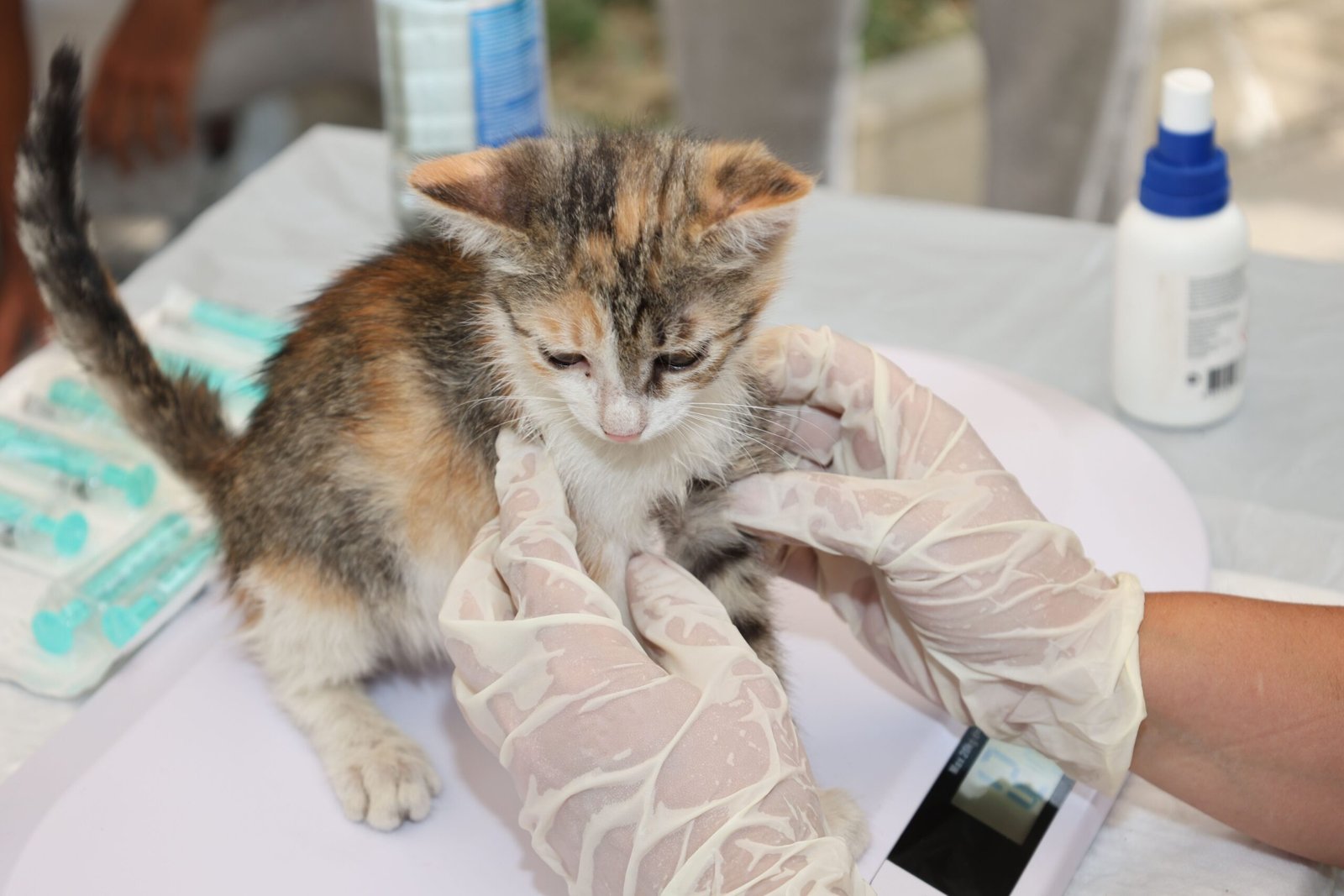
The workup opens with questions rather than tests: how often it happens, when it happens relative to meals, what your cat eats, whether she goes outdoors, and whether she could have gotten into anything toxic. A physical exam then looks for dehydration, belly pain, and changes in body condition. Blood tests and a fecal exam check for toxins, parasites, and metabolic disease. X-rays and ultrasound show the stomach and intestines for blockages, thickened bowel walls, or organ changes.
When the first round of tests does not explain it, your veterinarian may suggest a strict elimination diet trial of at least eight to ten weeks, or a biopsy of the stomach or intestine. Eight to ten weeks is a long time, but a half-kept trial answers nothing. Pinning down the cause matters because different causes need different treatments.
Supporting a Vomiting Cat at Home
Home care supports the vet visit. It does not replace it. While you are working out the pattern, keep your cat on one consistent food, because switching diets midway wipes out what you have learned.
Cats that gulp their food may do better with smaller meals spread through the day or a bowl designed to slow them down. Daily brushing and combing cuts down on swallowed hair, particularly in cats prone to hairballs.
Watch water intake and litter box output too. Vomiting costs fluid, and a cat that drinks less while still vomiting is heading toward dehydration.
Keeping notes helps. Jot down the date of each episode, what came up, and how your cat acted afterward, and take a photo if you can. A week or two of notes gives your vet far more to work with than a memory of a few times.
Was the article helpful?