
Yes, within limits. Bringing up a hairball once every week or two is nothing to worry about in a cat that is otherwise bright, eating well and leaving normal stools in the box. The wad of fur on the rug is a housekeeping problem, not a symptom.
Where that limit sits depends on the cat. Long-haired breeds such as Persians and Maine Coons are at much greater risk than short-haired cats, hairballs pile up during shedding season, and older cats are more apt to have them than kittens. A Maine Coon in April and a short-coated kitten in January are not held to the same standard.
So the useful question is not whether your cat has hairballs. It is whether the pattern is changing. A cat that vomits more than once a week, retches over and over without producing anything, or brings up hairballs more and more often than it used to has moved outside normal, and frequent hairballs can point to a problem beyond grooming, much as vomiting that keeps happening does.
When Hairballs Start Coming More Often
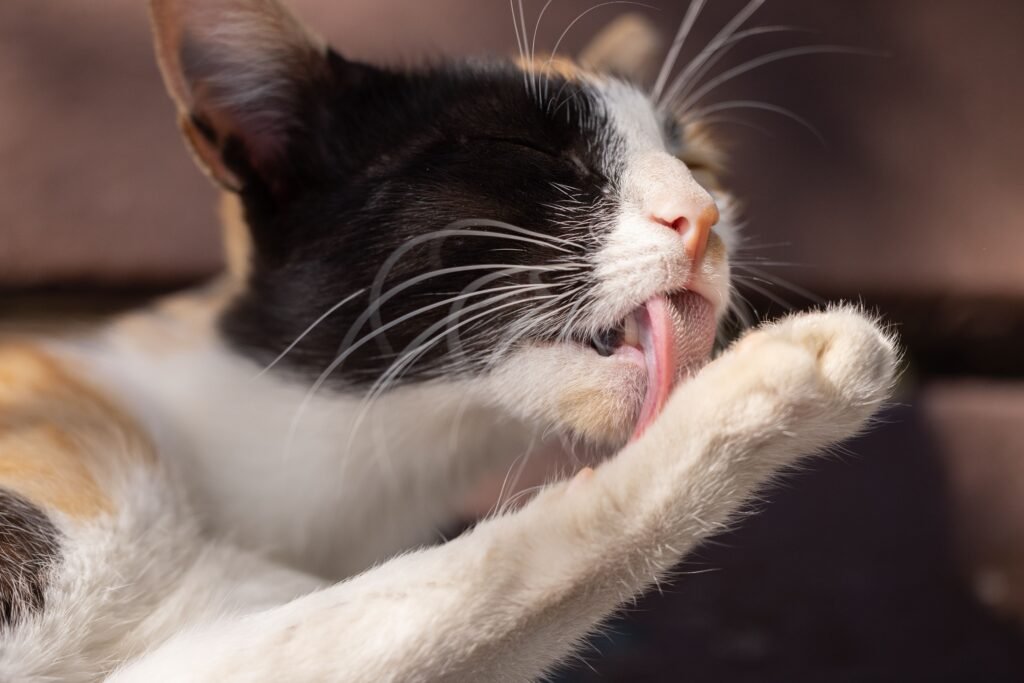
Grooming is how the fur gets in: as a cat grooms, she swallows a lot of the dead hair that has come loose. A hairball is that hair collecting in the stomach instead of moving on, until the cat brings it back up. Which leaves only two ways for hairballs to become more frequent. Either more hair is going in, or the gut is moving it along more slowly.
More hair goes down during seasonal shedding, and a long, dense coat has more to lose. The bigger change is usually over-grooming. Cats with allergies or other skin disease lick their coat more vigorously, and cats that over-groom because of stress or pain swallow more hair as a result. Because cats groom in private, the extra licking often goes unnoticed until the hairballs start turning up on the floor.
The other half is the gut itself. Hairballs are more common in cats with underlying gastrointestinal disease, where changes in how the stomach and intestines move leave hair sitting long enough to clump. That is why an adult cat that never used to have hairballs and now has them regularly needs a look at the gut rather than another remedy off the shelf. Diet has a hand in it too, since fiber helps move swallowed hair through the digestive tract instead of letting it gather.
What Goes Wrong When It Keeps Happening
An occasional hairball is messy, not dangerous. Frequent vomiting is a different matter. Each episode can bring stomach acid up into the esophagus, and acid reflux from vomiting can inflame it. Long-term vomiting can also lead to dehydration, electrolyte imbalances, and weight loss. The fur that does not come back up has to go somewhere, and swallowed hair can also predispose a cat to constipation.
The serious risk is a trichobezoar (from the Greek trichos, “hair”), the medical name for a hairball, that leaves the stomach and lodges in the intestine. There it can cause a potentially life-threatening blockage. The signs of an obstruction are vomiting, belly pain, and no bowel movements, and that is not something another dose of hairball gel will fix.
Two situations cannot wait. A cat that is lethargic and refuses food for more than a day or so, or that keeps retching without producing anything, may have a hairball blocking the gut and needs to be seen without delay. The other is a male cat straining in the litter box and passing little or no urine. That is more likely a urinary blockage than constipation, and it can be fatal in as little as a day or two, so take him to the nearest open clinic at once.
Call your vet promptly

What Actually Cuts Down Hairballs
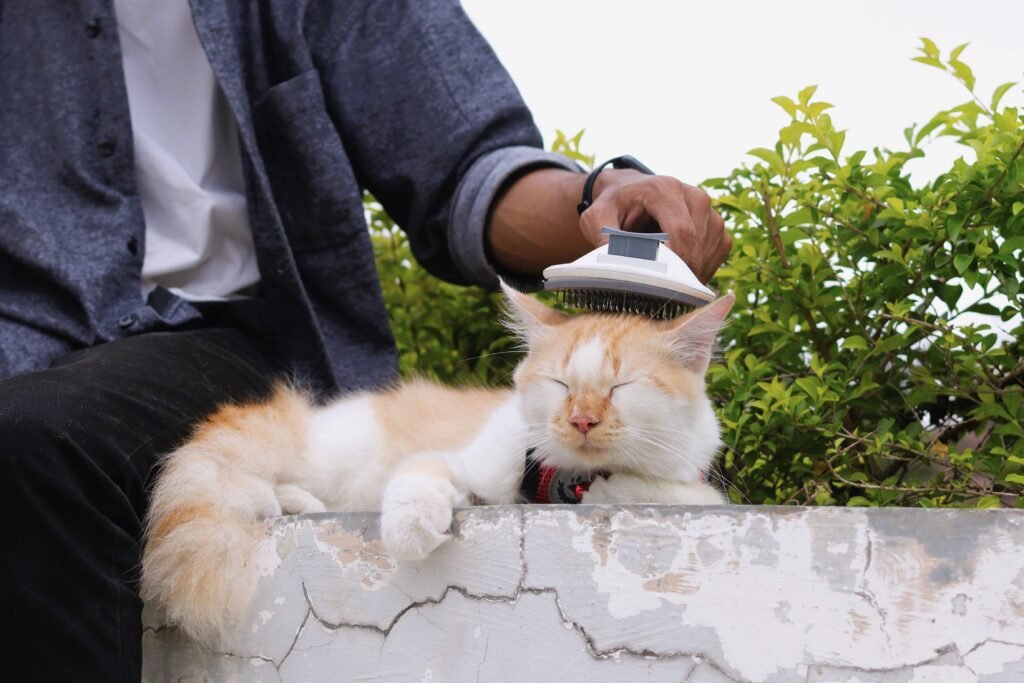
Brushing is the single most useful thing you can do, because every tuft that ends up on the brush is fur your cat will not swallow. A daily brushing and combing is the goal, especially for long-haired cats and during shedding season, and a gentle tool such as the DELOMO grooming glove makes that easier for a cat that is not keen on a brush. Very long coats can also benefit from professional grooming once or twice a year.
Food and water work on the other half of the problem. Hairball-specific diets are high in fiber, which carries hair through the gut rather than leaving it to clump in the stomach. Fresh water sources around the house or some wet food get more fluid into a cat that does not drink much, and a cat water fountain is worth trying if yours ignores the bowl.
Hairball gels, lubricants and the other hairball remedies for cats are mostly oil-based supplements that help prevent and eliminate hairballs. The usual choice is a mild petroleum-based laxative given once or twice a week, offered between meals rather than with food, with fresh water always available while you use it.
I think of these as a helper, not a fix. A gel can move hair along, but it does nothing about why a cat is swallowing so much hair in the first place, and it can quietly cover up the one thing worth watching, which is the pattern. If your cat has an ongoing health problem or takes daily medication, ask your vet before adding one.
What Your Vet Will Look At
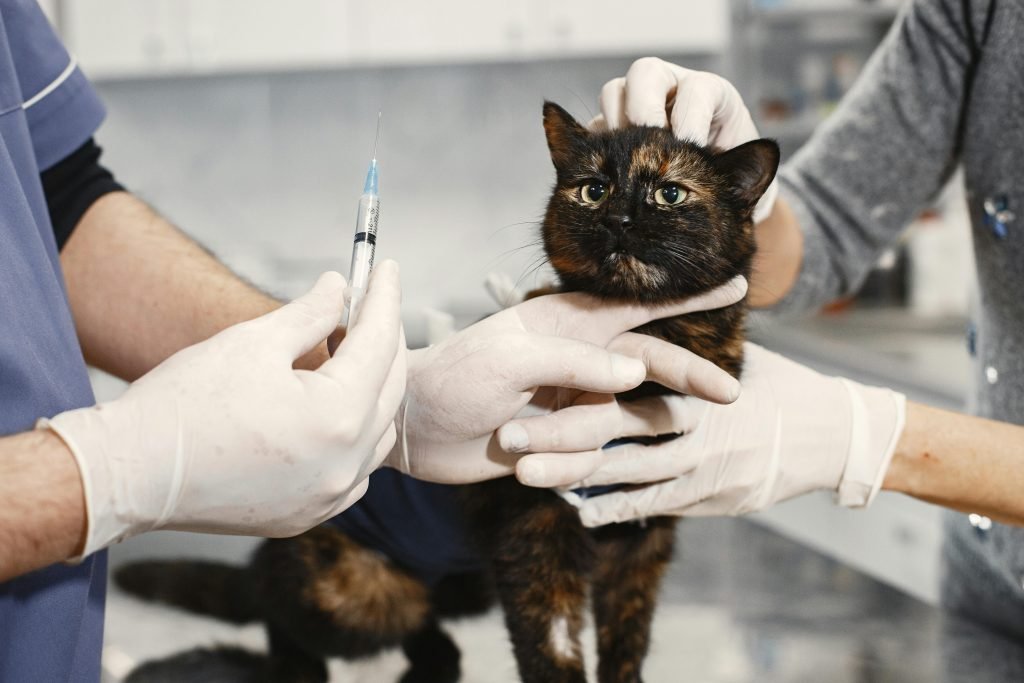
At the visit, your vet will go through diet, hydration, coat and skin, stress, and the gut itself to work out what is driving the hairballs. For a cat that vomits often, that can mean blood tests and a fecal exam, with X-rays or ultrasound to look at the gut. Any of the signs above is a reason to call promptly rather than wait to see whether the next one is worse.
This article is for educational purposes only and is not a substitute for professional veterinary care. Always consult a licensed veterinarian regarding your pet’s health and nutritional needs. As an Amazon Associate, Vet Explains earns from qualifying purchases.
Was the article helpful?