

The house is full of guests, the fireworks start at midnight, and somewhere under the bed your dog is shaking. The holidays are fun for people and a hard week for many pets, and the noise is only part of the risk, since foods that are dangerous for dogs at Christmas sit on every table this time of year as well. To keep pets calm during Christmas and fireworks, it helps to know what actually works, and a large survey of dog owners about fireworks fear asked exactly that.
The ranking is not the one most people would guess. Pairing the bangs with something good came out on top, helping just over 70 percent of the owners who tried it, and prescription anti-anxiety medication helped about seven in ten dogs. Pheromone diffusers, which most owners buy first, helped fewer than a third, roughly what a placebo produces. The sections below run in the order you will use them on the night, starting with the things that cost almost nothing.
What Holiday Stress Looks Like
Dogs and cats lean on a steady routine to feel safe, and the holidays take that routine apart. Meals, walks, and rest shift without warning, guests arrive and leave, and a visitor who wants to hold a shy animal adds pressure. Then comes the new input: fireworks, party noise, bright lights, cooking smells. A pet cannot reason out what is happening, so an unfamiliar bang reads as unsafe rather than exciting. Hiding, pacing, or skipping a meal is not bad behavior. It is a stress response, and catching it early lets you step in before the animal is overwhelmed. Usually it shows up as subtle changes rather than obvious distress:
- 01
Pacing or restlessness
Unable to settle in one spot
- 02
Hiding or trembling
Retreating under beds or behind furniture, shaking
- 03
Excessive barking or meowing
More vocal than usual, often in response to noise
- 04
Destructive behavior
Chewing, scratching at doors, or digging at exits
- 05
Loss of appetite
Skipping meals or ignoring treats
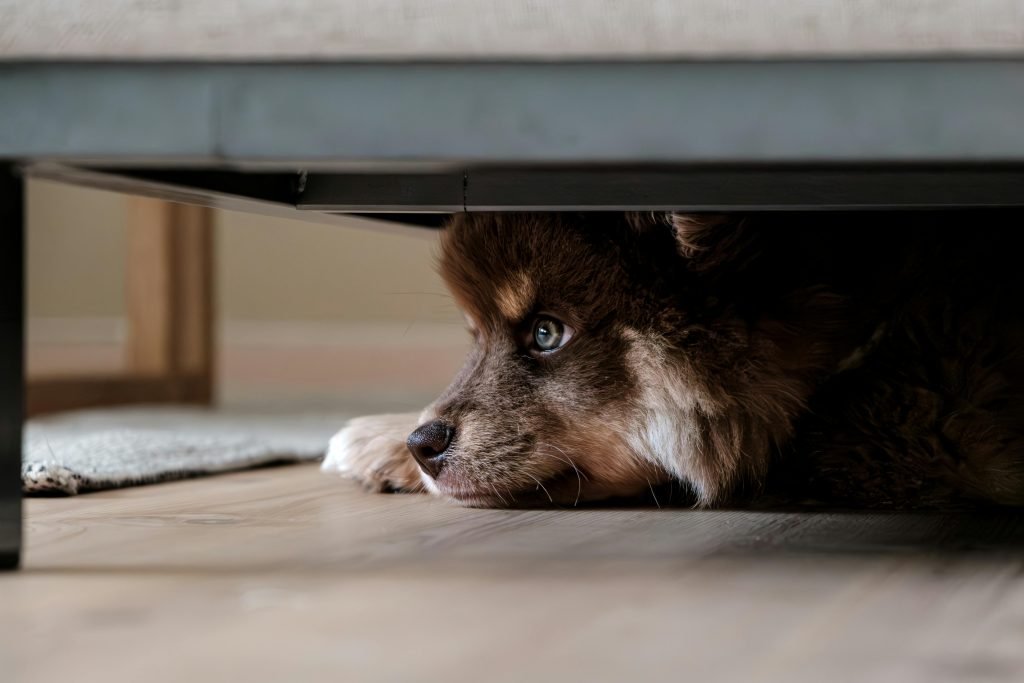
Fireworks are the worst version because they cannot be predicted. The bangs arrive without warning, and the animal cannot know why they happen or when they will stop. Many pets tip into a genuine fight-or-flight response: stress hormones surge, heart rate climbs, and thinking shuts down. That is when you see bolting through doors or fences, hiding in unsafe places, or injuring themselves while trying to escape. Those three outcomes are what everything below is trying to prevent. The same signals turn up outside the holidays, and the guide to anxiety signs in dogs covers the wider picture.

Set Up a Quiet Space Before the Noise Starts
Start here, because a panicked pet can bolt or get hurt escaping, and that risk does not wait for any training. Make it a retreat your pet can settle into straight away: indoors, away from windows and exterior doors, with familiar bedding and something that carries your scent. A den-style space works better still if it is ready before the event, not built during it. Keep the normal feeding, walk, and bedtime routine as steady as you can, since every small disruption stacks on top of the noise. White noise, soft music, a fan, or the television will dull sudden bangs. None of that removes the noise, but it softens the sharp contrast that sets off the panic.
A quiet room is where the plan starts, not the whole plan. In that survey, a hiding place or background music used on its own went along with fears getting worse over time. The data are correlational, so the hiding place is almost certainly not the cause, but it is clearly not enough by itself. What you do inside the room matters more, and that is the next section.
Your own demeanor counts too. Pets read their people closely, so gentle, slow petting and a normal voice help, while high-pitched baby talk and fast, frantic patting can raise anxiety. Staying calm signals there is no danger, even when you do not feel calm yourself.

Pair the Bang With Something Good
The most effective thing on the list costs almost nothing. The moment the noise begins, pair it with something your pet likes, treats or a quick game, instead of only waiting it out. Just over 70 percent of owners who tried it said it helped, more than any other approach in the survey. It works because it gives the bang a different meaning: a noise that reliably arrives alongside chicken stops being only a threat.
The catch is that it has to happen at the noise, not after it, so be in the room with the treats ready before the first shell goes up. If you do one thing this year, do this one.

When Medication and a Vet Visit Make Sense
Prescription anti-anxiety medication helped about seven in ten dogs in the same survey, far more than any supplement. It works best alongside behavior work, not instead of it, and it can be used short-term around predictable events or longer-term for chronic anxiety. For fear that does not improve at home, the strongest evidence favors a plan your vet guides: gradual desensitization and counterconditioning, which teach a calm response to the trigger, plus medication where it is needed.
If your vet does prescribe something, ask about testing it on a calm day first, and give the dose early enough that it has taken effect before the noise starts. Preventing a fearful reaction is far easier than reversing one, and the middle of a fireworks show is not the moment to find out how your pet responds to a new drug. The goal is never to sedate an animal unnecessarily. It is to get them calm enough to relax, and over time to cope on their own.
There is a second reason to make the appointment. Noise sensitivity in dogs tends to get more severe with age rather than fade, and fear responses tend to intensify without intervention. A dog that only trembled last year may be tearing at the door this year. Persistent fear does not resolve by being waited out, so if your pet’s anxiety is severe, ongoing, or getting worse despite your best efforts, involve your veterinarian. A visit sorts out whether this is one-off situational stress or a pattern that needs structured support. If the behavior ever feels unmanageable, trust that instinct and call.

Pheromones, Wraps and Supplements
Pheromone (Greek: pherein, “to carry,” + hormone) diffusers and sprays are what most owners reach for first, and in dogs the evidence for calming pheromones remains weak. The best-supported effect is modest, specific to storm-type noise fear, and shows up mostly during the exposure rather than afterward. In the fireworks survey, fewer than a third of owners who used them thought they helped, about what a placebo would produce. They are low-risk and reasonable to add, but not something to rely on alone. If the budget only stretches to one thing, I would spend it on the treats rather than the diffuser.
Anxiety wraps and calming wearables, which apply gentle, steady pressure, show a small benefit in some anxious dogs and none in others. Let your dog wear the vest on quiet days first, so it is not one more strange thing on the night. Natural supplements such as L-theanine, chamomile, or tryptophan are meant to support relaxation, and response varies by pet, but in dogs good evidence that they beat placebo is lacking. They are unlikely to be enough on their own for a real noise fear, and they should never replace supervision or a secure space during a high-stress event.
Alpha-casozepine (Zylkene), a milk-protein derivative, has a little more behind it than the rest of this shelf. In a small placebo-controlled trial in dogs with mild to moderate situational anxiety it reduced anxious body language without sedating them, although that study looked at vet visits rather than fireworks. Started ahead of time it can help some pets settle, but it belongs alongside a quiet space and a steady routine rather than in place of them. Check with your veterinarian before any new supplement or calming aid, especially if your pet has a health condition or takes other medications.

This article is for educational purposes only and is not a substitute for professional veterinary care. Always consult a licensed veterinarian regarding your pet’s health and nutritional needs. As an Amazon Associate, Vet Explains earns from qualifying purchases.
Was the article helpful?