
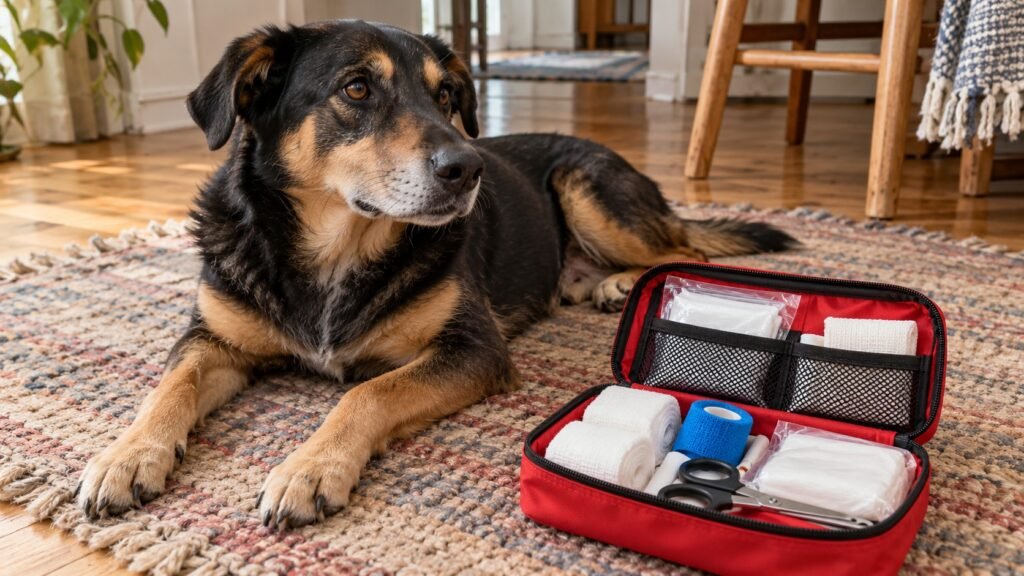
Your dog splits a pad open on a walk, or catches a nail on the stairs and leaves a bright smear down the hallway. You go hunting through the bathroom cabinet, and nothing in the family first aid box is made for a dog. That is a bad moment to start shopping. The time to look at dog first aid kits is before you need one.
A dog kit helps you stop bleeding, cover a wound and get to the clinic without making anything worse. For most owners, a prepacked kit makes sense, because it puts the basics in one bag you can grab in a hurry. Bandaging material matters most, and the most useful extra is a small pot of styptic powder.
Choose by where the kit will live, because a kit only helps if you can reach it. The ARCA PET kit is sold for the car. The rubyloo kit (listed in the table as the Vet Approved Emergency Kit) suits a cupboard at home. The EVERLIT is the compact one for walks and trips. The wound spray and styptic powder go with any of them.
Here are all five side by side.


Product prices and availability are accurate as of the date/time indicated and are subject to change.
What a Kit Is Actually For
A first aid kit does not treat anything. It buys time, keeps a wound clean and lets you drive instead of panic. That is less than the box promises. The real risk is relying on a kit for longer than you should.
At home, a kit handles only a short list: cut pads, torn nails, scrapes, small skin wounds and ticks. For anything bigger, use it to cover the wound while you drive to a vet.
The standard pet first aid checklist makes the same point. It lists phone numbers, a copy of your dog’s medical record, a muzzle, gauze, nonstick bandages, tape, blunt ended scissors, gloves, saline and a digital thermometer. That is mostly cloth and information. I would rather you have a simple kit you can reach in the dark than a deluxe one buried behind the paint cans in the garage.
The Supplies That Matter
Bandaging material does the main job, so check it first in any kit. A dog bandage has three layers. A nonstick pad goes against the wound, a gauze roll holds it in place, and self-adherent wrap, the stretchy colored stuff, goes on the outside. Add two extra rolls of self-adherent wrap to whichever kit you buy, so you do not run out halfway through a bandage.
Cleaning is simple. Sterile saline or plain warm tap water will flush a wound clean, and the saline sold for contact lenses works well. Do not put hydrogen peroxide on a wound, because it can damage healthy tissue and slow healing. For the days after, a wound spray that is safe if licked is a reasonable extra. Your dog still should not lick the wound, though.
I would not skip one small extra: styptic powder. If you clip a nail a little too short, the bleeding looks alarming for such a small injury. Press styptic powder onto the nail tip to help stop it. Cornstarch or flour can work if you have none. Keep it in the same cupboard as the nail grinder or clippers.
A digital thermometer and a small tube of lubricant are worth the minor indignity. A dog’s normal temperature is 100.0 to 102.5 degrees Fahrenheit. Anything above 104 or below 99 means a trip to the vet. A number is also more useful on the phone than saying your dog feels warm.
Add tweezers for getting a tick off cleanly. Two more things are easy to forget: a muzzle that fits your dog, and an index card with your vet’s number, the nearest emergency hospital and a poison line. The card helps when your phone is dead or out of reach.
What I Would Leave Out of the Kit
Some things sold in these kits are just for show. And two items on the standard checklist are only safe when a professional tells you to use them.
Hydrogen peroxide and activated charcoal are on that checklist for poisoning, but use them only when a vet or poison line tells you to. With a poisoning, never start first aid or give any over the counter human medicine before talking to a veterinary professional. Whether your dog should vomit depends on what it ate, how long ago, and how it is doing now. Something caustic can burn the food pipe a second time on the way back up.
That same rule is why human pain relievers do not go in a dog kit. Ibuprofen and acetaminophen are among the most common pet poisonings, and they can damage a dog’s stomach, kidneys or liver. If a bottle is in the kit, someone may reach for it at two in the morning.
Scalpel blades and suture kits are for the movies. Closing a wound is a job for a clinic. A tourniquet is a last resort for a leg when firm pressure has failed, so do not choose a kit because it has one.
Which Kit Fits the Car, the House or the Trail
Having two kits, one at home and one in the car, is not overkill. In the car, keep the ARCA PET kit inside the cabin where you can reach it. Check it at least once a year and replace anything used up or past its date. While you are at it, sort out a travel harness or crate restraint for the car too.
At home, put the rubyloo kit where everyone in the house can find it. If your home already has a kit, buy the two add-ons instead of a second box.
The EVERLIT Pet Medic suits walks and trips, because it packs 95 pieces into a compact travel bag. On a long hike, weight matters. A nonstick pad, one roll of wrap, tweezers and a spare slip lead are enough for a cut pad. Dry, cracked pads are a different problem, and a paw balm usually handles that.
Vetericyn Plus is the wound spray and Kwik Stop is the styptic powder. The spray is for small scrapes after cleaning, not a reason to treat a bigger wound at home. Whichever kit you buy, do not judge it by its piece count. Open it the day it arrives, count the pads and rolls of wrap, and add the extra wrap and the phone card.
Using It Without Making Things Worse
First, protect yourself. Even the sweetest dog may bite when it is frightened and in pain, and a bite turns one patient into two. So put a muzzle on before you touch a painful wound, unless your dog is vomiting. Also skip the muzzle if your dog is struggling to breathe, has a chest injury or is a short-nosed breed. Never leave a muzzled dog alone. Buy a basket or soft muzzle that fits before you need it. The first time your dog wears one should not be the day it is bleeding.
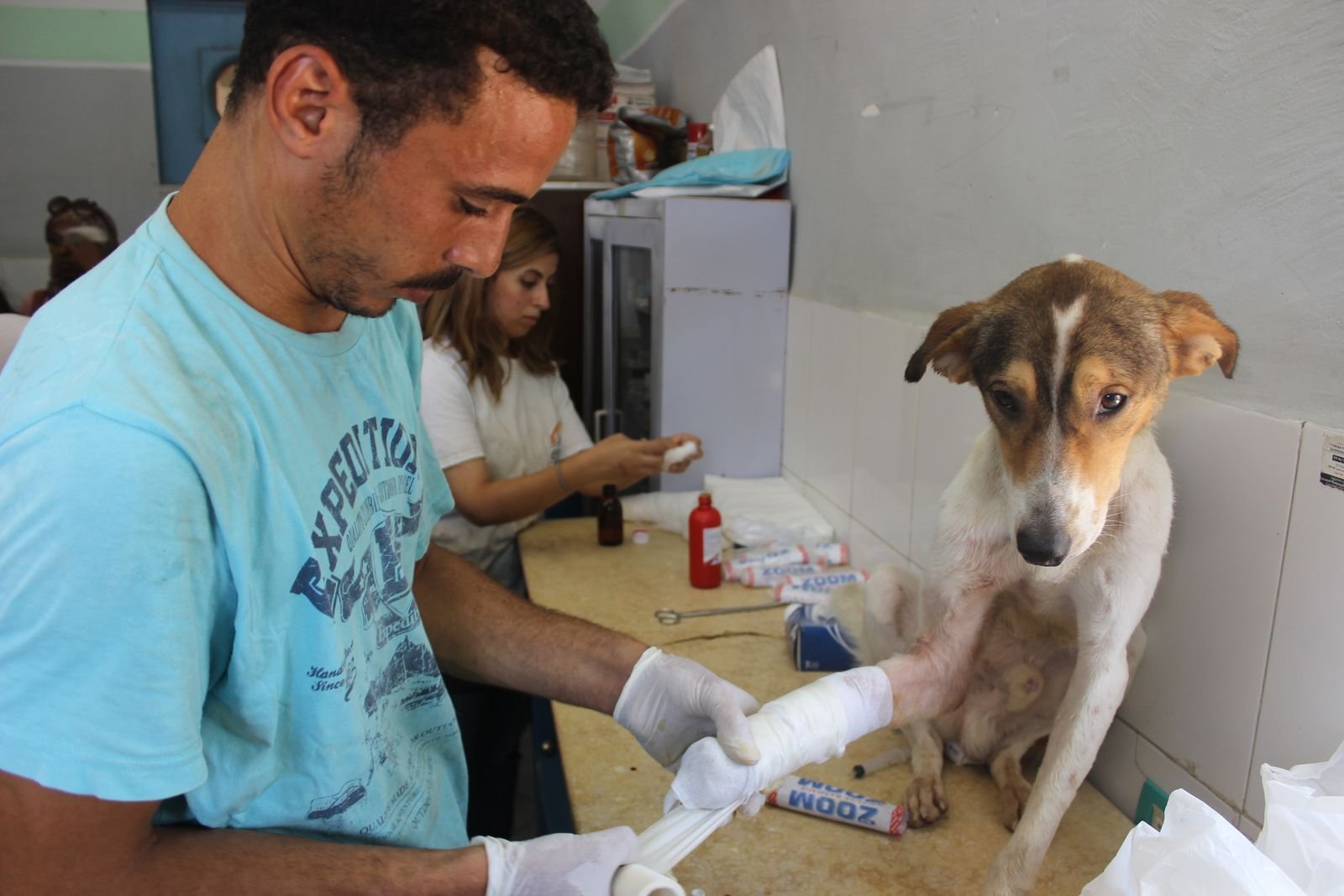
Second, use pressure: put a nonstick pad over the wound, wrap firmly, and press. A bleeding paw should stop in five to ten minutes. If you cannot stop the bleeding within ten to fifteen minutes, drive to an emergency hospital. Hold the pressure for the full ten minutes without lifting the pad to look, because lifting it can pull the clot away. If blood soaks through, add another pad on top. Keep the wrap firm but not tight. Swollen toes below it mean it is too tight.
If Your Dog Ate Something Toxic
With poisoning, keep the kit closed. If your dog has eaten a food that is toxic to dogs, call a poison line before you give anything at all. That includes dark chocolate.
Call ASPCA Animal Poison Control at (888) 426-4435 or Pet Poison Helpline at 1-855-764-7661. Both answer around the clock, and a consultation fee may apply. Either one will tell you whether to watch at home or drive to the clinic. That one call is worth more than everything else in the box.
A kit cannot help in a true emergency, and opening one wastes time you do not have. Take your dog straight to a vet if it is hit by a car, has a wound that will not stop bleeding, has trouble breathing, has a seizure, or cannot stand. Call the clinic on the way if you can.
A swollen, tight belly with retching that brings nothing up is an emergency now, not in the morning. This is gastric dilatation and volvulus, usually called bloat. The stomach fills with gas and twists on itself. To save the dog’s life, it needs a vet within minutes to a few hours, and surgery once the dog is stable. Large, deep chested dogs are most at risk. Watch for restlessness, drooling, retching with nothing coming up, and collapse.
This article is for educational purposes only and is not a substitute for professional veterinary care. Always consult a licensed veterinarian regarding your pet’s health and nutritional needs. As an Amazon Associate, Vet Explains earns from qualifying purchases.
Was the article helpful?