
Table of Contents
Dental disease often starts early. By age three, about 80% of dogs show some signs of it. You do not need a perfect routine on day one; you need a brush and paste your dog will accept.
Daily tooth brushing is the most effective home care for your dog’s mouth. Dental chews and rinses can help, but they work best alongside brushing.
Why Brushing Matters
Plaque is a sticky film of bacteria on the teeth. It can begin hardening into tartar within 24 hours. If you notice a red line along the gums, that may be gingivitis, an early sign of inflammation.
If gum disease progresses, it can damage the bone that holds teeth in place. Brushing helps prevent buildup, but it cannot rebuild lost bone or fix a painful tooth.
Aim to brush daily, focusing on the outside of the teeth near the gumline. Dental chews may help between sessions, but they do not replace brushing or a veterinary dental exam. Hardened tartar and disease below the gumline need professional care.
Choosing a Dog-Safe Toothpaste
Use toothpaste made for dogs. Human toothpaste may contain xylitol, which is toxic to dogs, and dogs swallow rather than rinse and spit. Choose a dog-safe flavor your dog accepts.
Some dog toothpastes contain enzymes intended to limit oral bacteria. The paste can make brushing more pleasant, but the brush still does the main work of removing plaque. For products with tested dental claims, check the VOHC accepted-products list.
Finger Brush or Handled Brush?
Pick a soft brush that reaches the outside of the teeth without hurting your dog or putting your finger at risk. The best choice depends on mouth size and how calmly your dog lets you lift a lip.
- Finger brush: Can be easy to introduce if your dog already accepts mouth handling. Your finger sits close to the teeth, so skip it if your dog might snap.
- Handled brush: A small, soft head reaches farther back while keeping your fingers away from the teeth. Choose one that fits your dog’s mouth.
Three Dental Products to Compare
These three products offer different starting points. Pick for your dog’s comfort and your ability to brush regularly; check the current listing for package contents and price.
| Product | Good fit | What to know |
|---|---|---|
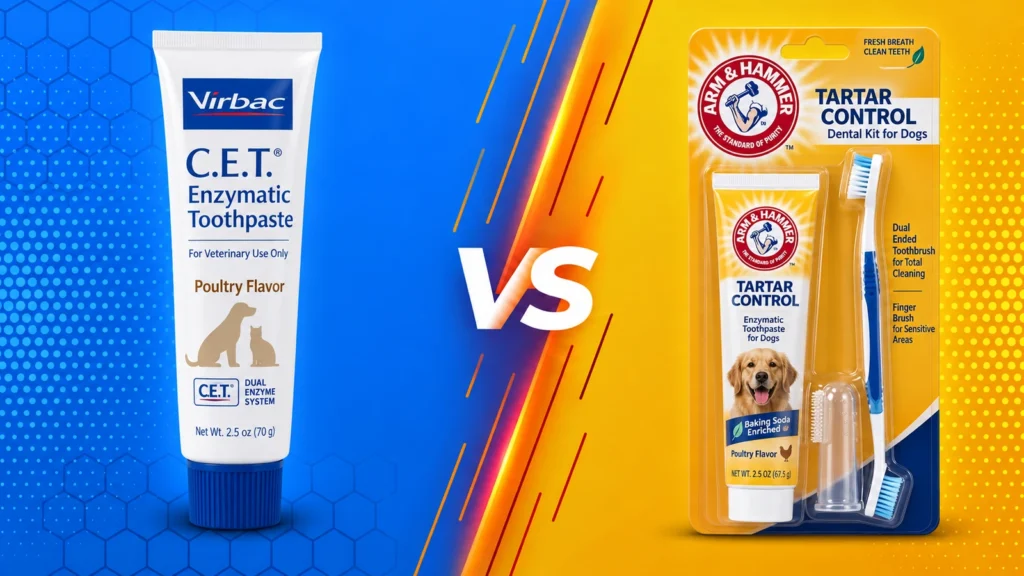
| Virbac C.E.T. Enzymatic Toothpaste (Poultry Flavor) | Dogs that accept a flavored paste | Use with a brush; paste alone does not replace brushing. |
| Jasper 360-Degree Silicone Finger Toothbrush (2-Pack) | Dogs comfortable with a finger near the mouth | Avoid if your dog may bite; a handled brush gives more reach. |
| Arm & Hammer Tartar Control Dog Dental Kit | Owners who want a brush and paste in one kit | Check the brush size and paste label before use. |
How to Start Brushing
An adult dog has 42 teeth, but you do not need to brush them all on the first day. Start with a few calm seconds and build the habit at your dog’s pace. Some dogs need more than two weeks.
- Let your dog sniff and lick a small amount of dog toothpaste. Stop before they lose interest.
- Lift the lip briefly, reward calm behavior, and let go. Repeat until this feels routine.
- Touch a soft brush to one or two outer teeth, then stop and reward your dog.
- Gradually add the back teeth near the gumline. Keep the jaw closed and work only as far as your dog stays comfortable.
If your dog pulls away, stop and return to an easier step at the next session. Keep it short and calm. Once your dog accepts the brush, work toward a daily session that covers the outer tooth surfaces.
When to Call Your Veterinarian
Bleeding gums, loose teeth, facial swelling, foul breath, or pain while eating call for a veterinary dental exam. Brushing can help prevent new plaque, but it will not remove hardened tartar or treat a broken tooth. Do not force a brush into a painful mouth.
This article is for educational purposes only and is not a substitute for professional veterinary care. Always consult a licensed veterinarian regarding your pet’s health and nutritional needs. As an Amazon Associate, Vet Explains earns from qualifying purchases.
Final Thoughts From a Veterinarian
If your dog pulls away from the brush, return to a step they can handle. If the mouth seems painful, book a dental exam before trying again. Choose the brush you can use consistently, then build toward daily care. Dr. Vojtech Gabriel
Was the article helpful?