

A thunderstorm rolls in, fireworks start, or a grooming dryer switches on, and your dog is suddenly pacing, panting, hiding, or trying to get out. Calming wearables help some noise-sensitive dogs, but they are not off-switches for fear. What works depends on your dog’s trigger, the fit of the garment, and whether your dog finds pressure or muffled sound comfortable. Review counts cannot answer that; watching your own dog can.
Quick answer
For storms and fireworks, a correctly fitted ThunderShirt is the more versatile starting point. For grooming dryers, vacuuming, or dogs that settle when their ears are covered, the Happy Hoodie is more targeted. Introduce either one on a calm day, pair it with treats, supervise every use, and take it off if your dog freezes, struggles, overheats, or becomes more distressed.
Table of Contents
What calming wearables can and cannot do
Pressure wraps create a snug, even sensation around the body. Some dogs settle in one, some show no change, and some dislike the feeling. A review of four canine trials found that pressure vests may have small but beneficial effects on anxiety, and may have no beneficial effect at all. The studies were small, and most outcomes were scored by owners who knew their dog was wearing the vest [Veterinary Evidence, 2018]. Benefit was more likely when the dog was already used to the vest, when it had been checked for comfort, and when it was used repeatedly rather than pulled out for one bad night. So expect modest support rather than treatment of the fear itself, and pair the wrap with a safe place to hide, sound management, and gradual training.
A head wrap works differently. Stretchy fabric over the ears softens some noise and may help during grooming or a brief loud event, but it does not block sound. Because it sits near the eyes, mouth, neck, and airway, placement and supervision matter. Your dog must be able to breathe, pant, see, swallow, and move normally the whole time it is on.
Neither product is a way to hold a frightened dog near something it is trying to get away from. Forcing an animal to stay with what frightens it tends to make the fear worse rather than better [Merck Veterinary Manual]. If your dog is panicking, create distance first: close the curtains, turn on steady background noise, and let your dog reach the covered bed, crate, or interior room it already trusts.
ThunderShirt vs. Happy Hoodie at a glance
The table below summarizes the current Amazon listings. Prices and availability change.

ThunderShirt: broader body-pressure support
The ThunderShirt for Dogs Calming Anxiety Vest wraps around the chest and torso with adjustable flaps. It suits owners who want one reusable garment for storms, fireworks, travel, visitors, or being left alone. Adjustability is the advantage, because you can aim for even contact without squeezing the neck or restricting the shoulders. Long coats and warm rooms raise the risk of overheating, and some dogs simply dislike torso pressure.
Measure the chest at its widest point and use the maker’s size chart. You should be able to slide fingers under the fabric, and your dog should walk, sit, lie down, and breathe normally. Watch the first few sessions closely, because stillness is not always relaxation. A dog who goes rigid, drops the head, ignores treats, or will not move is more likely uncomfortable than calm.
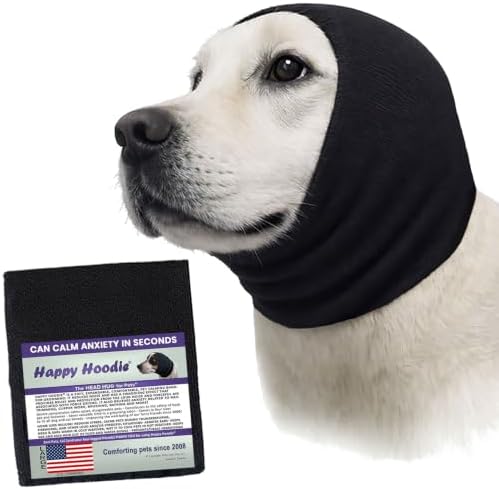
Happy Hoodie: targeted ear coverage and light compression
The Happy Hoodie Original Dog & Cat Calming Band is a stretchy tube that covers the ears and sits around the head and neck. It is used most often during grooming, especially around high-velocity dryers, and can take the edge off sudden household or holiday noise.
The tradeoff is a much narrower safety margin for fit. The band must never cover the nostrils, press on the throat, block vision, or stop comfortable panting. Take it off immediately if your dog paws frantically at it, gags, coughs, breathes noisily, or seems disoriented. Never leave it on an unattended dog, and do not treat it as ear protection against genuinely hazardous noise.

How to choose and fit a calming wearable
Before buying, think about your dog’s coat, body shape, medical history, and tolerance for being handled. Dogs with neck pain, skin disease, recent surgery, breathing problems, or limited mobility should have a veterinarian’s opinion before wearing compression clothing.
- Match the product to the trigger. A torso wrap is the more general option for storms and fireworks; an ear-covering band is more targeted to grooming noise or short events.
- Measure, do not guess. Use the maker’s chart and measure exactly where it specifies.
- Check movement and temperature. Your dog should walk freely and stay cool. Look under the garment for heat, moisture, rubbing, redness, or folded skin.
- Use the least pressure that stays in place. Tighter is not calmer, and too much compression can make breathing, movement, and fear worse.
- Supervise every session. Fabric can twist, snag, or be chewed. Take the wearable off before crating unless the crate and the product instructions specifically allow that combination.
A frightened dog may drink more, drool, or need to urinate. Check that the garment does not get in the way, and offer brief bathroom breaks on leash.
How to introduce the wearable before a noisy event
Introduce a calming wearable while nothing frightening is happening. Waiting for the first thunderclap makes the item part of the scary event. Build the association in short sessions over several days.
- Put it on the floor and reward your dog for looking at or sniffing it. Put it away after a minute or two.
- Touch it briefly to the shoulder or side, give a high-value treat, and take it away. For a head band, reward gentle ear and neck handling first.
- Fasten or position it loosely for a few seconds while feeding treats. Remove it before your dog asks to escape.
- Build up to several comfortable minutes during a calm activity, such as licking a food toy or resting beside you.
- Only then pair it with low-level recorded noise or a mild, predictable trigger. Keep the volume low enough that it does not set off the fear response, so your dog can still eat and respond to you [Merck Veterinary Manual].
During a real event, put the wearable on before your dog is frightened rather than after. The same goes for the hiding place: build a safe haven your dog already likes in a quiet part of the house, and take your dog there before the noise starts [Merck Veterinary Manual]. Close the windows, add steady background sound, dim the lights, and stay nearby. Never punish trembling, hiding, barking, or asking for reassurance. Punishment makes fear and avoidance more likely, not less [Merck Veterinary Manual].
Keep a short log after each use: the trigger, what your dog wore, panting, pacing, whether your dog could take food, and how long recovery took. Consistent notes tell your veterinarian more than a general impression.
When to see a veterinarian instead
Book a veterinary visit if the noise fear is new, getting worse, or starting to shape your household’s routine. Pain, hearing or vision changes, and other medical problems can make a dog more reactive, which is why ruling out a medical cause belongs at the start of any behavior plan [Merck Veterinary Manual]. For moderate to severe panic, ask about medication given ahead of a predictable event. A dexmedetomidine oromucosal gel is approved for canine noise aversion and suits storms because it works quickly and wears off quickly [Merck Veterinary Manual]. Timing matters, so follow your veterinarian’s instructions about when to give it. Medication is not a failure. For a dog this frightened, it is often what makes learning possible.
Seek urgent veterinary help
Get immediate help if your dog collapses, has trouble breathing, develops pale or blue gums, overheats, injures the mouth or paws while trying to escape, or swallows part of a garment. Also call promptly for nonstop panic, repeated self-injury, or escape behavior that puts the dog or people at risk. Remove the wearable if it is safe to do so, move to a quiet secure area, and follow the emergency clinic’s instructions.
If the fear keeps coming back, the answer is rarely the garment. A full plan usually combines environmental management, gradual desensitization and counterconditioning [Merck Veterinary Manual], predictable routines, and, where it is needed, referral to a board-certified veterinary behaviorist or a qualified reward-based trainer.
Further Reading
- Anxiety Signs in Dogs and What Helps: recognize subtle stress signals and know when behavior has become a welfare concern.
- Separation Anxiety in Dogs Explained: why absence-related panic needs its own management and treatment plan.
- Why Does My Anxious Dog Need a Cozy, Den-Style Bed? Build a comfortable retreat to pair with noise management.
This article is for educational purposes only and is not a substitute for professional veterinary care. Always consult a licensed veterinarian regarding your pet’s health and nutritional needs. As an Amazon Associate, Vet Explains earns from qualifying purchases.
Was the article helpful?