

Before you buy a dog life jacket, it helps to know that water takes more out of your dog than it looks like from the shore. Waves, boat wakes, and a long fetch session burn more energy than most owners expect. A day at the lake or an afternoon on the boat can turn into a real scare if your dog tires out or gets caught in a current.
A properly fitted life jacket does not replace watching your dog closely around water. What it does is buy you time, and a grab handle if your dog starts to struggle. That matters most in open water, in moving currents, and while a dog is still building water confidence.
This guide goes from your dog to the vest: what kind of swimmer you have, which features the vest needs, and which size fits your dog’s chest. The brand comes last.
Which Dogs Need a Life Jacket
Most dogs can paddle, but paddling is not the same as being safe in open water. Some dogs are built to sit low in the water. Short legs, a heavy barrel-shaped body, or a flat face all mean a dog works harder just to keep the nose up, and those dogs tire fast. Bulldogs and Pugs are the usual examples. For them the problem is the body and not the weather, so a life jacket is a sensible precaution for any swim, not just on rough days.
Senior dogs and dogs recovering from injury are the next group. They tire faster than they once did, even if they were strong swimmers in their prime, and the swim is often not the hard part. Climbing onto a dock or back into a boat is where a tired dog gets into trouble, which is why a ramp or set of steps can help as much as the jacket does.
A dog who swims beautifully and needs no help staying afloat still needs the jacket on a boat. A sudden fall overboard is disorienting no matter how well a dog swims in a calm pool. Keep the jacket on the whole time you are on or near the boat, not only when your dog is actually swimming.
Water-shy dogs are the last group, and for them a life jacket is a training tool. The extra buoyancy takes the guesswork out of staying afloat, so a nervous dog can settle and paddle instead of panicking. That often turns a stressful first swim into one the dog is willing to repeat.
What a Good Life Jacket Has
Not every vest is built the same way, and the cheapest one on the shelf isn’t always the safest. Whichever dog you have, check these features before you buy:
- 01
Front float support
A raised float under the chin keeps your dog’s head above water with less effort, which matters most for weak or first-time swimmers.
- 02
Two rescue handles
One near the shoulders and one near the hips keep the dog level. A single handle can twist a dog sideways during a lift.
- 03
Adjustable, quick-release straps
A snug fit stops the vest from riding up or sliding off, and quick-release buckles matter if it ever needs to come off fast.
- 04
Bright color and reflective trim
Easier to spot in open water, at dusk, or if your dog swims further than expected.
- 05
Sized by girth, not weight
Measure around the widest part of the ribcage rather than trusting a weight chart.
Which Vest, and Which Size
Two vests cover most dogs. Both have thousands of owner reviews behind them and both hold up for real lake, pool, and boat use, not just for photos on the dock.

Product prices and availability are accurate as of the date/time indicated and are subject to change.
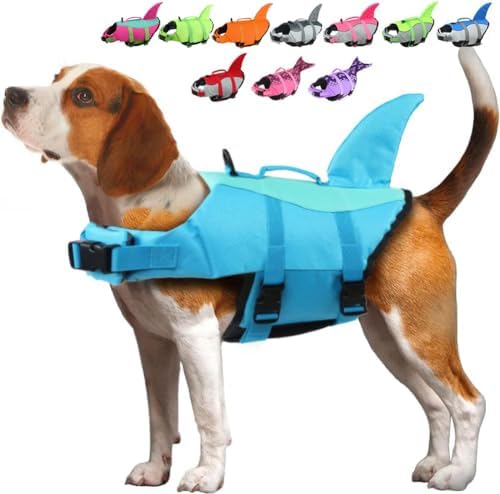
The Outward Hound Dawson Swim is the more traditional design. It is a neoprene vest with foam padding, adjustable straps with quick release buckles, reflective accents and a strong top handle for lifting your dog out in an emergency. It sits at the budget end of the category, so it is a reasonable buy even if your dog only wears it a few times a summer.
The VIVAGLORY Sports Style vest trades the front float for a more open cut around the neck and chest, which broader or deeper-chested dogs often find more comfortable for longer wear. It still has a padded handle and a leash ring. I would pick it for a confident swimmer that fought a bulkier vest, and the Dawson for a dog that does better in a snug, padded neoprene fit.
Size is where people go wrong, and it has nothing to do with which of the two vests you choose. Measure your dog’s chest girth at the widest point, usually just behind the front legs, before ordering. It is the same measurement you will want if you ever size a car harness. Short, wide breeds often weigh more than their frame suggests, so a weight-only chart can put them in the wrong size.
Most well-reviewed vests are inexpensive as dog gear goes, and premium options like the Ruffwear Float Coat cost several times more. Either way it is a small price next to an emergency vet visit for a near-drowning, or the far worse outcome of losing a dog to open water. Rinse off sand and chlorine after each use and let the vest air dry before storing, and most last several seasons.
The Week Before the First Swim
A vest that arrives the morning of the trip is one your dog meets for the first time at the water’s edge, which is the worst moment to do it. Let your dog wear it around the house or yard for a few short sessions first, paired with treats or a favorite toy, so it becomes part of something fun rather than something restrictive.
For the first real test, pick calm, shallow water and stay close enough to reach your dog easily, then go deeper only as your dog relaxes. Judge the fit while your dog is moving: a vest that fits well should not shift, ride up, or pinch under the front legs. Look over your dog’s fetch and chew toys while you are packing too, because a floating toy that is coming apart is a hazard of its own.
Lake and pond water bring two smaller follow-ups. A dog who drinks it can pick up giardia, a gut parasite that causes diarrhea. Water left in the ears can also set off ear trouble, so drying them and using a gentle ear cleaner after a swim helps.
What to Watch for After a Swim
One part of water safety has nothing to do with the vest. A dog who took water in during a scare can come home, shake off, eat dinner, and look normal while something is still going wrong in the lungs.
See a vet the same day if your dog starts coughing, seems unusually tired or weak, or has labored breathing in the hours or days after swimming, even if the swim itself looked completely normal. These can be signs of water in the lungs, often called secondary drowning, which can be fatal and can show up as late as three days after a near-drowning scare. A dog can act normal in between, so treat it as same-day care, not wait-and-see.
This article is for educational purposes only and is not a substitute for professional veterinary care. Always consult a licensed veterinarian regarding your pet’s health and nutritional needs. As an Amazon Associate, Vet Explains earns from qualifying purchases.
Was the article helpful?