
Is your cat straining in the litter box, making lots of trips with little to show for it, or crying while peeing? Your vet has probably mentioned FLUTD. It stands for feline lower urinary tract disease, an umbrella term for several conditions that look alike from the outside.
Quick answer: FLUTD covers several bladder and urethra problems in cats with overlapping symptoms. Most cases are manageable, but a male cat straining with nothing coming out needs emergency care within hours, not days.
What Is FLUTD in Cats?
FLUTD is a group of conditions, not one disease. They all irritate or block the bladder and urethra, so they cause similar signs. Cystitis (from the Greek “kystis,” bladder, plus “-itis,” inflammation) means an inflamed bladder, and it sits underneath most cases.
The most common cause by far is feline idiopathic cystitis, or FIC. Here the bladder is inflamed with no infection or stone to explain it. Idiopathic (from the Greek “idios,” one’s own, + “pathos,” suffering) means the exact trigger is unknown, though stress is strongly linked to flare-ups.
What Actually Causes FLUTD?
FIC tends to flare during stressful times, such as a new pet, a move, or even a new litter brand. Bladder stones and crystals cause another large share of cases. They form when minerals in concentrated urine clump together over time.
Urethral plugs are a sticky mix of mucus, crystals, and cell debris that can block urine flow. They are far more common in male cats, whose urethra is longer and narrower. True bacterial bladder infections are uncommon in cats under ten and become more common in older cats. When one shows up in a younger cat, vets look for an underlying problem like kidney disease or diabetes.
What Signs Do Owners Notice First?
Most owners notice the same handful of signs, whatever the cause. Watch for straining or crying while trying to pee, and many trips to the box with only small amounts each time. Other signs are blood in the urine, peeing outside the box (often on cool, smooth surfaces), lots of licking under the tail, and a tender, swollen belly.
Any one of these is worth a vet visit, though peeing outside the box on its own can have other causes. Several signs together, especially in a male cat, make it more urgent.
Is a Blocked Bladder in My Male Cat a True Emergency?
Yes. This is the single most important thing to know about FLUTD. A male cat who keeps straining but passes no urine may have a urethral obstruction, a complete blockage that stops the bladder from emptying. The word “urethra” comes from the Greek “ourethra,” the passage for urine.
Without treatment, toxins and potassium build up in the blood within 24 to 48 hours, and that can cause a fatal heart rhythm problem. Female cats have a shorter, wider urethra and almost never block completely, which is why this emergency mostly affects males.
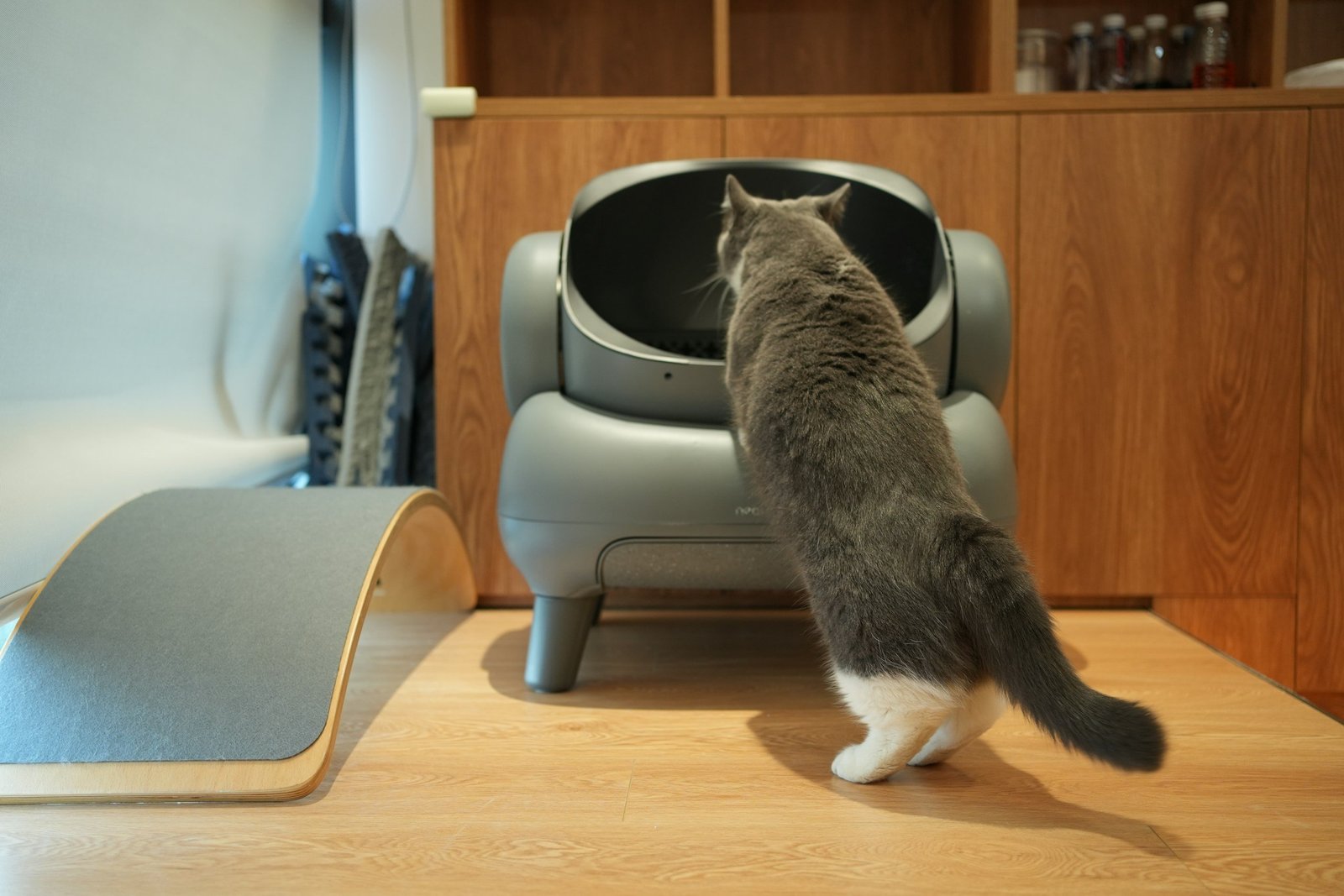
You do not need to feel the bladder yourself. Look at the litter box instead. A cat with cystitis leaves several small damp clumps or spots over a few hours. A blocked cat leaves nothing, or only a few drops, however often he goes in and strains. If you cannot find fresh urine after two or three visits to the box, treat him as blocked.
A male cat straining in the litter box with little or no urine coming out is a life-threatening emergency. Go to an emergency vet immediately, do not wait until morning.
How Do Vets Diagnose FLUTD?
Diagnosis usually starts with a urinalysis, which checks for crystals, blood, infection, and how concentrated the urine is. Your vet will also feel the bladder to see whether it is full or blocked. X-rays or an ultrasound often follow if stones are suspected, since not every stone shows up the same way on imaging.
Bloodwork becomes urgent in any cat that might be blocked, because it shows how much the kidneys and electrolytes have already been affected.
| Underlying Cause | How Common | Cats Most Affected | Emergency Level |
|---|---|---|---|
| Idiopathic cystitis (FIC) | Most common cause overall | Any cat, often stress-linked | Painful but rarely life-threatening on its own |
| Bladder stones or crystals | Common | Any cat | Can progress to a blockage, especially in males |
| Urethral plug or obstruction | Uncommon but serious | Male cats far more than females | True emergency, can be fatal within 24 to 48 hours |
| Bacterial UTI | Uncommon | Older cats, or those with other disease | Usually not an emergency, but needs treatment |
How Is FLUTD Treated and Managed at Home?
Treatment depends on the cause. A blocked cat needs an emergency catheter and a hospital stay. A cat with idiopathic cystitis is usually managed with pain relief, less stress, and diet changes that keep urine more dilute. Some stones dissolve on a prescription diet, while larger stones or certain types need surgery. If your cat is not improving with treatment, or gets worse at any point, call your vet back.
More water helps with nearly every cause. Dilute urine gives crystals less chance to form and is gentler on an inflamed bladder. Many vets suggest moving from dry to wet food, adding water fountains, or putting extra water bowls around the house.
Can FLUTD Be Prevented?
Lowering stress is one of the best tools you have. Play, climbing spots, steady routines, and enough litter boxes all lower the odds of a cystitis flare. The usual guidance of one litter box per cat plus one extra, in separate quiet spots, is one of the simplest stress reducers you control.
A cat who has had one FLUTD episode is more likely to have another, so the goal is ongoing management rather than a one-time fix.
Final Thoughts From a Veterinarian
FLUTD covers several causes, but the one you cannot afford to miss is a blocked male cat. If he is straining and you cannot find fresh urine in the box, go to an emergency vet now. For every other sign, a same-day or next-day vet visit is the right step.
Was the article helpful?