
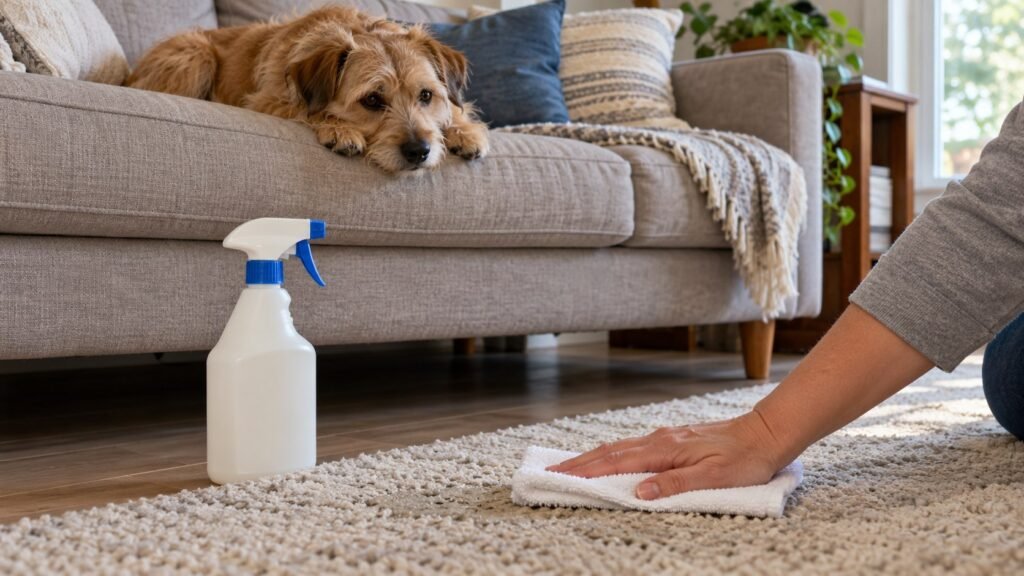
A puddle on the carpet gets blotted, sprayed and forgotten. A few days later the same patch smells faintly of urine as the room warms up, and the dog goes straight back to it. Dogs are often drawn to a spot that still smells, which is how house soiling in dogs turns one accident into a habit.
The fix is an enzymatic cleaner, used properly: soak the spot rather than wipe it, then leave it to dry without rinsing. Three bottles cover most homes. Rocco & Roxie is for a stain that has already set, Nature’s Miracle is the inexpensive everyday bottle, and Biokleen Bac-Out suits a house where perfumed cleaners are a problem.
If a house-trained adult dog or cat has suddenly started going indoors, cleaning is only part of the job, because a medical problem has to be ruled out first. In that case, start with the section on medical accidents below.
Why Ordinary Cleaners Leave the Smell Behind
A detergent lifts a stain off a surface so you can blot it away, but urine does not stay on the surface. It runs through carpet fibers into the backing and the padding, follows grout lines and the seam along the baseboard, and sometimes reaches the subfloor. What carries the smell sits well below where a paper towel reaches. That is why a spot can look clean and pass a quick sniff, then come back on the first humid day.
Enzymatic cleaners go after that residue. They contain enzymes that break down what is left of the urine, and some add live cultures that keep producing enzymes as they sit. The smell goes because the residue is broken down, not covered up. That is also why cleaners with vinegar or ammonia are a poor choice. They change what you can smell without removing what your dog can, and they may even encourage marking the same spot again.
What to Look For on the Label
Plenty of bottles smell like cleaning and do little for urine. Look for the word enzyme or enzymatic on the label. Phrases like odor eliminator or odor neutralizer mean nothing on their own, and they often sit on an ordinary scented cleaner. A real enzymatic product usually tells you to saturate the area and let it air dry. A label that says spray and wipe is describing something else.
Check which surfaces it is cleared for, then test a hidden corner anyway. Most are fine on carpet, upholstery, sealed hardwood and tile, but some can lighten wool or shift a dark dye. A rug you care about is worth thirty seconds of caution.
Think about volume before fragrance. A soaked spot can take a surprising amount of cleaner, because it has to reach as far as the urine did. Buying the smallest bottle usually means under-treating the stain, and in my view that is why so many owners decide these products do not work. A heavy perfume also makes it harder to tell whether the smell is really gone.
Using One So It Actually Works
When these products fail, it is usually down to how they were used rather than the cleaner itself. The spot got wiped when it needed to be flooded.
On Carpet and Padding
Blot first by pressing straight down rather than scrubbing, because scrubbing pushes urine sideways into clean fibers. Then saturate an area wider than the visible mark, since urine spreads outward underneath as it soaks in. Pour rather than mist, and use more than feels reasonable.
Then leave it alone. Do not rinse it, do not wipe off the excess, and do not point a fan at it. Enzymes need to stay wet to keep working, and they work over hours rather than minutes. An older stain usually needs a second treatment, and one that has sat for months may need a third.
A black light in a dark room will show you where the old spots really are, and it often shows more than you expected. One warning: do not steam clean a urine spot. The heat can set both the stain and the smell, which makes the odor much harder to remove later.
On Hard Floors and Washable Fabric
Tile, sealed wood and laminate are easier, but the seams are not. Urine runs into grout lines and the gaps at the edges of boards. Work the cleaner along the seam and let it sit there, rather than mopping the surface and calling it done.
Bedding, slipcovers and crate liners can go through the washing machine with the cleaner added alongside your detergent. Use the coolest cycle the fabric allows, air dry if you can, and keep the load out of the dryer until the smell is gone, because heat can set it.
When the Accidents Are Medical, Not Behavioral
A bottle of cleaner is the right answer for a puppy who is still learning, or for one accident after a long day. On its own, it is the wrong answer for an adult animal who used to be reliable.
In dogs, pay attention when house training slips at the same time as a sudden jump in drinking. That combination is a classic early sign of diabetes or kidney disease, and both do better when they are caught early. Straining, frequent small puddles or blood in the urine point instead toward a urinary tract infection or bladder stones. Whatever the pattern, a vet visit comes before anyone calls it a training problem.
Older dogs deserve extra patience. A senior who goes indoors overnight may be leaking rather than choosing, or too stiff to reach the door in time. He may also be in the early stages of canine cognitive dysfunction, the dog version of dementia. It is badly underdiagnosed. In one survey of owners of older dogs, 14.2 percent of the dogs met the criteria, but only 1.9 percent had been diagnosed. If a step down to the yard is part of the delay, a ramp sometimes solves what looks like a behavior problem.
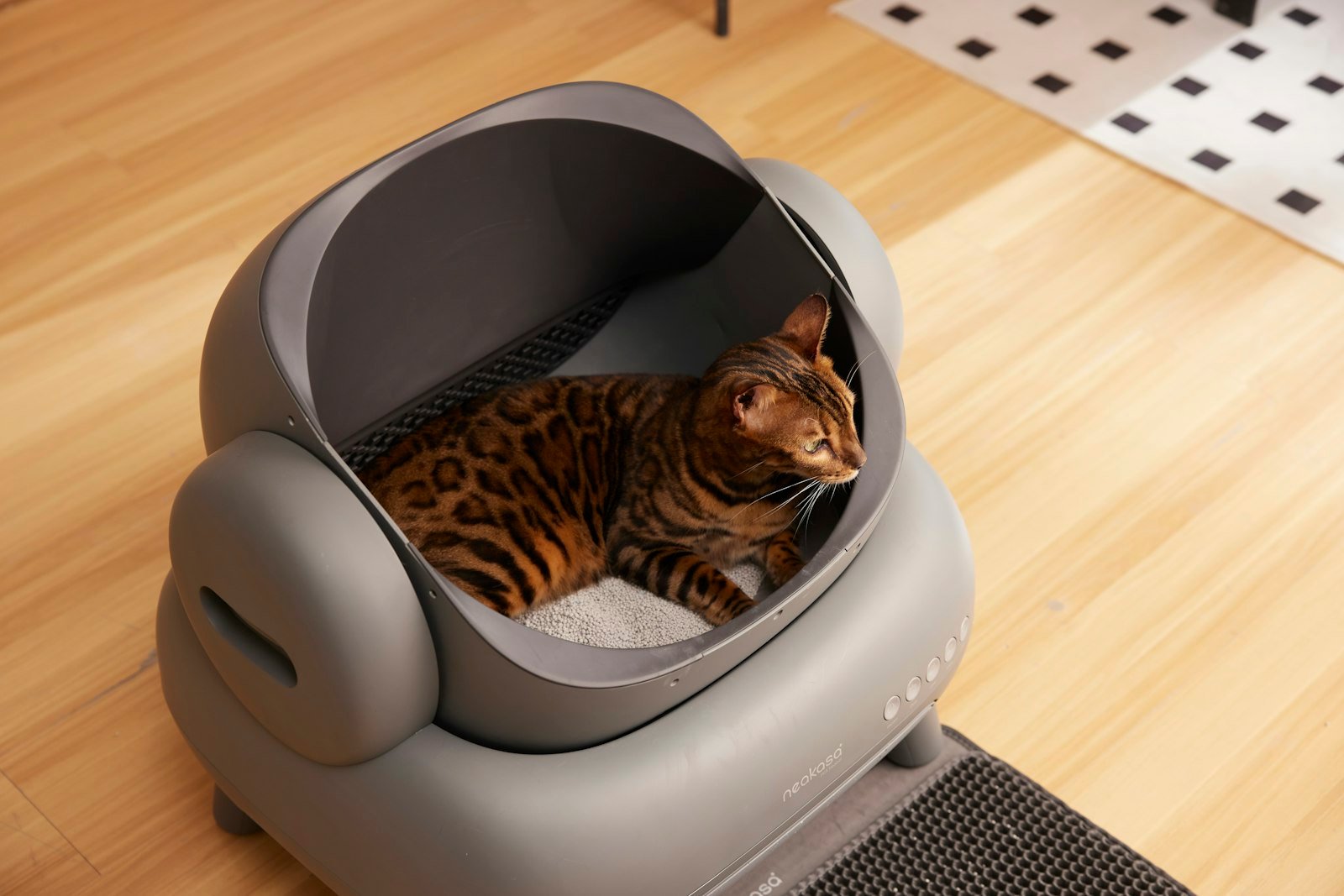
Cats are the ones most often misread. Urinating outside the box, which vets call periuria, tends to get put down to spite or stress. Problems in the urinary tract can cause it, though, and house soiling in cats is only treated as behavior once those are ruled out. Check the ordinary things too. Cats are particular about how many boxes they have and where they sit, and one more box than the number of cats is the usual rule. Sometimes a litter box the cat actually likes is the whole fix. In an older cat, drinking more and losing weight point toward diabetes or chronic kidney disease.
Three Enzymatic Cleaners Worth Buying
All three are true enzymatic cleaners with long review histories, but they suit different messes. They differ in strength, cost per ounce, and what they smell like while they work.


Product prices and availability are accurate as of the date/time indicated and are subject to change.
Rocco & Roxie Professional Strength is for a stain that has already set. It costs the most per ounce and is the most dependable on old marks. Nature’s Miracle is the one to keep under the sink. At roughly a third of the price, it suits a puppy in house training, where you treat several small spots a week and volume matters more than strength. Biokleen Bac-Out is plant based and uses live cultures rather than a fixed enzyme blend. Its lime scent comes from citrus extract rather than synthetic fragrance, so it is the pick if perfumed cleaners bother someone in the house.
Buy for the mess you have. A professional strength bottle is wasted on the occasional puppy puddle, and the budget bottle will struggle with padding that has been soaking since spring.
A cat straining in the litter box and producing nothing is an emergency, not a cleaning problem. In male cats especially, a urethral obstruction stops urine from leaving the body. Waste builds up in the blood within a day or two, the heart rhythm can be disrupted, and a complete urinary blockage can kill within about three days. If your cat is going in and out of the box, crying, straining with little or nothing coming out, or licking at himself repeatedly, go to an emergency veterinarian now rather than waiting for morning. The same urgency applies to a dog straining to urinate and producing nothing.
This article is for educational purposes only and is not a substitute for professional veterinary care. Always consult a licensed veterinarian regarding your pet’s health and nutritional needs. As an Amazon Associate, Vet Explains earns from qualifying purchases.
Was the article helpful?