
Your dog has just been diagnosed with kidney disease, and somewhere between the bloodwork and the first bag of prescription food you started wondering what all of this will cost. The cost to treat kidney disease in dogs is a running cost, not a single bill. For a 50 lb dog on diet and regular rechecks, the first year comes to roughly $3,000 at typical US prices and about $2,300 a year after that. Medications, when they are needed, go on top, and a phosphate binder alone can add $1,000 or more a year. The table further down works it out for three dog sizes.
What sets the total is which kind of kidney problem your dog has. Acute kidney injury comes on suddenly, usually from a toxin or from poor blood flow to the kidneys. Treatment happens in hospital, and fluid therapy is a central part of it. Chronic kidney disease builds over months or years and is managed at home, so the cost arrives in small repeating pieces rather than one large bill. The rest of this article is about the chronic kind, which is what most owners end up budgeting for.
The Cost to Treat Kidney Disease in Dogs at Diagnosis
Diagnosis starts with a kidney blood panel and a routine urinalysis. The blood panel looks for azotemia, the buildup of nitrogen waste that shows up once kidney function has dropped far enough. From azote, an old name for nitrogen, and the Greek haima, blood. A urine protein-to-creatinine ratio and a blood pressure reading belong in the same visit, because both change which medications a dog needs. Expect to pay for one repeat blood test before a stage is assigned, since staging uses creatinine measured on at least two separate occasions when the dog is stable. In the table below, that first workup comes to about $730.

The Prescription Kidney Diet
A prescription renal diet has less protein, of better quality, and less phosphorus, and it is the largest predictable running cost. A 27.5 lb bag of Hill’s Prescription Diet k/d lists at $139.99 and holds about 110 cups, which at the label’s feeding guide is roughly a month’s food for a 50 lb dog. Once it starts, it continues for life.
Diet is not an optional extra. In a randomized trial of 38 dogs, 33 percent of those on a renal diet died of kidney-related causes against 65 percent on ordinary food, and they lived a median of 594 days against 188. Current guidance is to consider the diet in stage 2, while a dog is still eating well, and to feed it from stage 3 on, because it is much harder to introduce once appetite drops.
Medications and What They Cost
Medications get added as problems appear, not all at once. A phosphate binder comes in when blood phosphate stays high on the diet alone. Blood pressure medication is added when systolic pressure stays at 160 mm Hg or above on repeat readings over a few weeks. That happens in roughly 20 percent of dogs with long-term kidney disease. Anti-nausea drugs and appetite stimulants can join the list from stage 2 onward, when vomiting or a fading appetite shows up.
The spread between them is wide. Generic amlodipine lists at about $0.18 a tablet, so a tablet a day is roughly $70 a year. A phosphate binder is the expensive one, because the amount needed scales with body weight. At the starting range in current canine guidance, compounded aluminum hydroxide at about $0.61 per 150 mg capsule works out to roughly $500 to $1,000 a year for a 25 lb dog and $1,500 to $3,000 for a 75 lb one. Your veterinarian sets the actual dose from bloodwork, and it is worth asking whether a bulk or liquid form comes out cheaper at that dose.
| What you pay for | 25 lb dog | 50 lb dog | 75 lb dog |
|---|---|---|---|
| First workup, one time (exam, blood panel, urinalysis, blood pressure, urine protein, plus the repeat panel that confirms the stage) | about $730 | about $730 | about $730 |
| Prescription renal diet, per year | about $810 | about $1,390 | about $1,860 |
| Rechecks, per year (3 visits: exam, panel, blood pressure) | about $920 | about $920 | about $920 |
| Blood pressure medication, per year, if needed | about $70 | about $70 | about $70 |
| Phosphate binder, per year, if needed | $500 to $1,000 | $1,000 to $2,000 | $1,500 to $3,000 |
| First year, diet and rechecks only | about $2,460 | about $3,040 | about $3,510 |
| Each later year, diet and rechecks only | about $1,730 | about $2,310 | about $2,780 |
| Each later year, if both medications are needed | $2,300 to $2,800 | $3,380 to $4,380 | $4,350 to $5,850 |
Rechecks and Monitoring
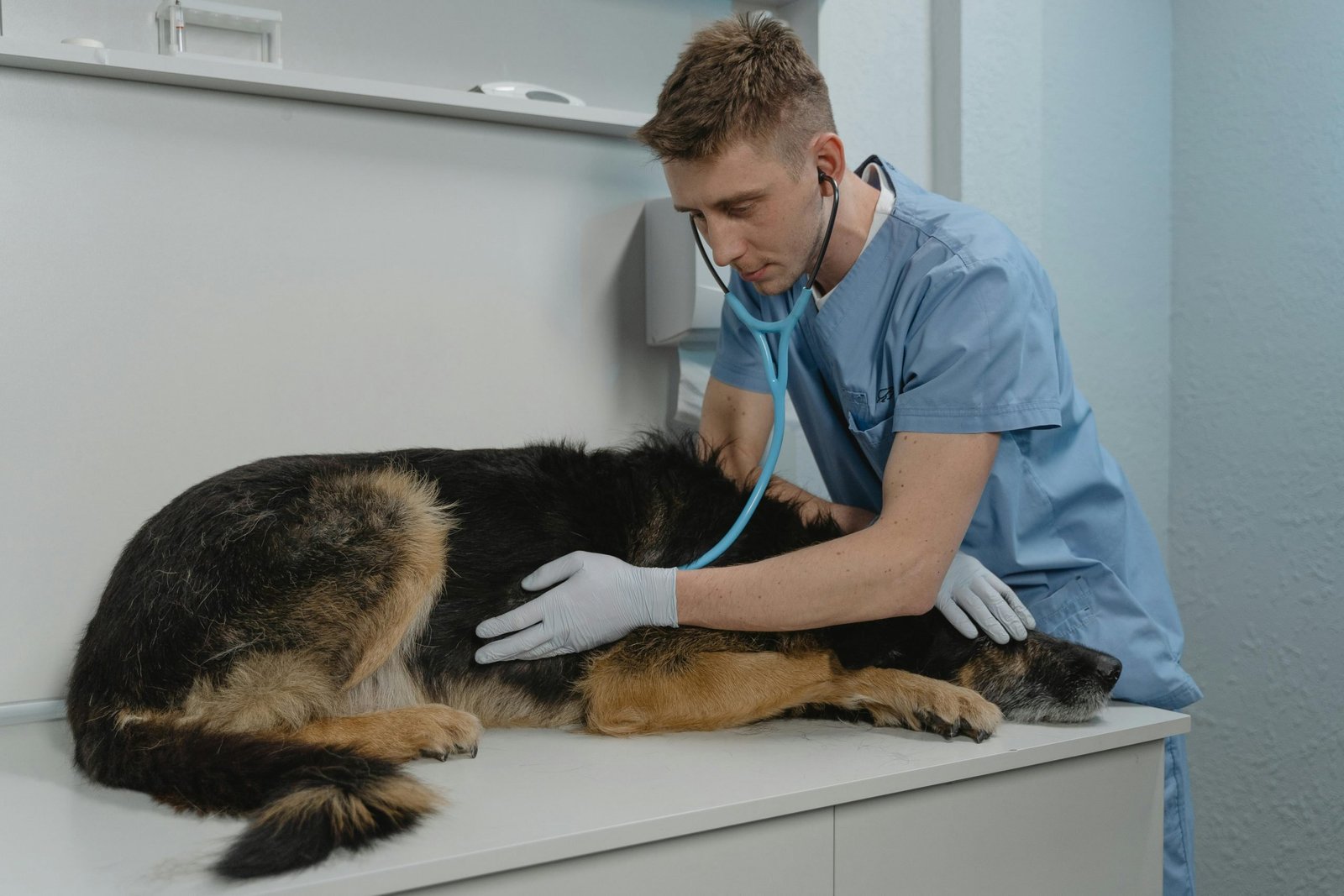
Recheck bloodwork is what the plan gets adjusted on, and what matters is the trend across visits rather than any single result. Early and middle stages usually mean a visit every 3 to 6 months, moving to every 1 to 2 months in stages 3 and 4. After a phosphate binder is started, expect checks every 4 to 6 weeks until the values settle, then about every 3 months. Blood pressure, once it is under control, is also rechecked at least every 3 months. In the table, three routine visits a year come to about $920, so each extra recheck adds a little over $300.

Does the Stage Change the Cost?
Kidney disease is graded in four stages, and the stage at diagnosis is the best guide to what you will spend. Stage 1 and early stage 2 often need only a diet change and periodic monitoring. From stage 2 on, a phosphate binder may be added, along with drugs for nausea and appetite. Blood pressure medication can be needed at any stage. Stages 3 and 4 can bring treatment for anemia on bloodwork, acidosis and nausea, and sometimes fluids given at home. In stage 4 the conversation can extend to dialysis or transplant.
Complications drive the bill more than the stage number does. Under the current treatment thresholds for dogs, anemia is treated once the hematocrit falls below about 30 percent, and acidosis is corrected when blood bicarbonate drops under 18 mmol/L. A dog with severe anemia, uncontrolled blood pressure, or a hypertensive crisis affecting the eyes can need extra treatment and sometimes hospitalization on top of routine care.

Ways to Keep the Bill Down
A few things really do lower the running cost. Buy prescription food in the largest bag your dog will finish before it goes stale: on the same food, the 8.5 lb bag works out to $6.71 a pound against $5.10 in the 27.5 lb bag. Ask whether a generic version of a medication is suitable. Ask which tests are needed at each recheck instead of running a full panel every time. Pet insurance only helps if it is in place before the diagnosis, since most policies exclude pre-existing conditions, and many apply a waiting period.
Ask your clinic for an itemized estimate and compare it against the table. Three costs sit outside it because they are genuinely unpredictable: an abdominal ultrasound or specialist referral at diagnosis, subcutaneous fluids at home if your dog reaches that point, and hospitalization for a crisis.
Many clinics also offer payment plans or work with third-party financing for larger bills. Ask about it before you need it. Nobody makes a good financing decision in the middle of an emergency.
When Do Costs Escalate Quickly?
See a vet now: a dog with known kidney disease who stops eating entirely, vomits repeatedly, or becomes unusually weak or collapsed may be in a uremic crisis, where waste products the kidneys can no longer clear build up in the blood fast enough to make the dog acutely ill. Go to the vet immediately; this cannot wait for the next scheduled recheck.
A sudden decline usually means a hospital stay on IV fluids, not an outpatient recheck. That is why steady monitoring between visits matters as much as the visits themselves, and why it helps to know the signs of kidney failure in dogs before you need them.
Was the article helpful?