
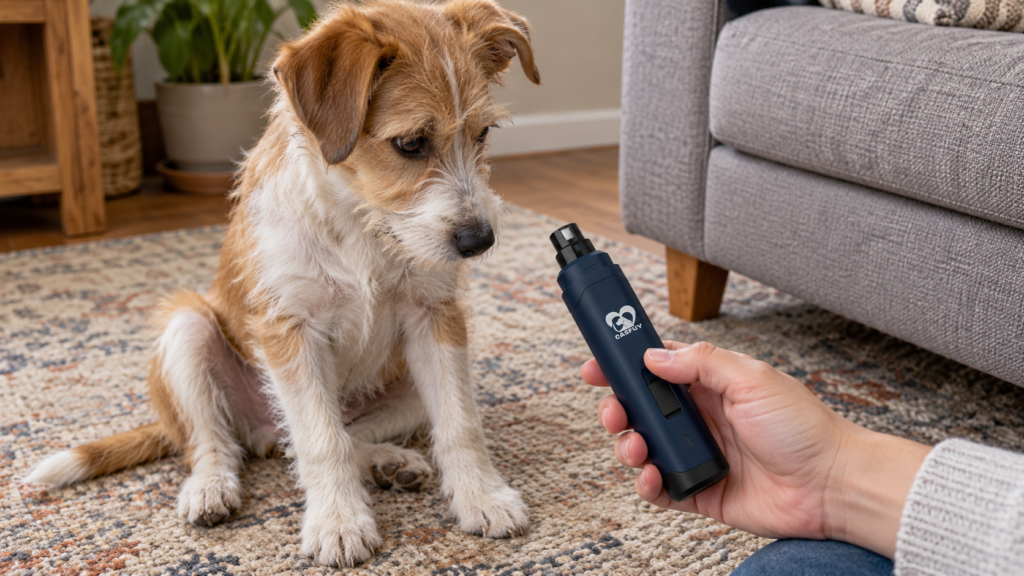
The clippers are in the drawer, your dog’s nails are clicking on the kitchen floor again, and the last attempt ended with a yelp, a drop of blood, and a dog that now leaves the room when the drawer opens. That is how most owners arrive at the idea of a grinder. The delay itself is the problem: overgrown nails make ordinary walking and running painful, and the longer they stay long, the harder they are to bring back.
Electric rotary nail grinders offer an alternative to guillotine and scissor-style trimmers. Instead of crushing and cutting the nail in one movement, they sand the keratin gradually. That lets you shape the claw in small steps and stop before you reach sensitive tissue, which is the whole reason nervous owners and nervous dogs tend to do better with one.
The Two Picks
For dogs that panic at standard clippers, or for owners working with opaque black claws, the Casfuy Upgraded 2-Speed Pet Nail Grinder is a quiet, approachable option with built-in guide lights. For large dogs with thick nails that need faster material removal, the Dremel 7300-PT Pet Grooming Kit offers stronger rotary power and replaceable sanding bands.
Why Rotary Grinders Reduce Clipping Anxiety
Manual clippers apply pressure before they cut. Even when the blades are sharp, that squeeze can transmit an unpleasant sensation through the nail capsule before the tip comes off. Some dogs flinch from that pressure even when the quick is not touched, and one bad experience is often enough to turn a tolerant dog into a drawer-avoider.
A grinder removes nail in thin layers. It also rounds the sharp edges that clippers leave behind, so newly trimmed claws are less likely to snag carpet or scratch skin during play. For dogs already nervous about paw handling, that slower pace can make cooperative care easier to build.
Gradual grinding also suits nails that have been left too long. When nails are not trimmed regularly, the quick grows farther down the shaft, so a single big cut is no longer possible without hitting it. Short, frequent sessions take the nail back a little at a time and keep you on the safe side of that line.
Finding the Quick: Black Claws Versus Clear Claws
The outer nail is hard keratin. Inside it sits the quick, which contains blood vessels and nerves. In clear nails, the quick is usually visible as a pink core. In dark nails, pigment hides it, which makes large clipper cuts risky and is exactly where a grinder earns its keep.
With a grinder, stop every few seconds and inspect the cut surface. Dry outer nail often looks chalky. As you get closer to living tissue, a gray to pink oval appears at the top of the cut surface; stop there, because the next layer is the quick. If your dog pulls away, the nail feels hot, or you are unsure where the quick is, end the session and try again later. Keep styptic powder within reach before you start, since a nicked quick can bleed for about five minutes without it.
Casfuy Versus Dremel: Rotary Grinder Comparison
If your dog is sensitive to noise, start with the quieter tool and shorter sessions. If your dog has thick nails and tolerates grooming well, a stronger rotary tool can reduce session length. I would pick the quiet one for any dog that has already had a bad clipper experience; speed matters far less than getting the dog back to the table next week.
A Step-by-Step Desensitization Protocol
- 1
Scent and visual acclimation
Place the powered-off grinder near treats and let your dog investigate without paw handling.
- 2
Sound exposure
Turn the grinder on across the room while offering food, then slowly move it closer over several sessions.
- 3
Vibration practice
Touch the non-grinding handle to the shoulder or leg so your dog learns that the buzzing sensation is harmless.
- 4
One-nail sessions
Hold one toe securely and touch the grinder to the nail tip for one to two seconds. Stop before heat builds up.
- 5
Frequent rewards
Use food, praise, and breaks. The goal is a repeatable routine, not a perfect full trim on day one.
When Nail Problems Need a Veterinarian
Seek veterinary care instead of grinding if a claw is split into the skin, bleeding does not stop after direct pressure, the nail fold is swollen or draining pus, your dog has sudden severe paw pain, or the toe looks misshapen. A grinder is a maintenance tool, not a treatment for torn nails, infections, fractures, or suspicious growths.
Regular nail maintenance protects comfort and long-term foot mechanics, and every six to eight weeks is a reasonable rhythm for most dogs, sooner for dogs that rarely walk on pavement. If your dog panics despite slow training, or shows signs of anxiety at the sight of the grinder no matter how slowly you go, ask your veterinarian or a qualified groomer about cooperative care, medication support, or professional nail care that keeps everyone safe.
This article is for educational purposes only and is not a substitute for professional veterinary care. Always consult a licensed veterinarian regarding your pet’s health and nutritional needs. As an Amazon Associate, Vet Explains earns from qualifying purchases.
Was the article helpful?