
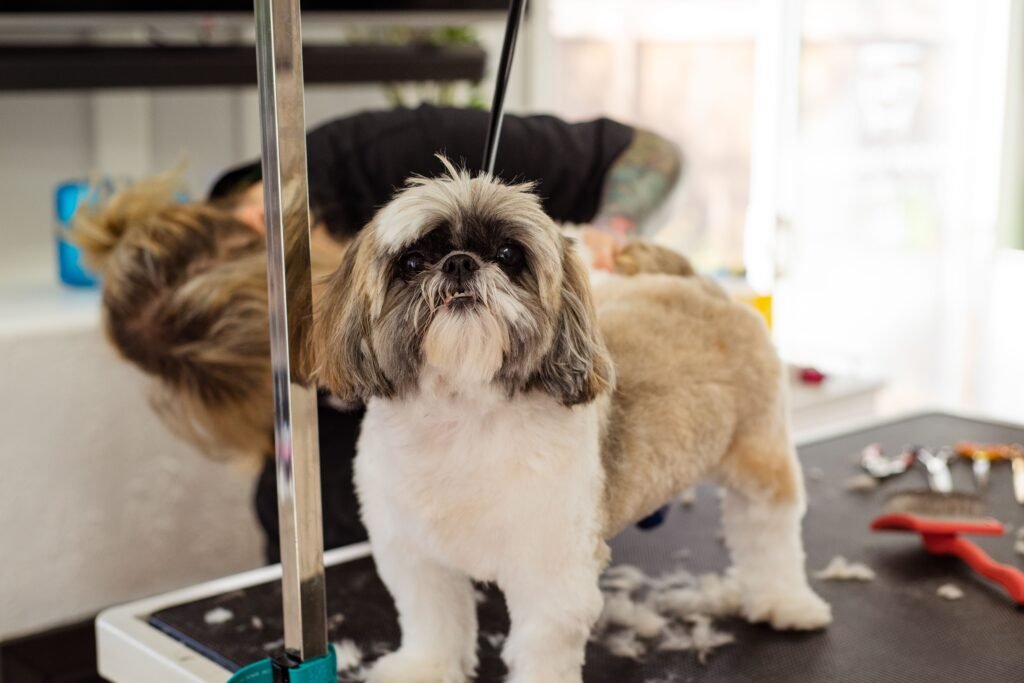
If you have vacuumed twice in one day and still found a tumbleweed of fur under the couch, you know the feeling. Shedding is normal. Living with it year round does not have to be.
A good deshedding tool pulls loose undercoat before it reaches your floors, your clothes, and your dog’s water bowl. The wrong tool just moves hair around, or irritates skin that is already sensitive. Here is what works, how to use it safely, and when heavy shedding is worth a call to your vet instead of another trip to the pet aisle.
Table of Contents
Quick answer: For dogs with a thick double coat, the FURminator Undercoat deShedding Tool pulls the most loose hair per session and is worth the higher price. For lighter shedders or a gentler daily option, the Maxpower Planet Dog Grooming Rake covers the basics at a fraction of the cost.
Why Do Dogs Shed So Much?
Most dogs carry two layers of hair: a coarser topcoat and a soft, dense undercoat underneath. That undercoat insulates in winter and helps keep them cooler in summer, and it is what falls out in handfuls during the spring and fall coat blows. Every hair moves through a growth phase, a transition phase and a resting phase before it drops, so some shedding is always happening [AAHA].
Where a dog lives changes the pattern. Dogs kept mostly indoors under artificial light often shed at a steady rate all year instead of in two big seasonal waves [AAHA]. If your dog seems to shed constantly and never has an obvious off season, that alone is not a warning sign.
Breeds with double coats, like Huskies, Labradors, German Shepherds, and Golden Retrievers, shed the most because they carry the most undercoat to begin with. Single-coated breeds still shed, just less dramatically.
Diet plays a part too. A substantial share of a dog’s daily protein goes into building skin and hair, and linoleic acid and omega-3 fats supply the sebum that keeps a coat glossy [Today’s Veterinary Practice]. But true deficiencies are uncommon in dogs eating a complete commercial food. When diet is the problem, it usually shows as a dull, dry, brittle coat rather than as more hair on the floor [Today’s Veterinary Practice]. Most of the time the cause is simpler than nutrition: hair that has already let go stays trapped in the coat until something lifts it out.
What Makes a Deshedding Tool Actually Work?
Not every brush marketed as a deshedding tool does the same job. A slicker brush is built for detangling and surface hair. A true deshedding tool, usually a rake or a rounded-edge blade, reaches through the topcoat to lift out loose undercoat. It should release that hair, not cut it or scrape the skin.
Look for three things before you buy. First, a curved or contoured edge that follows your dog’s body instead of digging in flat. Second, teeth spaced for your dog’s coat length. Third, a handle you can hold comfortably for several minutes. Cheap tools with sharp, uneven teeth are the ones most likely to nick skin or pull hair painfully instead of releasing it.
Quick answer: If your dog has a thick double coat, a rounded-edge deshedding rake beats a slicker brush every time. Slicker brushes are for finishing and detangling, not pulling undercoat.
How Often Should You Deshed Your Dog?
Short, frequent sessions beat long ones. For most dogs, 5 to 10 minutes 2 or 3 times a week keeps loose hair under control, and heavy shedders do better closer to daily [AAHA]. During the spring and fall coat blows, most double-coated dogs need the upper end of that range. Short-haired breeds that still carry an undercoat, like Labs and Beagles, benefit from the same rhythm even though it is less obvious how much they are shedding.
Frequent brushing and frequent deshedding are not the same thing: daily brushing with a pin or slicker brush is fine. A rake or blade that strips undercoat is more aggressive. Once a session stops filling the tool, the extra passes are working on coat the dog still needs rather than on hair that was coming out anyway. That is your cue to stop. One or two deshedding sessions a week, with ordinary brushing in between, keeps the floor just as clear without the extra wear.
Start slow with a new tool. A few short sessions of two or three minutes let your dog get used to the sensation before you commit to a longer grooming routine.
Matching the Tool to Your Dog’s Size and Coat
Deshedding tools are not one-size-fits-all, and the wrong size is a common reason owners feel like a tool is not working. Most rakes and blades come in small, medium and large versions. The size refers to the width of the blade and the length of the teeth, not just the size of the dog. A large-breed tool dragged across a Corgi covers the coat unevenly, while an undersized tool on a Golden Retriever means far more passes over the same ground.
Coat length matters just as much as breed size. Short-haired, dense-coated breeds like Labs and Beagles usually do best with a shorter-toothed rake that does not have to travel far to reach the undercoat. Long-haired breeds like Huskies, Shepherds and Collies need longer teeth that get through the topcoat without snagging on the way in.
Always check the weight and coat-length recommendation on the packaging before buying, since most brands sell separate versions of the same tool for exactly this reason.
Common Mistakes That Undo Your Effort
A few habits quietly cancel out an otherwise good routine. Brushing a dry, dirty coat is one of the biggest. Dirt and debris trapped near the skin stop the tool gliding cleanly and turn a gentle stroke into a tug on tangled hair. A bath with a deshedding shampoo, followed by a full towel or air dry, makes the next session noticeably more effective.
Rushing is another. Pressing too hard or moving quickly across the coat increases the odds of skin irritation, especially over bony areas like the hips and spine. Slow, even strokes in the direction of hair growth remove more loose hair with less discomfort than a fast, forceful pass.
Finally, do not skip the underside. Owners focus on the back and sides because that is what shows. The belly, legs and the area behind the ears hold just as much loose undercoat, and they mat more easily when they are ignored.
Best Deshedding Tools Compared
The FURminator Undercoat deShedding Tool is the one groomers reach for on double-coated breeds carrying a lot of loose hair. It has a curved stainless steel edge and a button that ejects collected hair so you are not picking it out by hand every few strokes. It costs more, but for a Husky, Shepherd, or Golden mid-coat-blow, it removes noticeably more hair per session than a standard rake.
The Maxpower Planet Dog Grooming Rake is the budget-friendly option that still gets real results. Its double-sided design handles both light deshedding and detangling, which makes it a reasonable single tool for owners who do not want to buy two separate brushes. It will not out-perform the FURminator on a heavy-shedding double coat, but for regular maintenance brushing it is an easy recommendation.

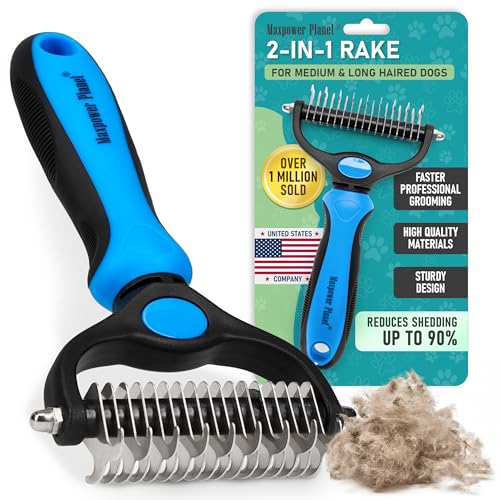
Whichever tool you choose, always brush in the direction of hair growth and stop if your dog shows signs of discomfort. A deshedding tool should never pull hard enough to make your dog flinch.
When Excessive Shedding Signals Something More
See a vet now: Bald patches, red or scabbed skin, constant scratching, or hair thinning evenly on both sides of the body point to a medical cause, not ordinary shedding. Intense itching with crusting on the ear edges, elbows and belly suggests sarcoptic mange, which spreads to people as well as to other dogs, so call your vet right away [Merck]. Even thinning without any itching points instead to a hormonal problem [Today’s Veterinary Practice]. A deshedding tool fixes neither, and brushing inflamed skin makes it worse.
Two patterns are worth telling apart, because they send you and your vet in different directions. Patchy, itchy hair loss with red or crusted skin usually comes from something inflammatory: fleas or mites, a skin infection, or allergies. When itching and hair loss show up together, the itch is what gets investigated first [Merck]. Hair that thins evenly across both flanks, the trunk and the tail, over skin that looks unbothered, is the classic hormonal pattern [Today’s Veterinary Practice].
Roughly two thirds of hypothyroid dogs develop that symmetrical, non-itchy thinning, most often between 4 and 10 years of age, alongside lethargy and weight gain without a bigger appetite [Merck]. Cushing’s disease causes a similar symmetrical loss over the trunk and belly that spares the head and feet, usually with more drinking and urinating, panting and a pot-bellied outline [Merck]. Ordinary shedding looks like neither: the coat stays dense, the skin underneath looks normal, and you never see skin showing through it.
Further Reading
Safe Dog Chew Toys: What to Look For covers another everyday grooming and safety decision, useful if you are already thinking through what belongs in your dog’s routine.
Reading Dog Food Labels is a helpful next step, since diet quality affects coat health and how much a dog sheds.
Signs Your Dog Is Becoming a Senior is worth a look if shedding or coat changes are showing up alongside other new changes in an older dog.
This article is for educational purposes only and is not a substitute for professional veterinary care. Always consult a licensed veterinarian regarding your pet’s health and nutritional needs. As an Amazon Associate, Vet Explains earns from qualifying purchases.
Was the article helpful?